

The Right Time to Build a Mobile App for Your Business
May 11, 2026
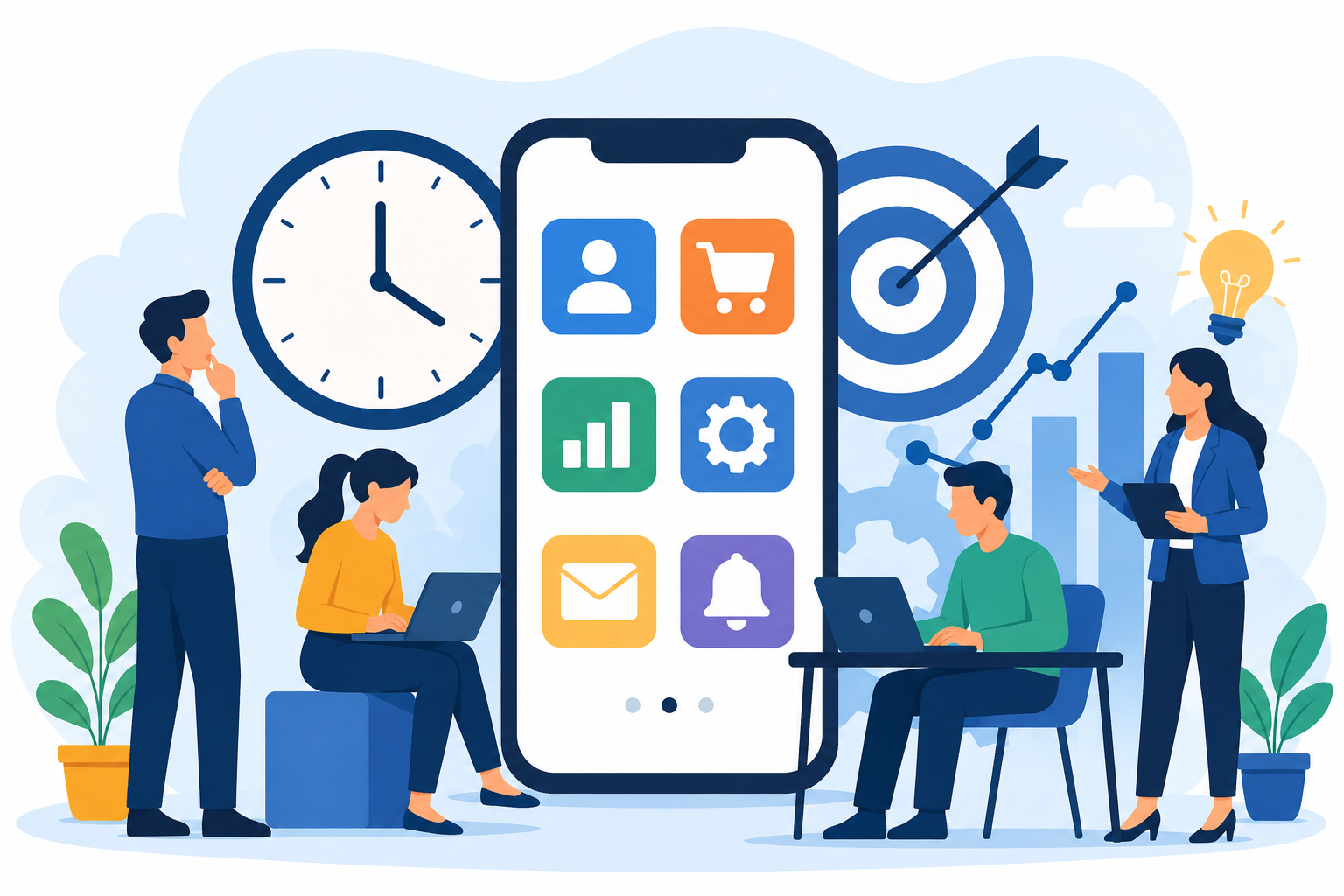
Mobile apps are everywhere. From banking and food delivery to fitness and customer support, apps have become a default part of everyday business. Because of this, many business owners assume that building a mobile app is an obvious next step for growth.
In reality, that assumption can be costly.
A mobile app is not automatically a smart investment. For some businesses, it becomes a powerful growth engine. For others, it turns into an underused product that drains time, money, and internal resources. The difference comes down to whether an app genuinely improves how customers interact with your business.
This article breaks down the real indicators that signal when a mobile app makes sense, when it does not, and how to approach the decision strategically—without hype, pressure, or unnecessary complexity.
Why Mobile Apps Feel Like a Must-Have
Mobile apps often carry an unspoken perception of legitimacy. They feel modern, established, and scalable. Customers associate apps with convenience, speed, and professionalism, which is why many businesses feel compelled to build one even before understanding the need.
Apps can strengthen customer relationships, streamline operations, and create new revenue opportunities. However, these outcomes only happen when the app is built with clear intent and aligned with how customers already behave.
Companies that see strong returns usually understand early influences of long-term stability, performance, and user trust.
The Real Question Every Business Should Ask
The decision to build a mobile app should start with one fundamental question:
Does a mobile app significantly improve the customer experience compared to a mobile website?
If the app does not remove friction, save time, or unlock new value, it is unlikely to gain consistent usage. Apps are strongest when they support frequent, repeat interactions—not occasional visits.
Signs Your Business Truly Needs a Mobile App
Certain business models naturally benefit from having a dedicated mobile app. If your operations align with the following indicators, an app may be a strategic move rather than an optional upgrade.
Frequent Customer Interaction
Businesses that rely on regular engagement are strong candidates for mobile apps. This includes companies where users return multiple times per week or month to perform specific actions.
Examples include:
- Booking or scheduling services
- Reordering products
- Managing subscriptions
- Tracking progress or activity
In these scenarios, an app reduces friction through saved preferences, faster access, and persistent logins. Over time, this convenience encourages loyalty and repeat usage.
Real-Time Updates and Notifications
When your business depends on timely information, apps offer a clear advantage. Push notifications, background updates, and live data syncing create a smoother experience than browser-based alternatives.
This is common in:
- Order tracking
- Delivery services
- Appointment updates
- Messaging platforms
Apps allow customers to stay informed without actively checking a website, which strengthens engagement and trust.
Use of Device Features
Some products require access to smartphone hardware to function properly. While mobile browsers have improved, they still cannot fully match native app capabilities.
Apps perform better when features like GPS, cameras, offline access, or biometric login are essential. Businesses that depend on these functions often find that app performance and reliability improve noticeably when built the right way.
Long-Term Customer Retention
Apps are not just about acquisition—they are powerful retention tools. A well-designed app keeps your brand present on a customer’s device, reducing the effort required to return.
This long-term value is one reason companies approach hiring app developer carefully, ensuring the product evolves alongside user expectations rather than falling behind them.
A Validated Business Model
Apps work best when demand already exists. Building an app without proven interest introduces unnecessary risk.
Businesses that validate demand first—through websites, early traction, or functional MVPs—make better app decisions. This approach aligns naturally with idea validation, helping companies confirm that users actually want a dedicated app experience.
When a Mobile App Is Likely the Wrong Choice
Equally important is recognizing when an app is not the right solution.
A Strong Mobile Website Already Exists
If your mobile website already delivers fast load times, smooth navigation, and high conversion rates, an app may not add enough value to justify its cost.
Many service-based businesses successfully handle inquiries, bookings, and payments through responsive websites without requiring an app download.
Low Interaction Frequency
Apps require commitment from users. If customers interact with your business only a few times per year, they are unlikely to install or keep an app.
In these cases, accessibility through search and browser-based experiences is often more effective.
Limited Capacity for Maintenance
An app is not a one-time deliverable. It requires continuous updates to remain secure, compatible, and relevant.
Without a plan for ongoing maintenance, apps quickly degrade in quality. Businesses that underestimate this reality often experience declining user trust and engagement.
Short-Term Goals Only
Apps are not ideal for temporary campaigns or one-off promotions. Marketing initiatives with limited timelines perform better through web platforms that offer flexibility and faster deployment.
Apps deliver value over time, not as quick wins.
Choosing Between Native and Cross-Platform Development
Once the decision to build an app is justified, the next step is choosing the development approach.
Native apps are built specifically for iOS or Android, offering optimal performance and deeper system integration. Cross-platform apps use shared codebases to reach multiple platforms more efficiently.
Each option has trade-offs related to speed, cost, scalability, and user experience. Understanding these differences early helps businesses avoid technical constraints that limit future growth.
Understanding What Drives App Development Cost
App costs vary widely and extend far beyond initial development.
Factors influencing cost include:
- Feature complexity
- Platform requirements
- Design depth
- Backend infrastructure
- Security and compliance needs
Companies that examine cost factors early are better equipped to align expectations, prioritize features, and plan realistically.
The Role of the Right Development Team
The success of an app often depends more on the team than the idea.
Experienced developers help refine scope, avoid unnecessary features, and design scalable systems that support future updates. The difference between a functional app and a successful one often lies in the quality of decision-making during development.
Apps as Part of a Broader Digital Ecosystem
A mobile app should enhance your existing systems, not replace them.
Successful apps integrate seamlessly with:
- Websites
- Customer databases
- Analytics tools
- Marketing platforms
This ecosystem approach ensures consistency across channels and supports long-term improvement throughout the full app delevopment process.
Measuring Success Beyond Downloads
Downloads alone do not indicate success.
More meaningful metrics include:
- Active user retention
- Session frequency
- Task completion rates
- Revenue contribution
- Customer satisfaction
These insights reveal whether the app genuinely improves the user experience and supports business objectives.
Final Thoughts: Build an App for the Right Reasons
A mobile app can be a powerful asset—but only when it serves a clear purpose.
If your business relies on frequent interaction, real-time functionality, or deep customer engagement, an app may significantly enhance your operations. If not, investing in other digital improvements may deliver stronger returns with less risk.
The most successful businesses do not build apps because they feel pressured to.
They build apps because the value is undeniable—for both the customer and the company.