

Paid Search Ads: What They Are, How They Work & Cost
August 12, 2026
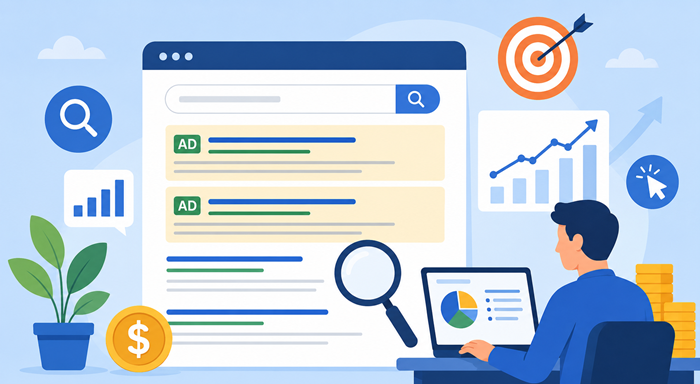
Paid search ads are a form of online advertising that helps businesses appear prominently in search engine results when potential customers actively look for relevant products, services, or solutions. These sponsored listings can increase visibility, attract targeted visitors, generate leads, and connect businesses with people who already have a clear interest or intent to make a purchase.
Unlike traditional advertising, this approach can target users based on search terms, location, device, audience signals, and other factors. Businesses can also control budgets, measure conversions, and adjust campaigns based on performance.
Key Takeaways
- Paid search ads place businesses in front of users with active search intent.
- Advertisers typically pay when someone clicks or interacts with an ad.
- Keyword targeting, bidding, relevance, and landing pages influence performance.
- Proper tracking and ongoing optimization are essential for profitable campaigns.
What Are Paid Search Ads?
Paid search ads are advertisements that appear on search engine results pages when users search for specific keywords or phrases. They are commonly associated with platforms such as Google Ads, where businesses bid for opportunities to show their advertisements to relevant searchers.
For example, someone searching for “emergency plumber near me” may see sponsored plumbing companies before the organic search results. A business can create an advertisement targeting that search and send interested users to a relevant service page.
The main advantage is intent. Instead of showing an advertisement to a random audience, businesses can reach people who are already looking for a solution, product, or service.
How Do Paid Search Ads Work?
The process starts when a user enters a search query. The search engine determines which advertisements are eligible to appear based on factors such as the advertiser’s keywords, bid, ad relevance, landing page experience, and expected performance.
An auction takes place whenever there is an opportunity to display an advertisement. Advertisers compete for visibility, but the highest bid does not automatically guarantee the top position.
Search engines aim to provide useful results, so ad quality and relevance matter alongside the advertiser’s bid.
Keyword Targeting
Keywords connect a business with relevant searches. An online retailer, for example, might target terms related to running shoes, while a local contractor could target searches for home renovation services.
Effective keyword selection considers search intent rather than simply choosing terms with high search volume. A highly specific keyword can sometimes produce better leads than a broad term with thousands of searches.
Ad Auction
The auction determines which advertisements can appear and where they may be positioned. The system considers multiple signals, including the bid and the expected quality of the advertisement.
This means advertisers should not focus exclusively on spending more. Improving relevance, messaging, landing pages, and conversion performance can also influence results.
Landing Pages
The page users reach after clicking an advertisement plays an important role in campaign success. A strong landing page should closely match the promise made in the ad.
If an advertisement promotes emergency plumbing services but sends visitors to a generic homepage, users may leave without contacting the company. A dedicated service page usually provides a clearer and more relevant experience.
Why Do Businesses Use Paid Search Ads?
One of the biggest reasons businesses invest in paid search is the ability to capture existing demand. When someone searches for a service or product, there is often a clear need behind that search.
A well-structured campaign can put a business in front of that potential customer at an important point in the buying journey.
Another benefit is measurable performance. Businesses can monitor impressions, clicks, conversions, cost per lead, revenue, and other metrics to understand whether advertising investment is producing meaningful results.
Companies that need a broader acquisition strategy may combine search advertising with other digital marketing services to build awareness, generate demand, and improve customer retention across multiple channels.
Paid Search Ads vs. Organic Search
Organic search and paid advertising can both bring visitors from search engines, but they work differently.
Organic rankings are earned through factors such as useful content, technical SEO, website authority, and relevance. Paid placements, on the other hand, allow eligible advertisers to compete for immediate visibility through advertising platforms.
This does not mean one approach is universally better. Many businesses use both.
Organic search can provide sustainable traffic over time, while advertising can help a company promote specific products, services, locations, offers, or high-value keywords more quickly.
What Are the Types of Paid Search Ads?
There are several formats available depending on the advertising platform and campaign objective. Understanding the types of paid search ads helps businesses select formats that align with their goals.
Search Text Ads
These are the familiar text-based advertisements that appear within search results. They generally include headlines, descriptions, and a destination URL.
They work particularly well when users are actively searching for a product or service and the advertisement directly addresses their needs.
Shopping Ads
Shopping advertisements can display product information such as an image, product name, price, and retailer details. They are particularly useful for e-commerce businesses because users can see key product information before visiting a website.
Local Search Ads
Local campaigns can help businesses reach users searching for nearby services or locations. Restaurants, medical practices, repair companies, retailers, and other local businesses can use location-focused advertising to attract nearby prospects.
Google Paid Ads: What Makes Them Effective?
Google paid ads can be effective because Google’s search environment captures users at the moment they express an interest through a query.
However, visibility alone does not guarantee results. The campaign needs relevant keywords, persuasive advertisements, appropriate targeting, strong landing pages, accurate conversion tracking, and ongoing optimization.
Businesses should also understand their economics before increasing budgets. Knowing the google paid ads cost for targeted keywords can help advertisers estimate potential traffic and determine whether expected conversions justify the investment.
Costs vary significantly by industry, location, competition, keyword intent, and account performance. A competitive legal or financial keyword, for example, may cost considerably more than a niche search term.
How Much Do Paid Search Ads Cost?
There is no universal price for a campaign. Advertising costs depend on the market and auction environment.
Some advertisers may pay a relatively low amount for a click, while competitive industries can have much higher costs. The important question is not simply how inexpensive a click is, but whether that click can produce a valuable customer.
A campaign receiving inexpensive traffic can still lose money if visitors rarely convert. Conversely, a campaign with a higher average click cost may be profitable when each conversion generates substantial revenue.
Businesses should therefore evaluate metrics such as cost per conversion, conversion rate, customer value, and return on advertising spend rather than focusing on clicks alone.
Paid Ads Management: What Does It Include?
Effective paid ads management involves much more than creating an advertisement and setting a daily budget.
Campaign managers may research keywords, organize ad groups, write and test advertisements, adjust bids, refine targeting, review search terms, improve landing pages, and monitor conversion data.
They also need to identify wasted spending. Irrelevant searches, poorly targeted locations, weak advertisements, and low-quality traffic can consume budget without producing useful business outcomes.
For businesses without an internal advertising team, professional paid ads services can provide campaign strategy, setup, monitoring, testing, and optimization.
Google Ads vs Facebook Ads
Search advertising and social advertising are built around different forms of user behavior. Search campaigns can capture existing intent, while social platforms can introduce products or services to users based on audience characteristics and interests.
The right channel depends on the business, offer, audience, sales cycle, and campaign objective. A detailed comparison of google ads vs facebook ads can help businesses understand where each platform fits.
The two channels can also work together. Social campaigns can build awareness while search campaigns capture users who later begin actively looking for the product or service.
How Small Businesses Can Benefit
Small businesses often need advertising that can be measured carefully. Instead of trying to reach everyone, they can focus on specific services, locations, and search terms that are closely connected to their ideal customers.
Understanding how google ads ppc helps small businesses can also make it easier to decide whether search advertising is appropriate for a particular growth strategy.
A local business, for example, may prioritize high-intent searches within a defined service area. This can be more practical than spending the same budget on broad advertising with limited geographic or intent targeting.
Common Mistakes to Avoid
Poor campaign structure can make even a generous advertising budget inefficient.
One common mistake is targeting overly broad keywords without considering search intent. Another is sending every visitor to the same generic page instead of matching landing pages to individual services or products.
Weak conversion tracking is another serious problem. If a business cannot tell which campaigns, keywords, or advertisements generate leads and sales, optimization becomes guesswork.
Automated bidding can also require attention. If performance suddenly changes, advertisers should investigate factors such as conversion tracking, data quality, competition, budgets, and campaign changes. Resources discussing why your google ads smart bidding stopped working can provide useful context when automated strategies underperform.
How Retargeting Supports Search Campaigns
Not every visitor converts during the first visit. Someone may click an advertisement, browse a service page, compare alternatives, and leave before making a decision.
Retargeting can help businesses reconnect with eligible previous visitors through appropriate advertising channels. This is particularly useful for products and services that require research before purchase.
Learning how retargeting ads recover more lost sales can help marketers understand how follow-up advertising fits into a broader customer journey.
The key is to use retargeting strategically rather than repeatedly showing the same message to every visitor.
How to Build a Successful Paid Ads Campaign
A strong paid ads campaign starts with a clear business objective. That objective might be generating phone calls, online purchases, quote requests, bookings, or qualified leads.
Next, identify the searches that demonstrate meaningful intent. Group related keywords logically and create advertisements that directly address those searches.
After launch, monitor performance regularly. Look beyond clicks and impressions to determine which traffic produces actual business outcomes.
Testing should be continuous. Different headlines, descriptions, landing pages, keyword groups, and offers can produce different results. The goal is to learn what works and allocate more budget toward proven opportunities.
Businesses with complex accounts may choose a specialized paid ads agency to manage strategy and optimization, particularly when advertising represents a significant portion of their customer acquisition budget.
Conclusion
Paid search advertising gives businesses a practical way to reach people who are actively searching for products, services, and solutions. Its biggest strength is the combination of intent, targeting, measurable performance, and budget control.
Successful campaigns require more than simply bidding on keywords. Strong advertisements, relevant landing pages, accurate tracking, thoughtful targeting, and consistent optimization all contribute to better results.
For businesses evaluating search advertising, the best starting point is to define the desired business outcome, understand the value of a conversion, and build campaigns around searches that demonstrate genuine customer intent.
FAQs
1. What are paid search ads?
They are sponsored search engine listings that businesses pay to display for relevant user searches.
2. Do businesses pay every time an ad is shown?
Not always; many campaigns use a pay-per-click model where advertisers pay when users click.
3. Are paid search ads good for small businesses?
Yes, especially when campaigns focus on relevant keywords, locations, budgets, and measurable conversions.
4. How quickly can paid search ads generate results?
They can generate traffic quickly after launch, although profitable performance usually requires ongoing testing and optimization.
5. Are paid search ads better than SEO?
Neither is universally better; search advertising can provide faster visibility while SEO can build sustainable organic traffic over time.