

How Google Ads PPC Helps Small Businesses Grow Fast
May 21, 2026
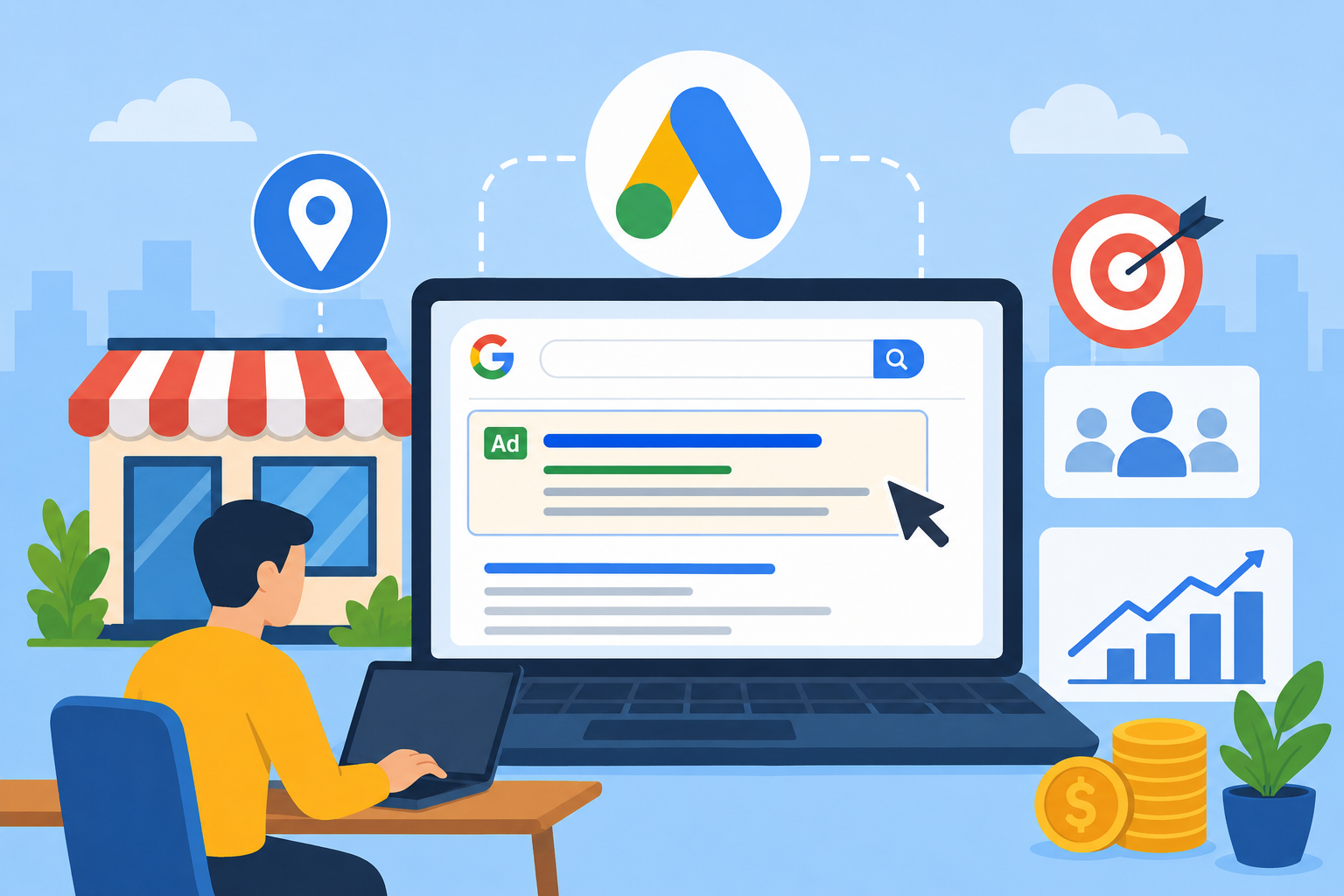
For small businesses competing in crowded online markets, visibility can make the difference between steady growth and missed opportunities. The challenge is that organic rankings often take time to build. Search engine optimization is essential, but many businesses need leads, calls, and sales sooner rather than later.
That’s where Google Ads PPC becomes one of the most effective digital marketing tools available.
Pay-per-click advertising allows businesses to appear at the top of Google search results almost immediately. Instead of waiting months for organic traction, companies can place their services directly in front of people actively searching for solutions.
Whether someone is looking for a local contractor, emergency plumbing services, dental care, or a renovation company, PPC advertising helps businesses connect with high-intent customers at the exact moment they’re ready to act.
When combined with broader digital marketing solutions, Google Ads can become a scalable system for generating consistent leads and measurable business growth.
What Is Google Ads PPC?
Google Ads is Google’s advertising platform that allows businesses to promote products and services across Google Search, YouTube, mobile apps, Google Maps, and partner websites.
PPC stands for “pay-per-click,” which means advertisers only pay when someone clicks their ad.
Unlike traditional advertising, businesses are not paying simply for exposure. They are paying for direct engagement from users who are actively searching for relevant services or products.
For example, when users search phrases like:
- plumber near me
- affordable roof repair
- cosmetic dentist in Miami
- kitchen renovation contractor
Google may display sponsored ads above the organic search results.
Businesses using PPC advertising can position themselves in these premium locations and attract highly targeted traffic immediately.
Why Google Ads PPC Works So Well for Small Businesses
Small businesses often operate with tighter budgets than large corporations, which makes efficiency incredibly important.
Google Ads works because it targets users based on intent rather than interruption.
Instead of showing random ads to broad audiences, PPC campaigns focus on people already searching for solutions. This creates a much higher likelihood of generating qualified leads and conversions.
Key Benefits of PPC Advertising
Immediate Visibility in Search Results
One of the biggest advantages of PPC advertising is speed.
SEO campaigns can take months to gain traction, while Google Ads can place businesses at the top of search results almost instantly.
This is especially valuable for:
- New businesses
- Seasonal campaigns
- Local service providers
- Competitive industries
Precise Audience Targeting
Google Ads allows businesses to target audiences based on:
- Geographic location
- Search intent
- Device type
- Time of day
- User behavior
- Demographics
This level of targeting helps businesses avoid wasting ad spend on irrelevant traffic.
Full Budget Control
Businesses can set:
- Daily spending limits
- Maximum bid amounts
- Geographic restrictions
- Campaign-level budgets
This flexibility makes PPC accessible even for businesses with smaller marketing budgets.
Measurable Performance Tracking
Google Ads provides detailed reporting that allows businesses to track:
- Clicks
- Calls
- Leads
- Sales
- Conversion rates
- Return on investment
Unlike many traditional marketing channels, PPC campaigns provide clear, measurable data.
How Google Ads PPC Actually Works
Understanding the mechanics behind PPC advertising helps businesses make smarter decisions and avoid unnecessary spending.
The Google Ads Auction System
Every time someone searches on Google, an automated ad auction happens in milliseconds.
Businesses bidding on related keywords compete for ad placement.
Google evaluates several factors before determining which ads appear, including:
- Bid amount
- Ad relevance
- Expected click-through rate
- Landing page quality
- Overall user experience
This means the highest bidder does not automatically win.
A well-optimized ad with strong relevance and a quality landing page can often outrank competitors while paying less per click.
Understanding Keyword Targeting
Keywords are the foundation of every successful PPC campaign.
Advertisers choose search phrases they believe potential customers are typing into Google.
Examples include:
- emergency HVAC repair
- best family dentist near me
- affordable moving company
- kitchen remodeling contractor
When someone searches those terms, Google determines whether an advertiser’s ad should appear.
Businesses that pair PPC campaigns with advanced search engine optimization strategies for long-term growth often build stronger visibility across both paid and organic search results.
High-Intent Keywords Matter Most
Not all keywords perform equally.
Searches with strong buying intent typically generate the best ROI.
Examples of high-intent searches include:
- same day service
- near me
- free estimate
- emergency repair
- book consultation
These searches indicate users are much closer to making a purchasing decision.
Creating Effective Google Ads
A Google search ad may look simple, but every component influences performance.
Core Elements of a PPC Ad
Headlines
Headlines are the first thing users notice.
Strong headlines should:
- Include target keywords
- Highlight value
- Create urgency
- Address user intent
Example:
Affordable Kitchen Remodeling Services
Descriptions
Descriptions should reinforce value and encourage action.
Example:
Get professional remodeling services with transparent pricing and fast project timelines. Call today for a free estimate.
Ad Extensions
Google Ads also allows businesses to add extra information such as:
- Phone numbers
- Locations
- Service categories
- Additional links
- Promotions
Ad extensions improve visibility and often increase click-through rates.
Why Landing Pages Are Critical for PPC Success
The landing page experience directly affects campaign performance.
Even strong ads can fail if users land on pages that are slow, confusing, or irrelevant.
What Makes a High-Converting Landing Page?
Effective landing pages usually include:
- Fast loading speeds
- Clear headlines
- Strong calls-to-action
- Mobile-friendly design
- Trust signals and reviews
- Relevant content matching the ad
Businesses often improve conversion rates by combining PPC campaigns with conversion-focused website design services for lead generation.
When ads and landing pages align properly, campaigns typically generate better conversion rates at lower costs.
Understanding Google Ads Quality Score
Quality Score is Google’s rating system that measures the relevance and usefulness of your ads.
Google evaluates three primary factors:
Expected Click-Through Rate
Google predicts how likely users are to click your ad.
Ad Relevance
Ads should closely match the search keywords being targeted.
Landing Page Experience
The landing page should provide useful, relevant, and user-friendly content.
Why Quality Score Matters
Higher Quality Scores often lead to:
- Lower cost per click
- Better ad placement
- Improved campaign efficiency
- Higher return on ad spend
Businesses that focus on relevance and user experience generally achieve better long-term PPC performance.
Different Types of Google Ads Campaigns
Google Ads offers several campaign formats depending on business goals.
Search Campaigns
Search campaigns display text ads directly in Google search results.
These campaigns are highly effective because they target active search intent.
For most local businesses, search campaigns are the primary PPC channel.
Display Campaigns
Display ads appear across Google’s partner websites.
These campaigns work well for:
- Brand awareness
- Retargeting
- Visual advertising
- Audience expansion
Display advertising is often used to stay visible after users leave a website.
Local Service Ads
Local Service Ads appear above traditional search ads for eligible service-based businesses.
These ads often include:
- Reviews
- Verification badges
- Direct phone call options
Local Service Ads are especially effective for plumbers, electricians, HVAC companies, dentists, and contractors.
Shopping Campaigns
Shopping campaigns are designed for eCommerce businesses.
These ads display:
- Product images
- Prices
- Store names
- Ratings
Shopping ads often generate strong conversion rates because users see product details before clicking.
Performance Max Campaigns
Performance Max campaigns use Google’s AI to distribute ads automatically across:
- Search
- YouTube
- Gmail
- Display Network
- Google Maps
These campaigns rely heavily on machine learning and audience signals to optimize performance.
How PPC Budgets Work
One reason small businesses favor PPC advertising is budget flexibility.
Businesses maintain full control over spending.
PPC Budget Controls Include
- Daily budget caps
- Geographic targeting
- Device targeting
- Bid strategies
- Audience segmentation
A local business may start with a modest daily budget and gradually scale campaigns as results improve.
The ability to control spending makes PPC accessible for both startups and established businesses.
Measuring PPC Campaign Performance
Google Ads provides detailed analytics that help businesses understand what’s working and what needs improvement.
Important PPC Metrics
Click-Through Rate (CTR)
Measures how often users click ads after seeing them.
Cost Per Click (CPC)
Tracks how much each click costs.
Conversion Rate
Measures how many visitors complete desired actions.
Cost Per Acquisition (CPA)
Tracks how much it costs to generate a lead or customer.
Return on Ad Spend (ROAS)
Measures overall campaign profitability.
Businesses that consistently analyze performance data typically improve ROI over time.
PPC vs SEO for Small Businesses
PPC and SEO are often compared, but the most effective marketing strategies usually combine both.
Advantages of PPC
- Immediate traffic
- Faster lead generation
- Precise targeting
- Easier testing and scaling
Advantages of SEO
- Long-term traffic growth
- Stronger brand authority
- Lower long-term acquisition costs
- Higher trust among users
Businesses that combine paid advertising with strong organic optimization often achieve more stable and sustainable growth.
Common PPC Mistakes Small Businesses Should Avoid
Many businesses lose money on PPC because campaigns are launched without proper strategy or optimization.
Targeting Broad Keywords
Broad keywords often generate irrelevant clicks.
Highly specific keywords usually produce stronger conversion rates.
Ignoring Negative Keywords
Negative keywords prevent ads from appearing for unrelated searches.
Without them, businesses may pay for unqualified traffic.
Weak Landing Pages
Poor landing pages can destroy campaign performance, even if ads generate strong click-through rates.
Lack of Conversion Tracking
Without tracking leads and conversions, businesses cannot properly optimize campaigns.
Reliable data is essential for making smart PPC decisions.
How Small Businesses Can Improve PPC ROI
PPC success requires consistent optimization rather than a one-time setup.
Focus on Buyer Intent
High-intent searches generally produce the best results.
Businesses should prioritize keywords connected to immediate purchasing behavior.
Continuously Test Ads
Testing multiple headlines, descriptions, and offers helps improve performance over time.
Small improvements in click-through rate can significantly reduce acquisition costs.
Optimize Mobile Experience
Many PPC clicks come from smartphones.
Landing pages should load quickly and function smoothly on mobile devices.
Use Geo-Targeting Strategically
Local businesses can maximize ROI by focusing only on cities or service areas they actively serve.
This minimizes wasted ad spend from irrelevant locations.
Why Professional PPC Management Makes a Difference
Launching a Google Ads campaign is relatively easy.
Running profitable campaigns consistently is far more complex.
Successful PPC management requires:
- Keyword research
- Competitor analysis
- Bid optimization
- Audience segmentation
- Conversion tracking
- Ongoing ad testing
Businesses that invest in professional pay-per-click often achieve better ROI while reducing wasted advertising spend.
Experienced PPC specialists understand how to refine campaigns, improve efficiency, and scale profitable strategies over time.
The Future of Google Ads PPC
PPC advertising continues evolving rapidly as Google expands automation and AI-powered features.
Major Trends Shaping PPC
AI-Driven Campaign Optimization
Google increasingly uses machine learning to automate bidding and targeting decisions.
Smart Bidding Strategies
Automated bidding helps advertisers maximize conversions while controlling costs.
Audience-Based Advertising
Advertisers are shifting toward audience behavior and intent signals rather than relying only on keywords.
Increased First-Party Data Usage
Privacy updates are making first-party customer data more valuable than ever.
Businesses that adapt to these changes early will gain stronger competitive advantages.
Conclusion
Google Ads PPC gives small businesses the ability to compete for valuable search visibility without waiting months for organic rankings.
By targeting high-intent keywords, creating compelling ads, and directing traffic to optimized landing pages, businesses can generate leads and sales far more quickly than many traditional marketing channels.
The most successful PPC campaigns rely on continuous optimization, accurate tracking, and a strong understanding of customer intent.
When managed strategically, Google Ads can become one of the most powerful growth tools available for small businesses looking to scale online visibility, attract qualified customers, and drive measurable revenue growth.
Frequently Asked Questions
How much should a small business spend on Google Ads?
There is no universal budget for PPC advertising. Some local businesses start with $10–$50 per day, while competitive industries may require larger investments. The ideal budget depends on competition, industry, and customer acquisition goals.
Is Google Ads worth it for small businesses?
Yes. Google Ads can generate highly targeted traffic and leads quickly when campaigns are properly optimized. Many small businesses use PPC to drive immediate visibility while building long-term SEO growth.
How long does it take for PPC campaigns to work?
Google Ads campaigns can start generating traffic almost immediately after launch. However, optimization and performance improvements usually happen over several weeks as data accumulates.
What industries benefit the most from PPC advertising?
Industries with strong local intent often perform very well with PPC advertising, including:
- Home services
- Dental practices
- Legal services
- Real estate
- Renovation companies
- HVAC businesses
- eCommerce stores
Can small businesses run Google Ads themselves?
Yes, but effective PPC management requires experience and continuous optimization. Many businesses eventually work with professionals to improve ROI and reduce wasted ad spend.