

Google Ads vs Facebook Ads: Which One Actually Brings Better Leads?
January 12, 2026
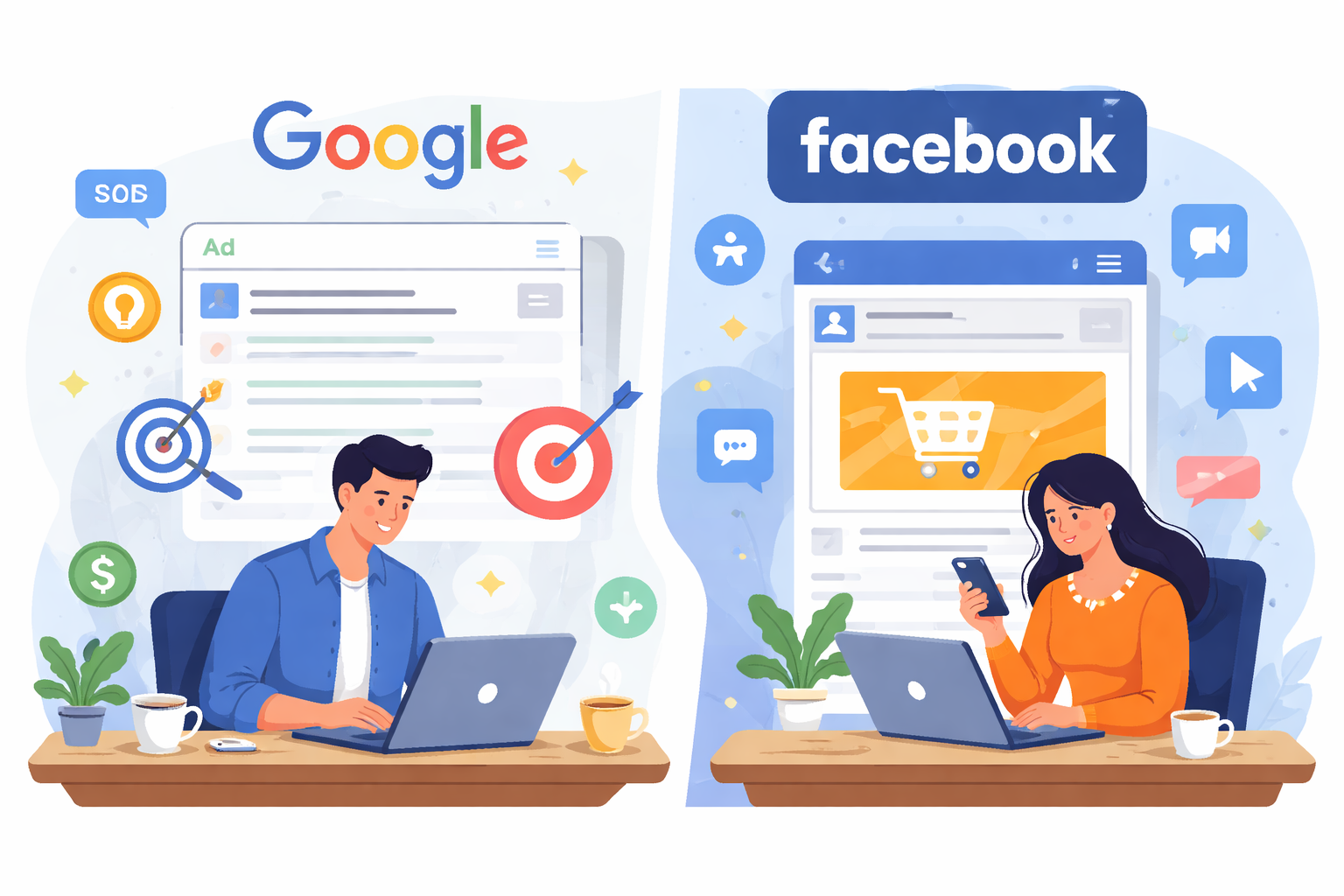
Choosing between Google Ads and Facebook Ads is one of the most common decisions businesses face when investing in paid advertising. Both platforms dominate the digital advertising space, both can generate leads at scale, and both can be highly profitable when used correctly. Yet they work in very different ways, attract users with different mindsets, and deliver results that vary depending on your goals, industry, and sales process.
This article takes a clear, practical look at Google Ads vs Facebook Ads and answers the question many marketers and business owners ask: which platform actually drives better leads? Instead of surface-level comparisons, we’ll break down intent, targeting, lead quality, costs, funnel fit, and long-term performance so you can decide which option aligns best with your growth strategy.
Understanding the Core Difference Between Google Ads and Facebook Ads
Before comparing performance, it’s important to understand how each platform operates at a fundamental level. The biggest difference comes down to user intent versus user discovery.
Google Ads reaches people who are actively searching for a solution. Facebook Ads reaches people who may not yet realize they need one.
This difference alone influences lead quality, conversion speed, and campaign structure.
How Google Ads Capture High-Intent Leads
Google Ads are built around search behavior. When someone types a keyword into Google, they’re expressing a specific need, question, or desire. Ads appear based on those searches, positioning your business directly in front of users who are already looking for what you offer.
Why Search Intent Matters for Lead Quality
Search-based advertising tends to attract leads who are closer to making a decision. Someone searching “commercial roofing contractor near me” or “CRM software pricing” is not browsing casually. They’re evaluating options with the intent to take action.
This high intent often leads to:
- Faster conversions
- Higher-quality inquiries
- Shorter sales cycles
- Better alignment with direct-response campaigns
Because of this, many businesses rely on Google Ads as a primary source of inbound leads, especially when tracking and optimizing through pay per click campaigns focused on bottom-of-funnel keywords.
Keyword Control and Buyer Readiness
One of Google Ads’ biggest advantages is keyword control. You decide exactly which searches trigger your ads. This allows you to filter out low-quality traffic and focus on terms that historically convert well.
Over time, performance data from Google Ads supports clearer success metrics, helping businesses identify which keywords and ads consistently contribute to real revenue rather than surface-level engagement.
How Facebook Ads Generate Demand and Awareness
Facebook Ads work differently. Instead of responding to active searches, they appear in users’ feeds based on interests, behaviors, demographics, and engagement patterns. Users aren’t necessarily looking for your product or service when they see your ad.
This makes Facebook Ads a demand-generation platform rather than a demand-capture platform.
Strengths of Facebook’s Audience Targeting
Facebook excels at audience targeting. You can reach users based on:
- Job titles
- Interests
- Past website visits
- Engagement with your content
- Lookalike audiences based on existing customers
This approach is especially effective for brands focused on client attraction, where trust, positioning, and repeated exposure play a critical role before conversion happens.
Visual Storytelling and Brand Influence
Facebook Ads allow for more creative freedom. Images, videos, carousels, and short-form storytelling help shape brand perception over time. While these leads may not convert immediately, they often respond well to remarketing and follow-up campaigns.
This type of brand exposure contributes to long-term authority, which supports stronger ranking trust across search, paid traffic, and referral channels.
Lead Quality: Google Ads vs Facebook Ads
Lead quality is where the comparison becomes more nuanced. “Better” leads depend entirely on buying intent and readiness.
Google Ads Lead Quality
Google Ads leads are typically:
- Highly intent-driven
- Ready to compare or purchase
- Focused on solving a specific problem
- More likely to convert quickly
These leads are ideal for businesses prioritizing speed, predictability, and direct conversions.
Facebook Ads Lead Quality
Facebook Ads leads tend to be:
- Earlier in the buyer journey
- More exploratory
- Influenced by messaging and brand familiarity
- Slower to convert without nurturing
When paired with strong follow-up systems and awareness campaigns aligned with current marketing trends, Facebook Ads can produce substantial long-term ROI.
Cost Comparison: Which Platform Is More Cost-Effective?
Cost alone shouldn’t determine platform choice. A lower cost per lead doesn’t always translate to higher profitability.
Google Ads Costs
Google Ads often have:
- Higher cost per click
- Higher cost per lead
- Stronger conversion intent
In competitive industries, keyword costs rise quickly, but those costs are often justified by faster deal cycles and higher close rates.
Facebook Ads Costs
Facebook Ads generally offer:
- Lower cost per impression
- Lower initial lead costs
- Larger audience reach
The real value appears when businesses optimize for lifetime value rather than immediate conversions.
Funnel Fit: Matching Ads to Buyer Intent
One of the biggest performance gaps comes from misaligned funnel strategy.
Google Ads for Conversion-Focused Campaigns
Google Ads perform best when users already understand their problem and are actively seeking a solution. These campaigns align closely with sales-driven goals and revenue attribution.
Facebook Ads for Awareness and Nurturing
Facebook Ads excel at building familiarity and warming audiences. They create demand that can later be captured through search, retargeting, or direct outreach.
Industry Performance Differences
Industries Where Google Ads Often Perform Better
- Local services
- B2B solutions
- Professional services
- Urgent or high-intent needs
Industries Where Facebook Ads Often Excel
- E-commerce
- Coaching and consulting
- Lifestyle brands
- Long-cycle, high-ticket offers
Using Google Ads and Facebook Ads Together
The strongest results often come from integration rather than comparison.
Facebook Ads introduce the brand and message. Google Ads capture intent when buyers are ready. Remarketing reinforces trust across both platforms, increasing total conversion rates.
Which Platform Drives Better Leads?
If your goal is immediate, high-intent leads, Google Ads typically deliver stronger quality.
If your goal is scalable growth, audience building, and long-term demand, Facebook Ads offer broader reach and influence.
Businesses that align platform choice with buyer intent, tracking accuracy, and funnel strategy consistently outperform those that rely on one channel alone.
Final Thoughts
Google Ads and Facebook Ads serve different roles in a complete marketing ecosystem. When used strategically, both can generate strong leads, increase revenue, and support sustainable growth.
The real advantage comes from understanding intent, aligning messaging, and optimizing based on data rather than assumptions.