

How Doctors Can Attract Patients Through Google Search
January 14, 2026
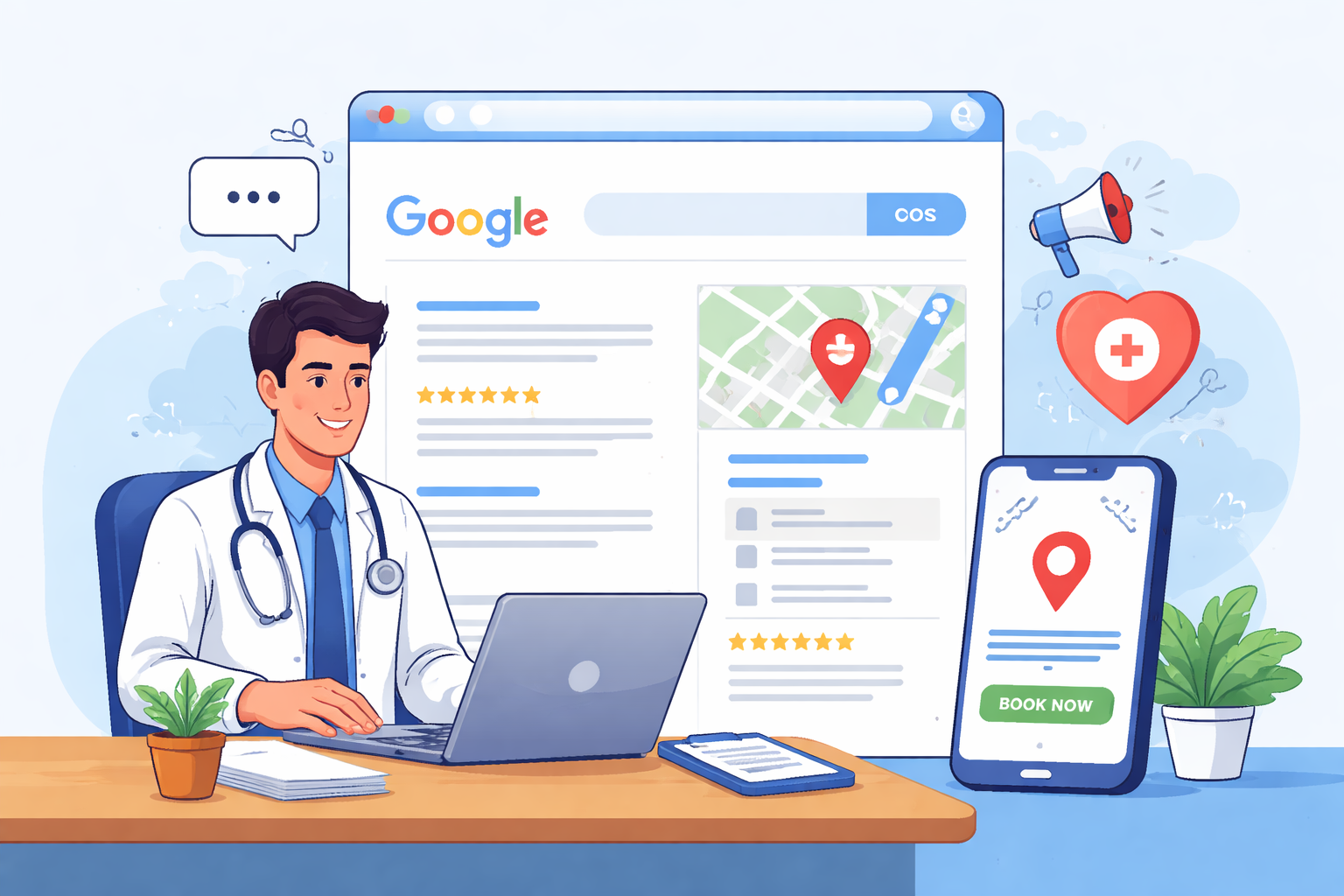
Most patients no longer rely solely on referrals when choosing a doctor. They turn to Google. Whether they are searching for a primary care physician, a specialist, or urgent care, Google Search is where decisions begin. For doctors and medical practices, appearing at the right time in search results is one of the most reliable ways to attract new patients.
This article explains how doctors can attract patients through Google Search by aligning visibility, trust, and conversion. From understanding patient intent to optimizing websites, local search presence, and paid ads, every element works together to turn searches into booked appointments.
Why Google Search Is the Most Powerful Patient Channel
Google Search captures demand at the exact moment it exists. Unlike social platforms where users browse passively, search users are actively looking for medical services. Queries like “cardiologist near me” or “urgent care open now” signal immediate intent.
This same intent-driven model is why search marketing performs so well in competitive service industries. The principles that drive success in real estate marketing—local relevance, clarity, and conversion-focused design—apply just as strongly to healthcare.
When your practice appears prominently in search results, patients associate visibility with credibility before they even visit your website.
How Patients Search for Doctors Online
To attract patients through Google, it is essential to understand how and why they search.
Informational Search Behavior
Patients often begin by researching symptoms, conditions, or treatments. These searches help them understand their health concerns and evaluate providers.
Examples include:
- “What causes joint pain”
- “Is LASIK safe”
- “Signs of sleep apnea”
Educational content that answers these questions builds early trust and positions your practice as a credible authority.
Local and High-Intent Searches
The most valuable searches include location and service intent. These users are often ready to book.
Examples include:
- “Dermatologist near me”
- “Pediatric clinic in Austin”
- “Same day urgent care”
Optimizing for these searches is where practices see the most direct growth.
Website Optimization That Converts Search Traffic
Your website plays a central role in turning Google traffic into patients.
Service Pages Built for Clarity
Each medical service should have a dedicated page that clearly explains what the service involves, who it is for, and how to schedule an appointment. Patients should immediately understand whether your practice is the right fit.
Many practices lose potential patients not because of traffic issues, but because their sites lack clarity or conversion structure. This problem mirrors patterns seen in lead generation failures across service-based businesses.
Mobile-First Experience
Most healthcare searches happen on mobile devices. If your site is slow or difficult to navigate, patients leave immediately.
A mobile-optimized site should:
- Load quickly
- Display phone numbers prominently
- Offer click-to-call and online booking
- Avoid disruptive popups
Google also prioritizes mobile usability when ranking websites.
Trust Signals That Reduce Friction
Patients want reassurance. Trust signals should be visible throughout your website, including:
- Physician credentials and certifications
- Patient reviews and testimonials
- Professional affiliations
- Clear contact information
Trust reduces hesitation and increases appointment bookings.
Local SEO: How Doctors Win Nearby Searches
Local SEO is the backbone of patient acquisition for most medical practices.
Optimizing Your Google Business Profile
Your Google Business Profile often appears before your website in search results. An optimized profile increases calls, direction requests, and bookings.
Key optimization elements include:
- Accurate name, address, and phone number
- Correct primary and secondary categories
- Updated hours
- High-quality office and staff photos
Consistency across platforms strengthens local rankings.
Reviews as Ranking and Decision Factors
Patient reviews influence both visibility and choice. Practices with steady, authentic reviews consistently outperform competitors in local search results.
Responding professionally to reviews further reinforces trust and engagement.
Location-Based Content Signals
Local relevance extends beyond your profile. Website content that references your city, service area, and community strengthens geographic association and improves visibility.
Content That Builds Trust and Search Authority
Content is not about volume—it is about relevance and clarity.
Educational Content Patients Actually Read
Patients value content that explains conditions and treatments in simple language. This reduces anxiety and builds confidence before the first appointment.
Effective topics include:
- Treatment expectations
- Recovery timelines
- Insurance explanations
- Common patient concerns
This approach mirrors content strategies used in professional services where education drives conversion.
Structured Content Improves Rankings
Search-friendly content uses headings, short paragraphs, and logical transitions. This structure helps both readers and search engines understand the page.
Avoid excessive medical jargon unless it is clearly explained.
Google Ads for Immediate Patient Visibility
While SEO builds long-term momentum, Google Ads provide instant exposure for competitive searches.
Search Ads Capture Active Demand
Google Search Ads place your practice at the top of results for high-intent queries. These ads are especially effective for new practices, competitive specialties, and urgent services.
Search ads often outperform social ads in healthcare because they capture intent at the moment of need, a difference clearly seen when comparing ad platforms in service-based industries.
Landing Pages That Convert
Sending ad traffic to generic pages lowers performance. Dedicated landing pages focused on a single service convert better.
High-performing pages include:
- Clear value propositions
- Trust indicators
- Simple calls to action
- Minimal distractions
Tracking Performance and ROI
Google Ads provide detailed data on calls, bookings, and conversions. This allows practices to refine campaigns and control costs effectively.
Common Mistakes That Limit Google Search Results
Many medical practices invest in Google marketing but see limited returns due to avoidable errors.
Inconsistent Online Information
Inconsistent addresses or phone numbers confuse search engines and patients, weakening local visibility.
Overcomplicated Messaging
Patients want clarity and reassurance, not technical explanations.
Ignoring Performance Data
Without analytics, optimization is guesswork. Many practices repeat errors such as relying on assumptions instead of data.
Measuring What Matters Most
Search visibility alone does not equal growth.
Key Metrics Doctors Should Track
Practices should monitor:
- Phone calls from Google
- Appointment bookings
- Conversion rates by service
- Cost per patient acquisition
- Local search impressions
These metrics reveal whether Google Search is driving real patient growth.
Continuous Optimization
Search algorithms, competition, and patient behavior evolve. Practices that treat Google Search as an ongoing system—not a one-time effort—maintain consistent results.
Turning Google Search Into a Patient Growth Engine
Doctors who succeed with Google Search align SEO, local optimization, content, and paid advertising into a single strategy. Visibility builds trust, trust drives clicks, and optimized experiences convert those clicks into appointments.
When executed correctly, Google Search becomes a predictable and scalable engine for attracting new patients.