

Common Digital Marketing Mistakes That Drain Your Budget
January 12, 2026
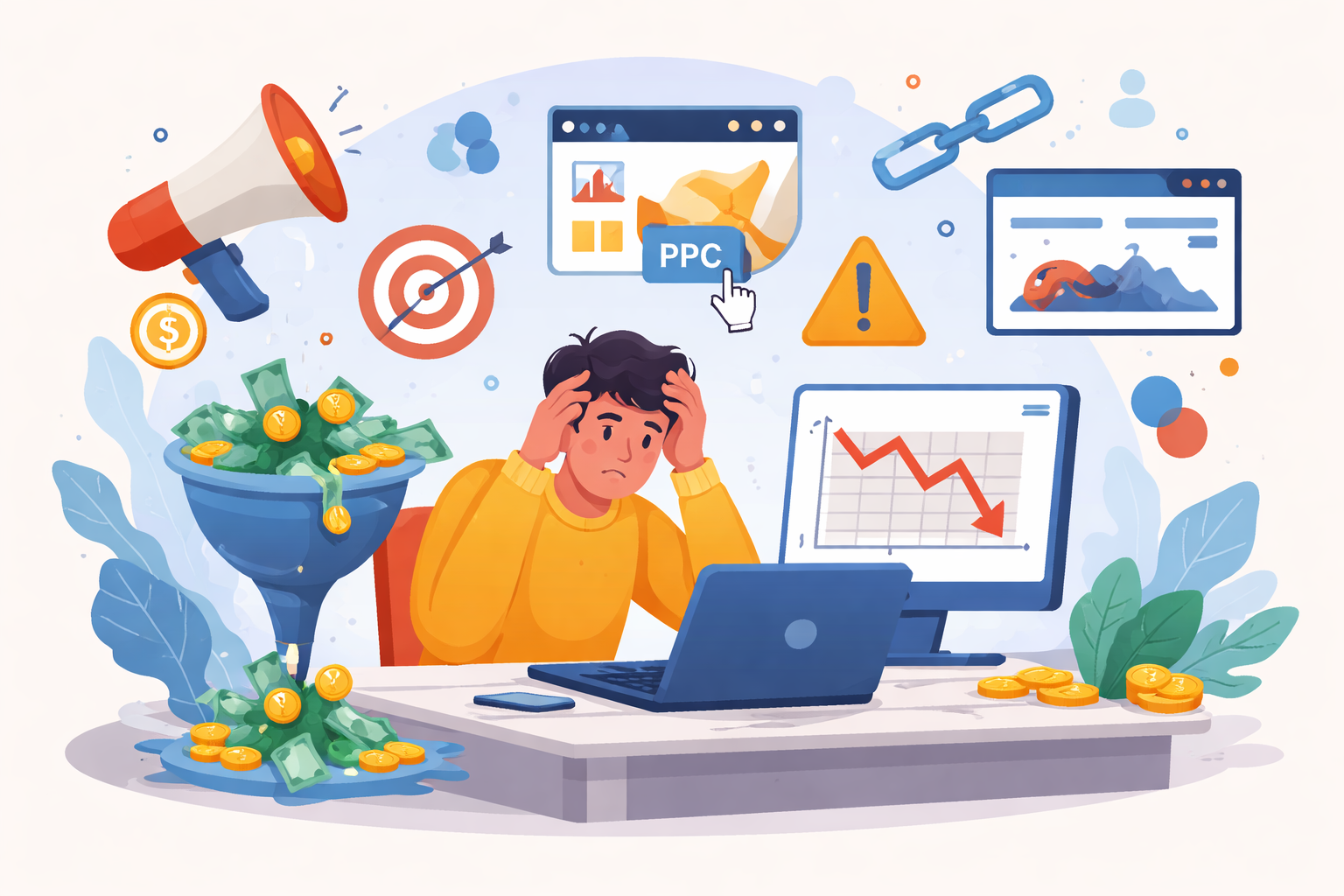
Digital marketing has never been more accessible—or more expensive to get wrong. Businesses invest heavily in ads, content, SEO, and tools expecting growth, only to watch budgets disappear with little to show for it. In most cases, the problem is not digital marketing itself, but avoidable execution errors that quietly drain resources over time.
Understanding common digital marketing mistakes is critical if you want sustainable results, predictable lead flow, and measurable ROI. This article breaks down the most frequent budget-draining issues companies face, why they happen, and how to correct them without overcomplicating your strategy.
Lack of Clear Goals and Measurable Outcomes
One of the most damaging mistakes in digital marketing is operating without clearly defined goals. Too many campaigns are launched with vague objectives like “get more traffic” or “increase brand awareness,” without tying those goals to revenue or lead quality.
Without measurable outcomes, spending decisions become emotional rather than data-driven. Campaigns continue running simply because they have always been running, not because they are effective.
Marketing performance should always be evaluated through structured metrics. Businesses that fail to establish success benchmarks often struggle with proper performance tracking. Understanding how to measure marketing success early on prevents long-term budget erosion and provides clarity for strategic decisions.
Chasing Traffic Instead of Conversions
High traffic numbers can look impressive in reports, but traffic alone does not pay the bills. A common mistake is investing heavily in channels that drive visitors without considering whether those visitors are qualified or ready to convert.
This often happens when businesses focus exclusively on impressions, clicks, or pageviews while ignoring conversion rate optimization. Paid campaigns may generate thousands of clicks, but if landing pages are poorly structured or messaging is unclear, the spend produces minimal returns.
Effective digital marketing prioritizes conversion intent. Every campaign should be aligned with user behavior, funnel stage, and expected action—whether that is a form submission, phone call, or purchase. Businesses that want to naturally attract high-paying clients often focus on optimizing for conversions, not just clicks.
Poor Audience Targeting and Messaging Mismatch
Another costly error is speaking to everyone and resonating with no one. Broad targeting wastes ad spend by reaching users who have little interest or purchasing intent.
Audience research is not optional. Messaging that appeals to price-sensitive users will not convert premium buyers, and generic copy fails to build trust in competitive markets.
Brands that struggle with low-quality leads often fail to align messaging with buyer expectations. Clear positioning attracts the right audience and filters out unqualified traffic, helping businesses naturally improve their ranking trust and build credibility with potential buyers.
Ignoring Data or Misreading Analytics
Analytics tools are only valuable if the data is interpreted correctly. Many businesses either ignore analytics entirely or focus on vanity metrics that do not reflect real performance.
Metrics such as bounce rate, time on page, cost per lead, and conversion paths provide insight into campaign efficiency. Without regular analysis, underperforming campaigns continue to consume budget unnoticed.
Effective teams consistently review analytics to refine targeting, adjust messaging, and reallocate spend toward high-performing channels. Staying informed about digital marketing trends ensures strategies remain current and prevent unnecessary waste.
Overinvesting in Paid Ads Without a Supporting Strategy
Paid advertising delivers fast visibility, but relying on it exclusively is risky and expensive. Many companies pour money into ads without building organic assets like SEO, content, or email lists.
This creates dependency. The moment ad spend stops, traffic and leads disappear. Worse, rising competition increases cost per click over time, shrinking margins.
A balanced approach combines paid acquisition with long-term growth channels. Businesses that ignore organic visibility miss the opportunity to build authority, trust, and compounding returns.
Neglecting Website Experience and Conversion Paths
Even the best marketing campaigns fail if the website experience is poor. Slow load times, confusing navigation, unclear calls to action, and mobile usability issues all reduce conversion rates.
Many companies spend heavily on traffic generation without auditing their website’s ability to convert visitors into leads or customers. This mismatch results in wasted spend and poor campaign performance.
Optimizing user experience is not a redesign exercise—it is a revenue protection strategy. Small improvements in clarity, speed, and structure can significantly reduce acquisition costs.
Following Trends Without Strategic Fit
Digital marketing trends change rapidly, and not every trend is right for every business. Jumping into new platforms, tools, or tactics without evaluating strategic fit often leads to wasted time and budget.
Trends should be filtered through business goals, audience behavior, and available resources. Blindly adopting tactics because competitors are doing so rarely produces strong results. Staying informed about marketing trends helps businesses implement the right strategies selectively.
Underestimating the Importance of Trust Signals
Trust is a major conversion factor, yet many businesses overlook it. Weak branding, inconsistent messaging, outdated content, and lack of social proof all reduce credibility.
Users are increasingly cautious online. They look for signals such as clear value propositions, professional design, authoritative content, and strong search presence before engaging.
Search engines also reward trustworthy websites. Strong authority and consistency reinforce both visibility and conversion performance, helping campaigns deliver better ROI over time.
Spreading Budget Too Thin Across Channels
Another common mistake is trying to be everywhere at once. Running campaigns across multiple platforms without sufficient budget or optimization focus leads to underperformance across the board.
Each channel requires testing, learning, and refinement. When budgets are fragmented, no channel receives enough data or investment to scale effectively.
A more efficient approach is to prioritize one or two high-performing channels, optimize them thoroughly, and expand only after achieving consistent results.
Failing to Adapt Based on Performance Feedback
Digital marketing is not a set-it-and-forget-it discipline. Campaigns that are not regularly reviewed and adjusted quickly become inefficient.
User behavior changes, competition evolves, and platforms update algorithms. Businesses that fail to adapt see declining performance while costs increase.
Continuous optimization—based on performance data rather than assumptions—is essential for protecting marketing budgets and maximizing returns.
Treating Digital Marketing as a Cost Instead of an Investment
Perhaps the most damaging mindset is viewing digital marketing purely as an expense. This often leads to short-term thinking, inconsistent efforts, and premature campaign shutdowns.
Successful companies view marketing as an investment with compounding returns. They allocate budgets strategically, track ROI, and optimize over time rather than chasing quick wins.
When digital marketing is approached with patience, structure, and accountability, it becomes a predictable growth engine rather than a budget drain.
Final Thoughts: Fix the Leaks Before Increasing Spend
Many businesses believe they need to spend more to get better results, when in reality they need to fix inefficiencies. Addressing common digital marketing mistakes often unlocks growth without increasing budget.
Clear goals, strong targeting, reliable analytics, conversion-focused websites, and strategic channel selection form the foundation of profitable digital marketing. Eliminating waste allows every dollar spent to work harder and deliver measurable impact.