

What Are the Different Types of Mobile Apps to Build?
October 6, 2026
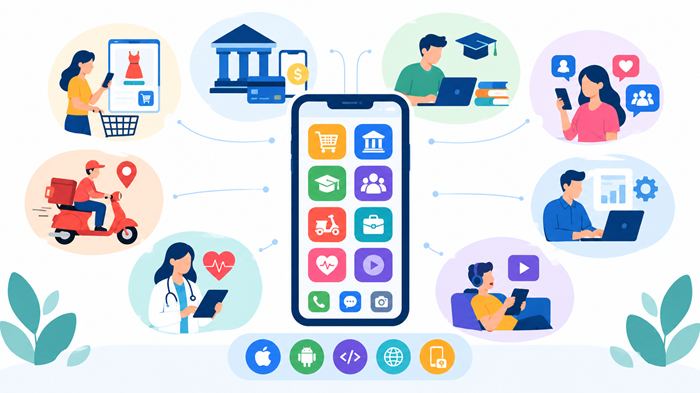
Mobile apps have become an important part of how people shop, communicate, learn, work, manage finances, book services, and interact with businesses. However, not every application is built the same way. Understanding the different types of mobile apps helps businesses choose the right technology, features, and development approach for their goals.
From native and hybrid solutions to web-based applications and specialized business tools, the different types of mobile apps serve different audiences and use cases. The right choice depends on factors such as performance, budget, platform requirements, security, scalability, and the experience a business wants to provide.
Key Takeaways
-
Different types of mobile apps are designed for different business goals, users, and technical requirements.
-
Native, hybrid, web, cross-platform, and progressive web applications each have distinct advantages.
-
Choosing the right application type can improve performance, usability, scalability, and development efficiency.
-
Accessibility, analytics, security, and user experience should be considered before development begins.
What Are the Different Types of Mobile Apps?
The term mobile application covers a broad range of digital products. Some are designed specifically for Android or iOS, while others work across multiple platforms or operate primarily through a web browser.
The different types of mobile apps can be classified by their development technology, operating environment, purpose, and functionality. The most common categories include native apps, hybrid apps, web apps, cross-platform apps, progressive web apps, and business-focused applications.
There is no universal option that works for every company. A banking application may require advanced security and native device capabilities, while a content-based application may benefit from a web-based approach.
1. Native Mobile Apps
Native applications are created specifically for a particular operating system, such as Android or iOS. They typically use the programming languages, development tools, and platform capabilities associated with that operating system.
Native applications can provide excellent performance and access to device features such as cameras, GPS, biometric authentication, notifications, contacts, and sensors.
One major advantage is the ability to create an experience that closely follows the design and interaction standards of the target platform. This makes native technology a popular choice for applications where speed, reliability, and deep hardware integration matter.
For businesses exploring the different types of mobile apps, native development is often worth considering for performance-intensive products, financial services, gaming platforms, and applications with advanced device requirements.
2. Hybrid Mobile Apps
Hybrid applications combine web technologies with a native application structure. They can use technologies such as HTML, CSS, and JavaScript while being packaged to operate within a mobile application environment.
This approach can reduce development effort when compared with creating completely separate native applications. Hybrid solutions may also allow organizations to reuse portions of their existing web technology.
Android documentation describes WebView as a way to incorporate web content into an application, including scenarios where web and native components work together.
Hybrid technology can therefore be useful for companies that need a balance between web-based development and mobile functionality.
3. Mobile Web Apps
Mobile web applications run through a mobile browser instead of requiring a traditional app installation. They are essentially websites designed and optimized to deliver an application-like experience on smartphones and tablets.
One advantage is accessibility. Users can generally reach the service through a browser without downloading an application from an app marketplace.
Mobile web apps can work well for publishing platforms, information services, booking systems, customer portals, and other products where broad accessibility is more important than extensive device integration.
Apple also supports connections between websites and native applications through associated domains, showing how browser and application experiences can complement each other.
4. Cross-Platform Mobile Apps
Cross-platform applications are built with technologies that allow developers to create software for multiple operating systems from a shared codebase.
This approach can help businesses maintain consistency across Android and iOS while potentially reducing duplicated development work. It can also simplify maintenance because changes to shared functionality may be managed within one primary codebase.
Cross-platform solutions are among the different types of mobile apps commonly considered by startups and growing companies that want to reach users on multiple platforms without maintaining entirely separate development projects.
The final decision should still consider performance requirements, platform-specific functionality, long-term maintenance, and the skills available within the development team.
5. Progressive Web Apps
Progressive Web Apps, commonly called PWAs, combine characteristics of websites and installed applications. They are delivered through web technologies but can provide features associated with an application-like experience.
Depending on the implementation and browser capabilities, PWAs can support features such as installation, offline experiences, notifications, and responsive interfaces.
They can be particularly useful for businesses that want to reach users through search and the web while also offering a more engaging mobile experience.
PWAs may not replace native applications in every situation, especially where extensive hardware access or demanding performance is required. However, they provide another practical option among the different types of mobile apps.
6. Business and Enterprise Mobile Apps
Enterprise applications are created to support internal operations, employees, partners, or business customers. Their purpose may include communication, inventory management, field service, reporting, document management, sales, scheduling, or workflow automation.
Unlike consumer applications, enterprise software often prioritizes security, integration, administration, and productivity.
A company may create an internal application that connects employees with its CRM, ERP, inventory platform, or other business systems. This can reduce manual processes and provide employees with important information while they are away from a desk.
7. E-Commerce Mobile Apps
E-commerce applications allow customers to browse products, compare options, manage shopping carts, make payments, track orders, and receive personalized offers from a mobile device.
These applications often integrate payment gateways, customer accounts, product databases, analytics systems, inventory platforms, and notification services.
Among the different types of mobile apps, e-commerce applications stand out because the quality of the user experience can directly influence conversions and repeat purchases.
Fast navigation, clear product information, secure checkout, personalized recommendations, and reliable order tracking are particularly important features.
8. Social Networking and Communication Apps
Social networking applications are designed around interaction, communication, content sharing, or community participation.
Typical features include messaging, profiles, comments, media sharing, notifications, live communication, and personalized content feeds.
Communication applications may also use real-time technologies for voice calls, video calls, group conversations, and collaboration. Because users expect these services to be fast and dependable, performance and infrastructure planning are critical.
These are among the different types of mobile apps where user engagement and retention can be just as important as initial downloads.
9. On-Demand and Service Apps
On-demand applications connect customers with services when and where they need them. Common examples include transportation, food delivery, home maintenance, healthcare appointments, cleaning services, and local professional services.
These products frequently depend on location services, scheduling, payment processing, real-time status updates, and notifications.
A well-designed service application should make the complete customer journey straightforward, from discovering a provider to booking, payment, communication, and follow-up.
Businesses interested in understanding why local businesses should consider building mobile apps can also evaluate how a dedicated application could support customer retention and local service delivery.
10. Educational and Learning Apps
Educational applications support students, teachers, professionals, and organizations through digital learning experiences.
They can provide video lessons, quizzes, assessments, courses, progress tracking, discussion features, digital resources, and personalized learning paths.
The different types of mobile apps in education can range from simple reference tools to sophisticated learning management platforms.
Accessibility should be considered from the beginning rather than added after development. W3C provides guidance on applying WCAG principles to mobile applications, including native, mobile web, and hybrid applications.
For practical guidance, businesses can also explore how to design accessible mobile apps before beginning a new project.
How to Choose the Right Mobile App Type
Choosing among the different types of mobile apps requires more than comparing development costs. The application should be matched with the business model and the expectations of its intended users.
Consider Your Target Audience
Start by understanding who will use the application, what devices they use, how frequently they will interact with it, and which features matter most to them.
A customer-facing product may need an intuitive interface and personalized features, while an internal business application may prioritize workflow automation and security.
Define the Required Features
List essential features before selecting a technology. GPS, cameras, biometric authentication, offline functionality, push notifications, Bluetooth, payment processing, and real-time communication can influence the appropriate development approach.
Consider Performance Requirements
Performance becomes especially important for applications involving gaming, video, real-time communication, complex calculations, or intensive device interactions.
Native development may be preferable for highly performance-sensitive products, while cross-platform or web technologies can be suitable for many other use cases.
Think About Long-Term Maintenance
An application is not finished when it launches. Updates, bug fixes, operating system changes, security improvements, analytics, and new features will continue throughout its lifecycle.
The different types of mobile apps also have different maintenance considerations, so businesses should evaluate long-term development requirements rather than focusing only on the initial launch.
Why User Experience Matters Across App Types
Technology alone does not make an application successful. Navigation, content structure, speed, accessibility, visual hierarchy, and ease of completing tasks all contribute to the overall experience.
A useful application should make important actions easy to discover and reduce unnecessary steps. Consistent interactions also help users understand what to expect as they move through different screens.
Businesses wanting a deeper understanding of this subject can read how mobile apps transform customer experience for modern businesses.
Analytics also plays an important role after launch. Measuring acquisition, engagement, retention, conversions, and other meaningful metrics helps teams identify what is working and what needs improvement. A practical resource on how to measure mobile apps traffic with the right agency can help businesses approach measurement more strategically.
Work With Professional for Mobile App Developer
The right development partner can help with technology selection, user experience, functionality, testing, integrations, and long-term improvements.
JNA provides best mobile app development services for businesses looking to turn an application idea into a practical digital product.
For organizations comparing the different types of mobile apps, professional guidance can make the decision easier by connecting technical choices with business objectives. We vcan help businesses evaluate the appropriate approach rather than selecting a technology simply because it is popular.
Businesses can explore our mobile apps development services to learn more about available development solutions.
How the Most Popular Types of Mobile Apps Differ
The most popular types of mobile apps vary because businesses have different objectives. Native applications are often selected for high performance and platform-specific capabilities. Cross-platform solutions can help organizations reach multiple operating systems with shared development resources.
Web and progressive web applications can provide easier access through browsers, while hybrid applications can combine web technologies with native functionality.
Understanding these distinctions makes it easier to identify the right solution instead of assuming that one approach is suitable for every project.
Common Types of Mobile Apps Categories to Consider
When businesses organize the types of mobile apps categories, they can look at both technology and purpose.
Technology-based categories include:
Native
Hybrid
Cross-Platform
Mobile Web
Progressive Web Applications.
Purpose-based categories include:
E-Commerce
Education
Healthcare
Finance
Entertainment
Communication
Enterprise
Social Networking
On-Demand Services.
These classifications can overlap. An e-commerce product, for example, can also be a native or cross-platform application. The category describes what the application does, while the development approach describes how it is built.
What Do Mobile Apps Developers Consider Before Development?
Experienced mobile apps developers typically evaluate the target platforms, required functionality, integrations, security, scalability, accessibility, analytics, testing requirements, and expected user behavior before development begins.
The development approach should support both current requirements and future growth. A short-term decision that creates unnecessary technical limitations can increase maintenance costs later.
That is why planning is an important part of mobile apps development, especially for businesses building a product intended to serve customers for several years.
Final Thoughts
The different types of mobile apps give businesses several ways to create useful digital experiences. Native, hybrid, web, cross-platform, progressive web, enterprise, e-commerce, educational, social, and on-demand solutions all have different strengths.
The best option depends on the application’s purpose, audience, required features, budget, performance expectations, and long-term strategy.
Before development starts, define the user problem, identify essential features, choose the appropriate technology, and plan for accessibility, analytics, security, testing, and future updates. With the right strategy and development partner, the different types of mobile apps can become powerful tools for improving customer engagement, streamlining operations, and supporting business growth.
Frequently Asked Questions
1. What are the main types of mobile apps?
The main categories include native, hybrid, mobile web, cross-platform, progressive web, enterprise, e-commerce, social, educational, and on-demand applications.
2. Which mobile app type is best for a business?
The best choice depends on business goals, target users, required features, budget, performance needs, and long-term maintenance requirements.
3. Are native apps better than cross-platform apps?
Native apps can provide stronger platform-specific performance, while cross-platform apps can simplify development across multiple operating systems.
4. What is a progressive web app?
A progressive web app is a web-based application that can provide an app-like experience through features such as installation, responsive design, and offline capabilities.
5. Why is mobile app accessibility important?
Accessibility helps more people use an application effectively and supports inclusive experiences across different abilities and mobile usage conditions.