

How to Measure Mobile Apps Traffic With the Right Agency
September 8, 2026
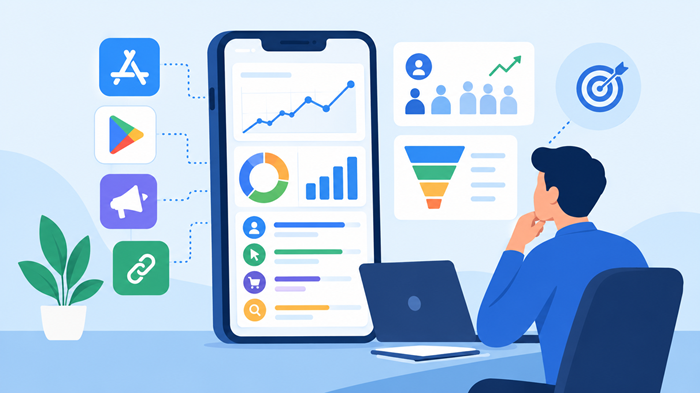
Measuring mobile apps traffic is about more than counting downloads or opening a dashboard once a month. The right measurement process connects acquisition, engagement, retention, and conversions so you can see where users come from, what they do, and which channels actually support business growth. With the right partner, you can turn scattered analytics into practical decisions that improve your product and marketing performance.
Key Takeaway
-
Track app traffic from acquisition through conversion, not downloads alone.
-
Combine analytics, attribution, engagement, and retention data for a clearer picture.
-
Set measurable goals before choosing tools or reporting dashboards.
-
Work with an agency that can connect app development with ongoing measurement.
What Is Mobile Apps Traffic?
Mobile apps traffic refers to the flow of users interacting with an application, including new visitors, returning users, sessions, screens viewed, and actions completed. Unlike website traffic, app activity is typically measured through events and user journeys inside the product.
A useful report can show where users originated, how frequently they return, which features they use, and where they stop progressing.
For example, 20,000 installs may look impressive, but the result means little if only a small percentage of users open the app again. A smaller acquisition campaign with stronger engagement may deliver better business results.
Why Measuring Mobile Apps Traffic Matters
Tracking mobile apps traffic helps identify which campaigns, referral sources, app-store activities, and user journeys are performing. It also gives product teams evidence for deciding which features deserve attention.
Connect Traffic to Business Goals
Start with the outcome you want from the application. It might be purchases, bookings, subscriptions, lead generation, account creation, or repeat usage.
Once the goal is clear, the agency can map events and funnels around it. This turns mobile apps traffic into a business measurement system rather than a collection of disconnected statistics.
Understand User Quality
Traffic volume can be misleading. Ten thousand users who leave after one session may be less valuable than 2,000 users who return every week.
Look at engagement, retention, conversion rate, session frequency, and revenue alongside acquisition volume. These metrics help determine whether your marketing is attracting the right audience.
Which Metrics Should You Track?
The right metrics depend on your business model, but several measurements are useful across most applications.
Acquisition Metrics
Monitor installs, acquisition source, campaign performance, cost per acquisition, and attribution. These numbers help explain how people discover the app and which channels deserve further investment.
Engagement Metrics
Track daily and monthly active users, sessions, session duration, feature usage, and important in-app events. Engagement data shows whether people find the product useful after installing it.
Retention Metrics
Retention measures how many users come back after their first interaction. Cohort analysis is especially useful because it can reveal whether users acquired through different channels behave differently over time.
For practical ideas on keeping users engaged, explore effective retention strategies for mobile apps.
Conversion Metrics
Define the actions that matter most to revenue or growth. Depending on the application, this could include completing checkout, requesting a quote, booking a service, upgrading a plan, or submitting a lead.
A strong app traffic strategy connects these conversions to their original acquisition sources.
Revenue Metrics
For monetized applications, measure revenue per user, average transaction value, subscription performance, and customer lifetime value. These metrics help you compare traffic quality instead of simply comparing traffic volume.
How an Agency Measures Mobile Apps Traffic
A capable partner begins by creating a measurement plan before building reports. The plan should define events, conversion points, user properties, acquisition sources, and reporting requirements.
We provide mobile apps development services with analytics planning, so measurement is considered as part of the product rather than added as an afterthought.
Set Up Event Tracking
Event tracking records meaningful actions such as registration, search, product views, purchases, bookings, or content interactions. Naming events consistently is essential because poor tracking can make otherwise useful data difficult to interpret.
Use Attribution
Attribution helps identify which marketing source contributed to an install or conversion. Depending on the campaign, this may involve app-store data, advertising platforms, deep links, or mobile measurement solutions.
The objective is to understand the path from acquisition to action. That makes app traffic easier to evaluate across campaigns.
Build Conversion Funnels
A funnel can show how users move from installation to registration, activation, purchase, or another desired action. When a large percentage leaves at one stage, teams have a clear area to investigate.
Funnel analysis becomes more useful when combined with audience segments. For instance, users from paid search may behave differently from users who arrive through referrals.
Create Cohort Reports
Cohorts group users according to a shared characteristic, such as acquisition date, campaign, location, or first action. Comparing cohorts can reveal whether newer users are becoming more engaged or whether campaign quality is declining.
Cohorts help evaluate mobile apps traffic over time by separating new-user growth from existing-customer behavior.
Choosing the Right Mobile Apps Agency
The agency should understand both product development and measurement. A strong technical team still needs to interpret user behavior.
Look for experience with analytics architecture, event tracking, attribution, dashboards, and privacy-conscious data practices.
You should also ask how the agency defines success. A good partner will want to understand your business objectives before recommending metrics or reporting tools.
It is equally important to discuss app development risks, particularly when analytics, third-party integrations, and user data are part of the product. Planning for technical and operational risks early can prevent expensive problems later.
Make Analytics Part of the Product
Analytics should not be treated as a separate marketing task. Tracking requirements can influence screen flows, event names, user permissions, and backend architecture.
When development and measurement are planned together, teams can collect cleaner data and reduce the need for costly tracking fixes later.
Accessibility should also be considered during product planning. If you are reviewing usability across different audiences, this guide on how to design accessible mobile apps that work for all can help teams think beyond basic functionality.
How to Turn Traffic Data Into Better Decisions
Data becomes useful when it leads to a specific action. Instead of reporting that app traffic increased by 20%, ask what caused the increase and whether the new users are valuable.
If a campaign produces many installs but weak retention, adjust targeting or onboarding. If a feature attracts strong engagement but poor conversion, review the user journey around that feature.
JNA can help businesses approach measurement as an ongoing process: define goals, implement tracking, review performance, identify friction, and refine the product based on evidence.
Review Data Regularly
Set a reporting schedule that matches your business cycle. Weekly reviews can help marketing teams react quickly, while monthly or quarterly reviews can uncover broader trends.
Avoid changing several variables at once. When possible, make a focused change, measure the result, and document what happened.
Segment Before You Optimize
Averages can hide important differences. Compare new and returning users, acquisition channels, and customer types.
This can reveal that one audience has excellent engagement while another needs a different onboarding or marketing approach.
Common Measurement Mistakes to Avoid
Focusing only on downloads is a common mistake because installs do not show whether users activate, engage, convert, or return. Tracking too many events without a clear purpose can also make reports harder to interpret. Keep event names consistent and treat attribution as directional data, especially when privacy restrictions or platform limitations affect measurement.
For businesses considering a new app, it can also be useful to understand why local businesses should consider building mobile apps, especially when customer engagement and repeat interactions matter.
Conclusion
Measuring mobile apps traffic correctly gives businesses a clearer view of how users discover, experience, and respond to an application. The strongest approach goes beyond installs by connecting acquisition data with engagement, retention, conversions, and revenue.
Choosing the right agency can make that process more reliable. With thoughtful tracking, useful reporting, and continuous optimization, your app data can become a practical guide for improving both marketing performance and the product itself.
Frequently Asked Questions
1. What is the most important mobile apps traffic metric?
There is no single metric; acquisition, engagement, retention, and conversion should be evaluated together.
2. Can an agency track where app users come from?
Yes, an agency can implement attribution and campaign tracking to connect users with acquisition sources where supported.
3. How often should mobile app traffic be measured?
Core dashboards should be monitored regularly, with deeper performance reviews typically conducted monthly or quarterly.
4. Are downloads enough to measure app success?
No, downloads should be evaluated alongside activation, engagement, retention, conversions, and revenue.
5. Can JNA help with both app development and measurement?
Yes, JNA can support app development while helping teams plan analytics and measure user activity.