

What CRO Means for Business Growth?
April 22, 2026
If you’re getting traffic to your website but not enough leads, calls, or sales, the problem often is not visibility alone. It’s conversion. You can spend time and money bringing people to your site, but if those visitors do not take action, your marketing is doing only half the job.
That is where conversion rate optimization, or CRO, comes in.
Conversion rate optimization is the process of improving your website, landing pages, and marketing funnel so more of your existing visitors become customers. Instead of chasing more traffic right away, CRO helps you make better use of the traffic you already have. For small businesses, service providers, and growing brands, that can mean lower acquisition costs, better return on ad spend, and more revenue without constantly increasing your budget.
In this guide, we’ll break down what conversion rate optimization really means, why it matters, what affects your conversion rate, and how to improve it in a practical way. If you’ve heard the term before but never got a clear explanation, this is the version that makes it easy to understand and easier to apply.
What Is Conversion Rate Optimization?
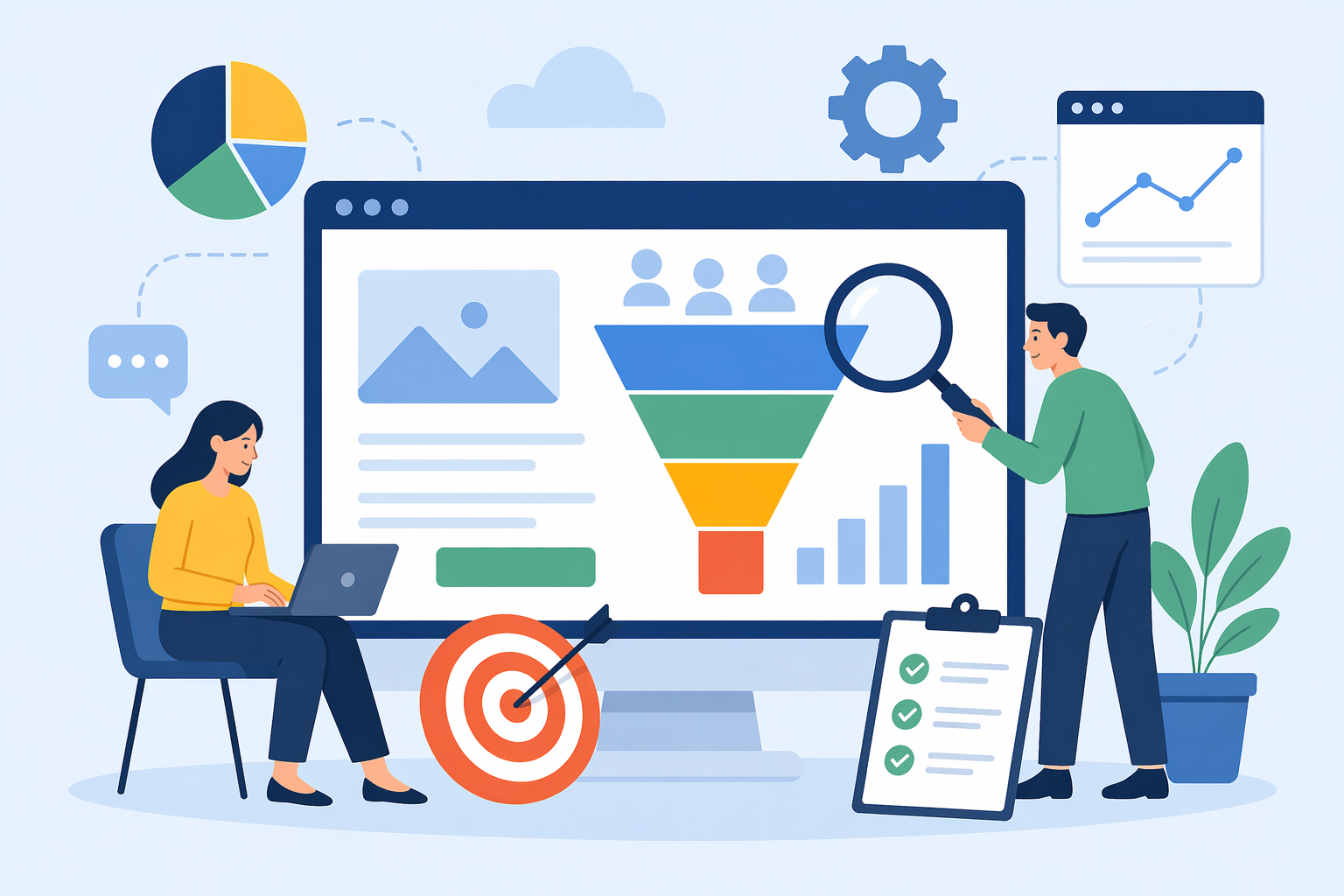
Conversion rate optimization is the process of increasing the percentage of website visitors who complete a desired action.
That action could be filling out a contact form, booking a consultation, making a purchase, calling your business, signing up for a newsletter, or requesting a quote. In simple terms, CRO helps turn more visitors into leads or customers.
Your conversion rate is calculated by dividing the number of conversions by the total number of visitors, then multiplying by 100.
For example, if 1,000 people visit your page and 30 of them fill out your form, your conversion rate is 3 percent.
CRO focuses on improving that percentage through smart changes based on user behavior, data, and testing. It is not guesswork, and it is not just about making a page look nicer. Good conversion optimization improves clarity, trust, usability, and relevance so people feel more confident taking the next step.
Why CRO Matters for Business Growth
A lot of businesses focus heavily on traffic. More clicks, more impressions, more visitors. That can be useful, but traffic alone does not pay the bills.
If your website gets plenty of visits but very few inquiries or purchases, you do not have a traffic problem. You have a conversion problem.
CRO matters because it helps you get more value from the marketing you are already doing. When your website converts better, every channel becomes more effective. Your SEO traffic becomes more valuable. Your paid ads produce stronger returns. Your email campaigns lead to more action. Even your referrals are more likely to turn into real business.
CRO helps you do more with what you already have
One of the biggest benefits of CRO is efficiency.
Let’s say two businesses each get 2,000 monthly visitors. One converts at 1 percent, and the other converts at 4 percent. The second business gets four times as many leads from the same traffic volume.
That difference can completely change how fast a business grows.
CRO improves marketing ROI
If you’re investing in content, advertising, or social media, CRO helps you protect that investment.
Driving traffic to a weak landing page is like pouring water into a leaky bucket. Conversion optimization helps fix the leaks. That is why CRO and paid advertising often go hand in hand. Before increasing ad spend, it helps to understand the Google Ads basics that influence how traffic turns into real business.
CRO creates a better user experience
This is the part many people overlook.
A high-converting website is usually easier to use. It answers questions faster. It builds trust more clearly. It removes confusion. It makes decisions simpler.
So while CRO is often discussed in terms of numbers, it is also about creating a better experience for real people.
What Counts as a Conversion?
A conversion is any action that supports your business goals.
That does not always mean a sale. Depending on your business model, a conversion might be:
- Submitting a contact form
- Booking an appointment
- Calling your office
- Downloading a guide
- Signing up for a free trial
- Making a purchase
- Requesting a quote
- Joining your email list
The important part is defining what matters most for your business.
For a service-based business, a consultation request may be the main conversion. For an e-commerce store, it is likely a completed purchase. For a local business, it might be a phone call or map click.
When you know your primary conversion goal, you can optimize your pages with much more focus.
What Affects Your Conversion Rate?
There is no single factor that determines whether people convert. It usually comes down to a mix of relevance, trust, design, messaging, and usability.
Here are the biggest factors that influence conversion performance.
Traffic quality
Not all traffic is equal.
If the wrong people are landing on your page, your conversion rate will stay low no matter how polished the page looks. A big part of CRO is making sure your offer matches visitor intent.
Someone searching for pricing, for example, is in a very different stage than someone searching for general information. Your content and page experience should reflect that.
Clarity of your message
Visitors should understand what you offer within seconds.
If your headline is vague, your value proposition is weak, or your copy buries the point, people will leave. Strong conversion pages make the offer clear right away. They explain what you do, who it is for, and what the next step should be.
Trust signals
People rarely convert on a site they do not trust.
Trust can come from testimonials, reviews, case studies, recognizable clients, security indicators, clear contact information, and polished design. Even simple elements like professional photos and transparent messaging can make a difference.
Page speed and mobile usability
If a page loads slowly or feels frustrating on a phone, conversions drop.
A large share of traffic now comes from mobile devices, and users are quick to leave when something feels inconvenient. CRO includes making sure the user experience works smoothly across screens.
Offer strength
Sometimes the issue is not the page. It is the offer.
If your pricing is unclear, your call to action is weak, or your offer does not feel compelling, people will not act. CRO often involves testing different offers, guarantees, bundles, or messaging angles to make the next step more appealing.
Common Signs Your Website Has a CRO Problem
Many businesses assume their site is “fine” because it looks modern. But appearance alone does not guarantee performance.
Here are some signs your website may need conversion rate optimization:
You get traffic but few inquiries
If analytics show visits coming in but your form submissions, bookings, or calls stay low, the problem is likely somewhere in the page experience or messaging.
Your bounce rate is high
A high bounce rate can mean visitors are not finding what they expected, or your page is not engaging enough to keep them around.
People click but do not finish
If users start filling out a form but abandon it, or if they add products to a cart and leave, friction may be getting in the way.
Your landing pages underperform
This is especially common with paid ads.
Businesses often send paid traffic to pages that are too general, too cluttered, or too slow. If you are running campaigns and not seeing enough return, both your ad setup and landing pages may need work. That is also why choosing the right PPC agency matters when you want traffic and conversion strategy working together.
CRO vs SEO: What’s the Difference?
CRO and SEO are closely connected, but they are not the same thing.
SEO focuses on getting more qualified visitors from search engines. CRO focuses on turning those visitors into leads or customers once they arrive.
You need both.
A website with strong SEO but weak conversion performance may get traffic and still struggle to grow. A website with strong CRO but no visibility may convert well but never attract enough visitors to scale.
The best results usually come when SEO and CRO support each other. You attract the right people, then make it easy for them to take action.
The Core Elements of Effective CRO
If you want to improve conversion rates, focus on the fundamentals before chasing advanced tactics.
Strong headlines
Your headline should clearly communicate value.
A good headline tells visitors they are in the right place. It should be specific, easy to understand, and relevant to the traffic source.
Clear calls to action
A call to action should tell people exactly what to do next.
“Submit” is weak. “Book a consultation” is stronger. “Get a free quote” is more compelling. Effective CTAs feel direct and useful.
Simple page structure
Clutter kills conversions.
Pages should be easy to scan, visually balanced, and organized around one main goal. Too many options can create decision fatigue.
Social proof
Reviews, testimonials, and case studies reduce uncertainty.
They show visitors that other people have trusted your business and gotten results. This is especially important for service-based companies where the buyer is making a higher-trust decision.
Reduced friction
Every extra step creates resistance.
Long forms, confusing navigation, too many fields, weak mobile design, or unclear pricing can all lower conversion rates. Good CRO removes unnecessary friction so acting feels easier.
CRO Strategies That Actually Work
There is no one-size-fits-all formula, but there are several CRO strategies that consistently improve results when applied well.
Improve your headline and above-the-fold section
The first screen matters more than most businesses realize.
Your visitor should quickly understand what you do, why it matters, and what action to take next. If your opening section is generic, conversions will suffer.
Tighten your copy
Many websites say too much without saying anything clearly.
Good CRO copy is focused, specific, and easy to read. It answers objections, highlights benefits, and keeps momentum moving toward the call to action.
Make forms easier to complete
If your form asks for too much information too early, people will hesitate.
Shorter forms often convert better, especially for first contact. Ask only for what you need.
Use real proof
Screenshots, testimonials, reviews, and case studies all help.
Generic claims like “we deliver amazing results” do not carry much weight on their own. Concrete proof does.
Test one change at a time
CRO works best when you test thoughtfully.
That might mean trying two headline versions, two button texts, or two page layouts to see which performs better. Small changes can lead to meaningful gains when backed by data.
Why DIY CRO Often Falls Short
It is tempting to tweak your site based on instinct alone.
Sometimes that works, but often it leads to random changes without a clear strategy. Businesses end up rewriting copy, moving buttons, or redesigning pages without knowing whether those changes actually helped.
That is one reason DIY marketing mistakes can quietly limit growth. Conversion optimization works best when it is guided by analytics, user behavior, testing, and a clear understanding of buyer intent.
You do not need a massive enterprise setup to improve conversion performance. But you do need a process.
How to Start Improving CRO Today
If you want to make progress without overcomplicating it, start here.
Review your top landing pages
Look at the pages where most of your traffic enters. Are they clear? Fast? Focused on one action? Do they match what the visitor expected to find?
Check your calls to action
Are your CTAs specific and easy to spot? Are they repeated naturally throughout the page? Do they feel low-friction enough for where the visitor is in the decision process?
Look at your mobile experience
Go through your own website on your phone. If anything feels slow, cramped, awkward, or unclear, your visitors probably feel it too.
Use analytics and heatmaps
Data helps you see where people drop off, what they click, and where attention fades. That makes your CRO decisions much smarter.
Prioritize your biggest bottlenecks
You do not need to optimize every page at once. Start with the pages that get the most traffic or drive the most business value.
Final Thoughts on Conversion Rate Optimization
Conversion rate optimization is not about tricks, hacks, or squeezing people into action.
At its best, CRO is about clarity. It helps your website communicate better, build trust faster, and make the next step easier for the right visitor. That is what drives more inquiries, more sales, and better marketing performance over time.
If your website already gets traffic, CRO may be one of the fastest ways to improve results without constantly increasing your budget. And if your traffic is still growing, getting your conversion strategy right early can make every future marketing effort more effective.
In other words, CRO is not just a technical marketing term. It is a practical growth tool.
FAQ About Conversion Rate Optimization
What is a good conversion rate?
A good conversion rate depends on your industry, traffic source, and offer. For many businesses, anything between 2 percent and 5 percent can be healthy, but some pages perform far higher when traffic is highly targeted.
Is CRO only for e-commerce websites?
No. CRO is valuable for service businesses, local companies, consultants, agencies, SaaS brands, and e-commerce stores. Any business that wants more actions from its website can benefit from conversion optimization.
How long does CRO take to work?
Some improvements can make an impact quickly, especially if you fix major usability or messaging issues. More advanced CRO usually works best over time through ongoing testing and refinement.
Do I need more traffic before focusing on CRO?
Not necessarily. If you already have enough visitors to see patterns in behavior, CRO can help now. In many cases, improving conversions first makes future traffic growth more profitable.
What is the difference between CRO and UX?
User experience, or UX, focuses on how people interact with your site. CRO focuses on increasing the percentage of users who take action. The two overlap a lot, because a smoother user experience often leads to better conversions.
Can CRO help lower ad costs?
Yes. If your landing pages convert better, you get more value from the same ad spend. That can improve return on investment and make your overall campaigns more efficient.