

Why DIY Marketing Slows Down Business Growth
March 17, 2026
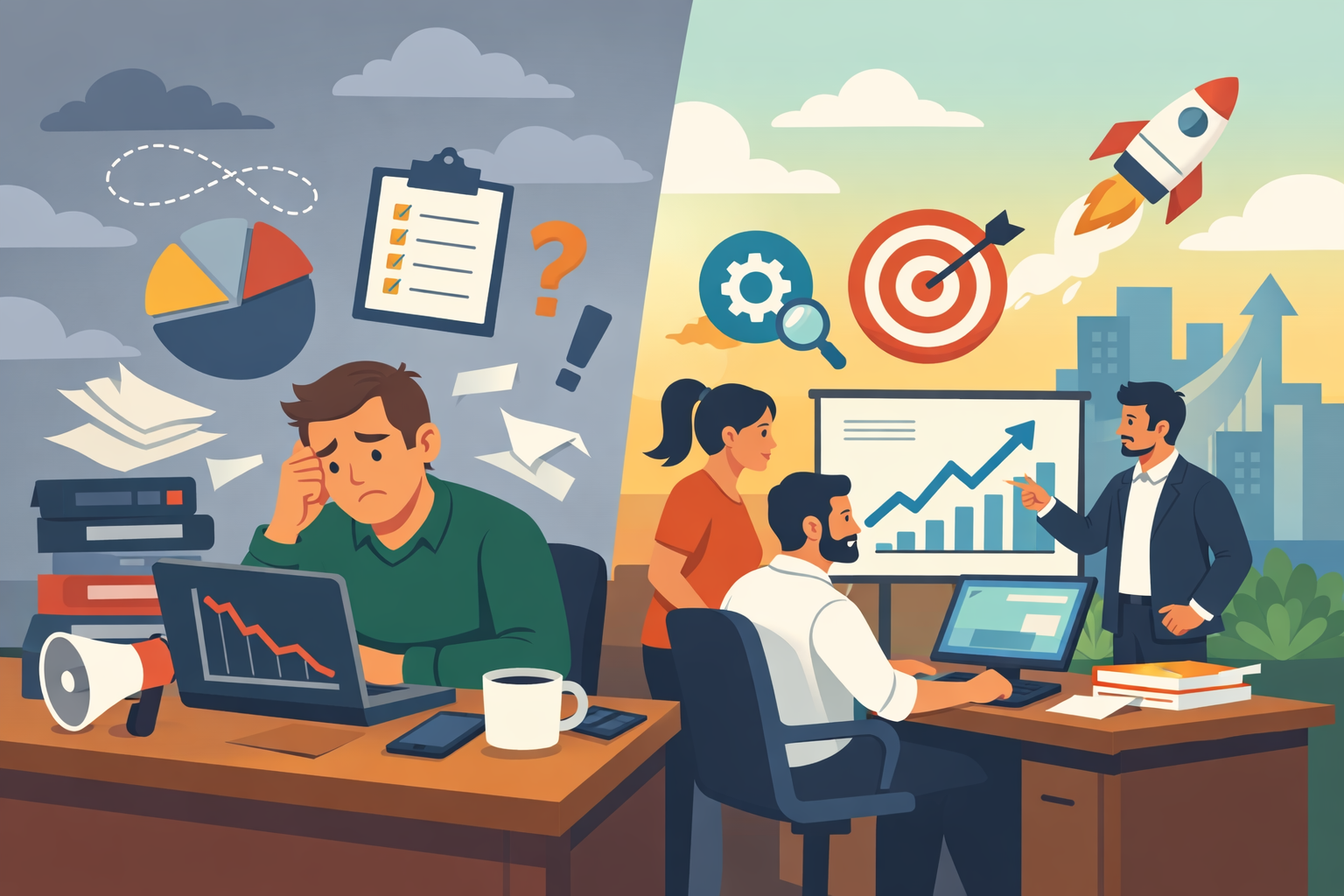
Digital marketing has never been more accessible. With countless tutorials, tools, and platforms available online, many business owners feel confident handling their own marketing. At first glance, do-it-yourself marketing appears to be a smart way to save money while maintaining control over brand messaging.
However, as many companies eventually discover, DIY marketing often creates more problems than it solves. What starts as a cost-saving strategy can quietly limit visibility, reduce lead generation, and slow down overall business growth.
Successful marketing requires strategy, data, creativity, and technical expertise. Without these elements working together, businesses risk wasting time, missing opportunities, and falling behind competitors.
This article explores why DIY marketing often hurts business growth and what businesses should consider if they want to build sustainable, scalable marketing results.
The Appeal of DIY Marketing
For many entrepreneurs and small businesses, the decision to manage marketing internally comes from good intentions. The idea is simple: learn the basics, use affordable tools, and handle marketing tasks alongside other responsibilities.
At the beginning, this approach can seem manageable.
Lower Upfront Costs
Hiring professionals or agencies requires investment. When budgets are tight, doing the work yourself appears to be the most economical option.
But while DIY marketing may reduce immediate expenses, it often introduces hidden costs in the form of wasted ad spend, missed leads, and lost growth opportunities.
Access to Marketing Tools
Modern platforms make marketing easier than ever. Website builders, advertising platforms, and analytics dashboards promise simple setup and automation.
These tools are powerful, but they still require knowledge and experience to use effectively.
Control Over Brand Messaging
Many business owners feel more comfortable managing their own marketing because it keeps messaging close to the brand.
While that level of control is valuable, strategy and execution still need professional expertise to deliver measurable results.
Marketing Is More Complex Than It Looks
Digital marketing involves far more than posting on social media or running a few online ads. Every channel works best when it is part of a coordinated strategy.
Without a clear plan, businesses often end up spreading their efforts too thin.
Strategy Comes Before Tactics
One of the most common DIY marketing mistakes is focusing on tactics before strategy.
Posting content, launching ads, or redesigning a website can all be useful actions, but they only produce results when they support a broader marketing strategy.
Effective marketing strategies identify:
- Target audiences
- Customer intent
- Competitive positioning
- Conversion goals
- Channel prioritization
Without this foundation, marketing activities rarely generate consistent results.
Data Interpretation Requires Expertise
Marketing platforms generate large amounts of data, but interpreting that data correctly requires experience.
Clicks, impressions, engagement rates, and conversion metrics can easily be misunderstood. Business owners managing their own campaigns may adjust strategies based on incomplete or misleading information.
Professional marketers use data to guide decision-making, optimize campaigns, and continuously improve performance.
Time Is One of the Biggest Hidden Costs
Running a business already demands attention across multiple areas, including operations, customer service, finance, and product development.
Marketing adds another layer of complexity.
Learning Marketing Takes Significant Time
DIY marketing requires learning a wide range of disciplines, including:
- Search engine optimization
- content marketing
- advertising platforms
- analytics tools
- conversion optimization
- website performance
Each area can take months or even years to master.
Time spent learning marketing is time that could otherwise be used to improve the business itself.
Execution Requires Consistency
Marketing success depends on consistent effort.
Blog content needs regular updates. Advertising campaigns need ongoing optimization. SEO strategies require continuous refinement.
When business owners attempt to manage all of these responsibilities themselves, marketing often becomes inconsistent or neglected altogether.
Inconsistent Marketing Reduces Visibility
One of the most damaging consequences of DIY marketing is inconsistency.
Marketing platforms reward regular activity and strategic alignment. When efforts are sporadic, results quickly decline.
Search Engine Rankings Suffer
Search engines prioritize websites that demonstrate authority, relevance, and consistent updates.
Businesses that manage their own SEO often overlook technical factors such as site structure, keyword targeting, and internal linking.
Working with professional SEO services helps ensure that websites are properly optimized to compete in search results.
Advertising Campaigns Require Ongoing Optimization
Paid advertising can generate fast results, but it also requires careful management.
Ad targeting, bidding strategies, audience segmentation, and landing page performance all influence campaign success.
Without expertise, businesses may spend significant budgets without generating meaningful leads.
Companies that implement strategic targeted PPC advertising campaigns typically achieve far better results through proper testing and optimization.
DIY Marketing Often Produces Weak Messaging
Effective marketing communicates value clearly and persuasively.
Many DIY campaigns fail because messaging focuses too much on products or services instead of customer needs.
Customers Respond to Benefits
Marketing that resonates with audiences speaks directly to their problems, goals, and motivations.
Businesses handling their own marketing sometimes struggle to step outside their internal perspective. As a result, messaging may become overly technical or overly promotional.
Professional marketers understand how to translate business offerings into compelling benefits that attract and convert customers.
Brand Consistency Matters
Every marketing touchpoint should reinforce a consistent brand identity.
This includes:
- visual design
- tone of voice
- messaging structure
- customer experience
Working with teams that specialize in modern website design ensures that brand presentation remains cohesive and professional across digital platforms.
Technology and Platforms Change Constantly
Digital marketing evolves quickly.
Search engine algorithms change regularly. Advertising platforms update their targeting capabilities. Social media platforms introduce new formats and features.
For business owners already managing daily operations, keeping up with these changes becomes extremely difficult.
Algorithms Are Always Evolving
Search engines continuously refine how they rank websites. Strategies that worked a year ago may no longer produce results.
Professionals monitor these changes closely and adjust campaigns accordingly.
Without this awareness, DIY marketing strategies can quickly become outdated.
Advertising Platforms Require Continuous Learning
Platforms like Google Ads and Meta Ads introduce new tools, targeting options, and automation features frequently.
Businesses that do not stay up to date may unknowingly run inefficient campaigns that waste advertising budgets.
Websites Must Convert Visitors Into Customers
Driving traffic to a website is only half the challenge.
The real goal of marketing is converting visitors into customers.
Poor Website Structure Reduces Conversions
Many DIY websites are built quickly without considering conversion strategy.
Common problems include:
- unclear calls to action
- slow loading speed
- confusing navigation
- weak landing page structure
Conversion Optimization Requires Testing
Professional marketers use structured testing to improve conversion rates.
This includes testing different:
- headlines
- page layouts
- calls to action
- offers
- audience segments
DIY marketing rarely includes this level of analysis, which can significantly reduce the effectiveness of campaigns.
Businesses Risk Falling Behind Competitors
Perhaps the most significant risk of DIY marketing is competitive disadvantage.
While one company experiments with marketing strategies, competitors may already be working with experienced professionals.
Professional Marketing Moves Faster
Marketing agencies and specialists already understand:
- industry trends
- platform algorithms
- audience behavior
- campaign optimization
This experience allows them to launch and refine campaigns far more efficiently.
Competitive Markets Require Strategic Marketing
In competitive industries, marketing success depends on strategic positioning and precise execution.
Companies that rely solely on DIY marketing may struggle to gain visibility against competitors investing in professional expertise.
Businesses seeking faster growth often choose expert digital marketing services to develop comprehensive strategies that combine SEO, advertising, design, and conversion optimization.
When DIY Marketing Makes Sense
While DIY marketing has limitations, it can still be useful in certain situations.
Early-Stage Businesses
New startups may begin with DIY marketing while validating their products or services.
During this phase, basic marketing activities can help build early awareness and gather initial customer feedback.
Limited Campaigns
Some businesses may manage small marketing initiatives internally while outsourcing more complex strategies.
The key is recognizing when professional expertise becomes necessary to achieve meaningful growth.
Finding the Right Balance
Marketing does not have to be an all-or-nothing decision.
Many successful businesses combine internal efforts with external expertise.
Strategic Collaboration
Business owners bring valuable industry knowledge and insights about their customers.
Marketing professionals bring strategic frameworks, technical expertise, and data-driven optimization.
When these strengths are combined, marketing becomes far more effective.
Focus on What You Do Best
Business owners should spend their time developing products, improving services, and building customer relationships.
Marketing professionals can focus on creating the strategies that bring new customers through the door.
Final Thoughts
DIY marketing may seem like a practical way to save money, but it often slows business growth by limiting visibility, weakening messaging, and wasting valuable time.
Digital marketing has become a sophisticated discipline that requires strategy, analytics, creativity, and technical expertise. Businesses that rely entirely on trial-and-error marketing often struggle to generate consistent results.
By working with experienced professionals and implementing strategic marketing systems, businesses can unlock greater visibility, stronger customer engagement, and long-term growth.
Investing in the right marketing strategy is not simply an expense. It is one of the most powerful ways to build a scalable and sustainable business.