

Best Marketing Channels for Online Stores Today
April 28, 2026
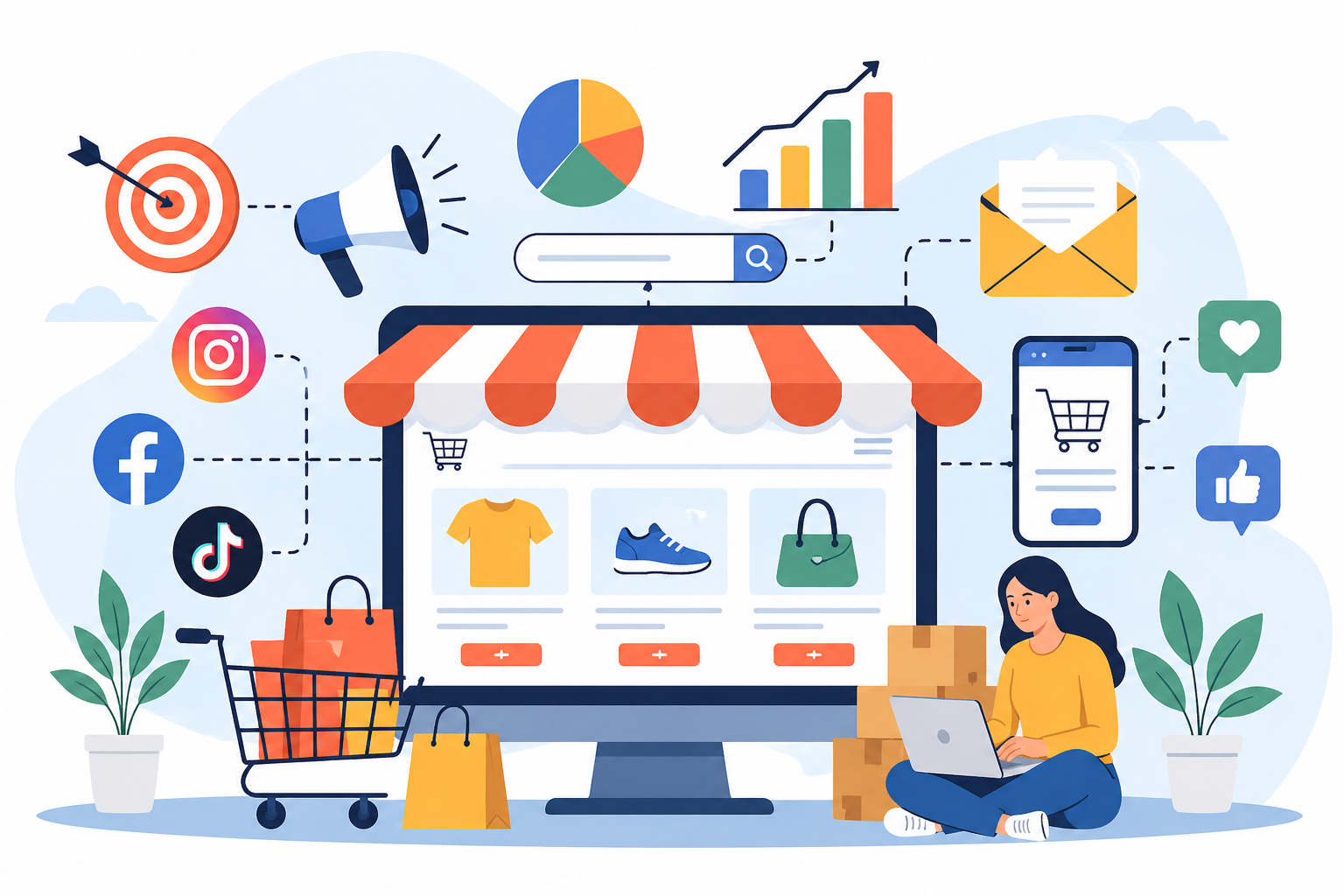
Running an online store is exciting, but getting consistent traffic and sales is where the real work begins. With so many digital marketing channels available, it can be difficult to know where to invest your time, budget, and energy.
The best marketing channels for online stores are the ones that attract the right shoppers, build trust, and move people closer to buying. Some channels are great for quick visibility, while others build long-term growth. The strongest ecommerce brands usually use a smart mix of both.
In this guide, we’ll break down the most effective online store marketing channels, how they work, when to use them, and how to choose the right strategy for your business.
Why Marketing Channels Matter for Online Stores
Your products may be excellent, your website may look great, and your pricing may be competitive. But if people cannot find your store, none of that matters.
Marketing channels are the paths customers use to discover, evaluate, and buy from your brand. These can include Google search, social media, email, paid ads, influencer content, marketplaces, and more.
Each channel plays a different role. Some introduce your brand to new customers. Others bring back shoppers who visited but did not buy. Some help build loyalty after the first purchase.
The goal is not to be everywhere. The goal is to be visible where your ideal customers already spend time and make buying decisions.
Search Engine Optimization for Long-Term Ecommerce Growth
Search engine optimization, or SEO, is one of the best marketing channels for online stores because it helps shoppers find your products through Google and other search engines.
When someone searches for “best leather tote bag,” “organic skincare set,” or “running shoes for flat feet,” they already have buying intent. Ranking for those searches can bring highly valuable traffic to your store.
SEO takes time, but it can become one of your most cost-effective channels.
What Ecommerce SEO Includes
Ecommerce SEO is more than adding keywords to product pages. It includes product descriptions, category pages, site speed, internal links, image optimization, technical structure, and helpful blog content.
A strong SEO strategy usually includes:
Keyword research for product and category pages
Optimized product titles and descriptions
Helpful buying guides and comparison content
Clean site navigation
Fast-loading pages
Mobile-friendly design
Schema markup for products and reviews
SEO is powerful because it keeps working even after the initial effort. A well-ranked category page can bring in traffic for months or years.
Paid Search Ads for High-Intent Shoppers
Paid search ads, especially Google Ads, are useful when you want to reach shoppers who are actively searching for products like yours.
Unlike social ads, which often interrupt people while they scroll, search ads appear when people are already looking for something specific. That makes paid search especially valuable for ecommerce stores with clear product demand.
For example, if someone searches “buy waterproof hiking backpack,” a well-placed ad can send them directly to your product or category page.
When Paid Search Works Best
Paid search works well when your products solve a clear problem or match common search terms. It is especially effective for stores selling practical, comparison-driven, or need-based products.
However, paid search can become expensive if campaigns are not managed carefully. You need strong keyword targeting, negative keywords, optimized landing pages, and clear conversion tracking.
Many online stores waste ad spend by sending traffic to weak pages or targeting broad keywords. Avoiding those marketing mistakes early can make a major difference in campaign performance.
Social Media Marketing for Brand Awareness
Social media is one of the most popular marketing channels for online stores because it helps brands build attention, personality, and community.
Platforms like Instagram, TikTok, Facebook, Pinterest, and YouTube allow ecommerce businesses to showcase products visually. This is especially useful for fashion, beauty, home decor, fitness, food, lifestyle, travel, and giftable products.
Social media is not only about posting product photos. It works best when you share useful, entertaining, or inspiring content that gives people a reason to follow your brand.
What to Post on Social Media
Online stores can use social media to share:
Product demos
Behind-the-scenes content
Customer reviews
How-to videos
Styling ideas
Before-and-after content
Seasonal promotions
Founder stories
User-generated content
The key is consistency. One post will rarely transform your business, but consistent content can build familiarity and trust over time.
Paid Social Ads for Scalable Traffic
Paid social ads are one of the fastest ways to get your online store in front of new audiences. Platforms like Meta, TikTok, Pinterest, and YouTube offer advanced targeting options that help brands reach people based on interests, behaviors, demographics, and engagement.
Paid social works especially well for visual products and impulse-friendly offers. If your product can be explained quickly through a strong image or video, paid social may be a great fit.
Why Creative Matters in Paid Social
The success of paid social often depends on the quality of your creative. A good ad needs to stop the scroll, communicate value quickly, and make the next step obvious.
Short videos, customer-style content, product demos, and problem-solution ads often perform well. Polished brand visuals can work, but overly staged content may feel less relatable.
Testing is essential. The best-performing ad is not always the one you expect, so stores should test different hooks, formats, offers, and audiences.
Email Marketing for Repeat Sales
Email marketing remains one of the highest-value channels for online stores because it gives you direct access to people who have already shown interest in your brand.
Unlike social media, where algorithms control visibility, email lets you communicate directly with your subscribers and customers.
Email is especially useful for turning first-time visitors into buyers, recovering abandoned carts, increasing repeat purchases, and promoting new products.
Essential Ecommerce Email Campaigns
Every online store should consider setting up key email flows, including:
Welcome series
Abandoned cart emails
Browse abandonment emails
Post-purchase follow-ups
Product recommendation emails
Win-back campaigns
Seasonal promotions
Review request emails
Email marketing becomes even more powerful when it is personalized. A customer who bought skincare should not receive the same follow-up as someone who bought travel accessories.
Segmentation helps you send more relevant messages, which can improve open rates, click-through rates, and sales.
SMS Marketing for Fast Customer Engagement
SMS marketing can be highly effective for online stores, especially for time-sensitive promotions, cart recovery, shipping updates, and product launches.
Text messages usually have high visibility because people check their phones frequently. However, SMS must be used carefully. Customers may unsubscribe quickly if messages feel too frequent or pushy.
SMS works best when it is short, useful, and timely. It should support your customer experience, not interrupt it.
Best Uses for SMS Marketing
SMS can be useful for:
Limited-time discounts
Abandoned cart reminders
Back-in-stock alerts
Order updates
VIP early access
Flash sales
Appointment or delivery reminders
Because SMS feels more personal than email, brands should respect that space. Focus on value, not volume.
Content Marketing for Building Trust
Content marketing helps online stores attract, educate, and convert customers through useful information. This can include blog posts, buying guides, comparison articles, videos, product tutorials, and gift guides.
Content marketing supports SEO, email, social media, and paid ads. It also helps customers feel more confident before buying.
For example, an online luggage store could publish guides on packing efficiently, choosing carry-on sizes, or finding the best bag for international trips.
This type of content attracts shoppers earlier in the buying journey and helps position your brand as helpful rather than purely promotional.
Influencer Marketing for Social Proof
Influencer marketing can help online stores build trust quickly by partnering with creators who already have engaged audiences.
This channel works best when the influencer’s audience closely matches your target customer. A smaller creator with strong engagement can often outperform a larger influencer with a broad but less connected audience.
Influencer marketing is especially useful for products that benefit from demonstration, personal experience, or lifestyle context.
How to Use Influencers Effectively
Instead of focusing only on follower count, look at audience quality, content style, engagement, and authenticity.
Good influencer campaigns often include:
Product reviews
Unboxing videos
Tutorials
Try-on hauls
Lifestyle integrations
Affiliate links
Discount codes
User-generated content rights
The best partnerships feel natural. If the creator would genuinely use the product, the recommendation is more likely to feel believable.
Affiliate Marketing for Performance-Based Growth
Affiliate marketing allows online stores to work with creators, publishers, bloggers, and partners who promote products in exchange for a commission.
This can be attractive because you usually pay based on results. Affiliates may drive traffic through blogs, videos, social media, newsletters, or product recommendation pages.
Affiliate marketing works well when your store has strong margins, a clear offer, and reliable tracking.
Who Can Be an Affiliate?
Affiliates can include:
Bloggers
Influencers
Review websites
Niche publishers
YouTubers
Email newsletter owners
Existing customers
Industry partners
The key is to provide affiliates with strong product information, brand assets, tracking links, and clear commission terms.
Marketplace Marketing for Extra Visibility
Many online stores sell through their own website, but marketplaces like Amazon, Etsy, Walmart Marketplace, and eBay can provide additional visibility.
Marketplaces already have built-in traffic, which can make it easier for shoppers to discover your products. However, competition can be intense, and fees can reduce profit margins.
Marketplace marketing works best when used strategically. It can help validate demand, reach new customers, and create another revenue stream.
Marketplace Pros and Cons
The main advantage is access to shoppers who are ready to buy. The downside is less control over branding, customer data, and the overall shopping experience.
For many ecommerce brands, marketplaces should support the main website rather than replace it completely.
Conversion Rate Optimization for Better Results
Conversion rate optimization, or CRO, is not always treated as a marketing channel, but it directly affects every channel you use.
If your store converts poorly, you will get weaker results from SEO, ads, email, and social media. Improving your website experience can make all your marketing more profitable.
CRO focuses on turning more visitors into customers.
What to Improve on Your Store
Common CRO improvements include:
Clear product photos
Better product descriptions
Faster checkout
Trust badges
Customer reviews
Simple navigation
Strong calls to action
Transparent shipping information
Easy returns policy
Mobile-friendly design
Small improvements can create meaningful results. For example, making your checkout process easier or improving product page clarity can increase sales without increasing traffic.
AI and Automation in Ecommerce Marketing
AI tools are changing how online stores plan campaigns, personalize experiences, write product descriptions, analyze customer data, and manage advertising.
Used well, AI can save time and improve decision-making. It can help identify patterns, segment customers, create content variations, and recommend products.
However, AI should support human strategy, not replace it. Your brand voice, customer understanding, and creative direction still matter.
Online stores that understand AI driven marketing can often move faster while staying more relevant to customer behavior.
Referral Marketing for Customer-Led Growth
Referral marketing encourages existing customers to recommend your store to friends, family, or colleagues.
This works because people often trust recommendations from people they know. A referral program can turn happy customers into a growth channel.
Common referral offers include store credits, discounts, free products, or loyalty points.
Why Referrals Work
Referral marketing is effective because it combines trust with incentive. Customers are more likely to share when the reward feels valuable and the process is simple.
A good referral program should be easy to understand, easy to share, and easy to redeem.
Retargeting Ads for Lost Shoppers
Most shoppers do not buy on their first visit. They may compare prices, read reviews, get distracted, or need more time.
Retargeting ads help bring those visitors back. These ads can target people who viewed a product, added something to cart, visited a category page, or engaged with your brand online.
Retargeting works best when the message matches the customer’s behavior. Someone who abandoned a cart may need a reminder, while someone who only viewed a product may need more proof or education.
Video Marketing for Product Confidence
Video marketing is one of the most useful channels for online stores because it helps customers see products in action.
Photos are important, but videos can answer questions faster. They can show size, texture, use cases, movement, quality, and real-life context.
Video is especially helpful for products that require explanation or demonstration.
Video Ideas for Online Stores
Strong ecommerce video ideas include:
Product demos
Comparison videos
How-to tutorials
Customer testimonials
Founder videos
Behind-the-scenes clips
Packaging videos
Frequently asked question videos
These videos can be used across social media, product pages, email campaigns, ads, and YouTube.
Local and Niche Marketing Channels
Not every online store needs a global audience. Some ecommerce brands serve a specific region, industry, or customer type.
For example, online stores serving travel professionals, local communities, hobby groups, or specialized industries may benefit from highly targeted marketing instead of broad campaigns.
A niche approach often leads to better messaging because you can speak directly to the needs of a specific audience. For travel-related ecommerce or service brands, travel agent marketing can show how focused digital strategies help reach the right buyers more effectively.
How to Choose the Best Marketing Channels
The best marketing channels for your online store depend on your product, audience, budget, margins, and growth stage.
A new store may need social media, paid ads, and influencer content to create awareness quickly. A more established store may focus on SEO, email, affiliate marketing, and CRO to improve long-term profitability.
Ask yourself:
Where do my customers spend time?
How do they search for products?
Do they need education before buying?
Is my product visual or practical?
Do I need quick traffic or long-term growth?
What channels can I manage consistently?
Your answers will help you choose a focused strategy instead of spreading yourself too thin.
A Strong Channel Mix for Most Online Stores
While every ecommerce business is different, many online stores benefit from a mix of short-term and long-term channels.
A practical channel mix may include:
SEO for long-term organic traffic
Paid ads for faster visibility
Email for retention and repeat sales
Social media for awareness and community
Influencer marketing for trust and content
CRO for improving sales performance
This combination helps your store attract new shoppers, nurture interest, and increase customer lifetime value.
As new platforms and buying behaviors emerge, it also helps to stay aware of marketing trends ahead so your strategy does not fall behind.
When to Get Help With Ecommerce Marketing
Managing multiple marketing channels can become overwhelming. Product sourcing, fulfillment, customer service, website updates, content creation, ad testing, email automation, and analytics all take time.
If your store is growing or you want a more structured strategy, working with a digital marketing team can help you prioritize the channels that matter most.
You do not need every channel at once. You need the right channels working together with a clear plan, consistent execution, and measurable goals.
For stores that need practical support without a one-size-fits-all approach, flexible digital marketing can help connect traffic, content, ads, and conversion strategy around your budget.
Truly Flexible Digital Marketing Services for Every Budget
Conclusion
The best marketing channels for online stores are not always the trendiest ones. They are the channels that help your ideal customers discover your products, trust your brand, and feel confident enough to buy.
SEO builds long-term visibility. Paid ads create faster traffic. Email and SMS bring customers back. Social media and influencers build awareness and trust. Content marketing educates buyers. CRO improves the value of every visitor.
The strongest ecommerce strategy usually combines several channels in a way that fits your audience, product, and budget. Start focused, measure carefully, and improve over time. That is how online stores turn marketing activity into real growth.
FAQ
What is the best marketing channel for an online store?
The best channel depends on your product and audience, but SEO, paid ads, email marketing, and social media are often the most valuable starting points for online stores.
Is SEO worth it for ecommerce websites?
Yes, SEO is worth it because it helps your store attract shoppers who are already searching for products like yours. It takes time, but it can become a strong long-term traffic source.
Are paid ads good for new online stores?
Paid ads can be useful for new stores because they bring traffic quickly. However, your product pages, pricing, offer, and checkout process should be strong before spending heavily.
How important is email marketing for ecommerce?
Email marketing is very important because it helps turn visitors into buyers and first-time customers into repeat customers. It is one of the most effective retention channels.
Should online stores use influencer marketing?
Yes, influencer marketing can work well when the creator’s audience matches your target customer. It is especially useful for visual products, lifestyle brands, and trust-building campaigns.
How many marketing channels should an online store use?
Most online stores should start with a few focused channels instead of trying everything at once. Once those channels are working, you can expand into new ones.