

How AI Is Reshaping Digital Marketing Today
April 21, 2026
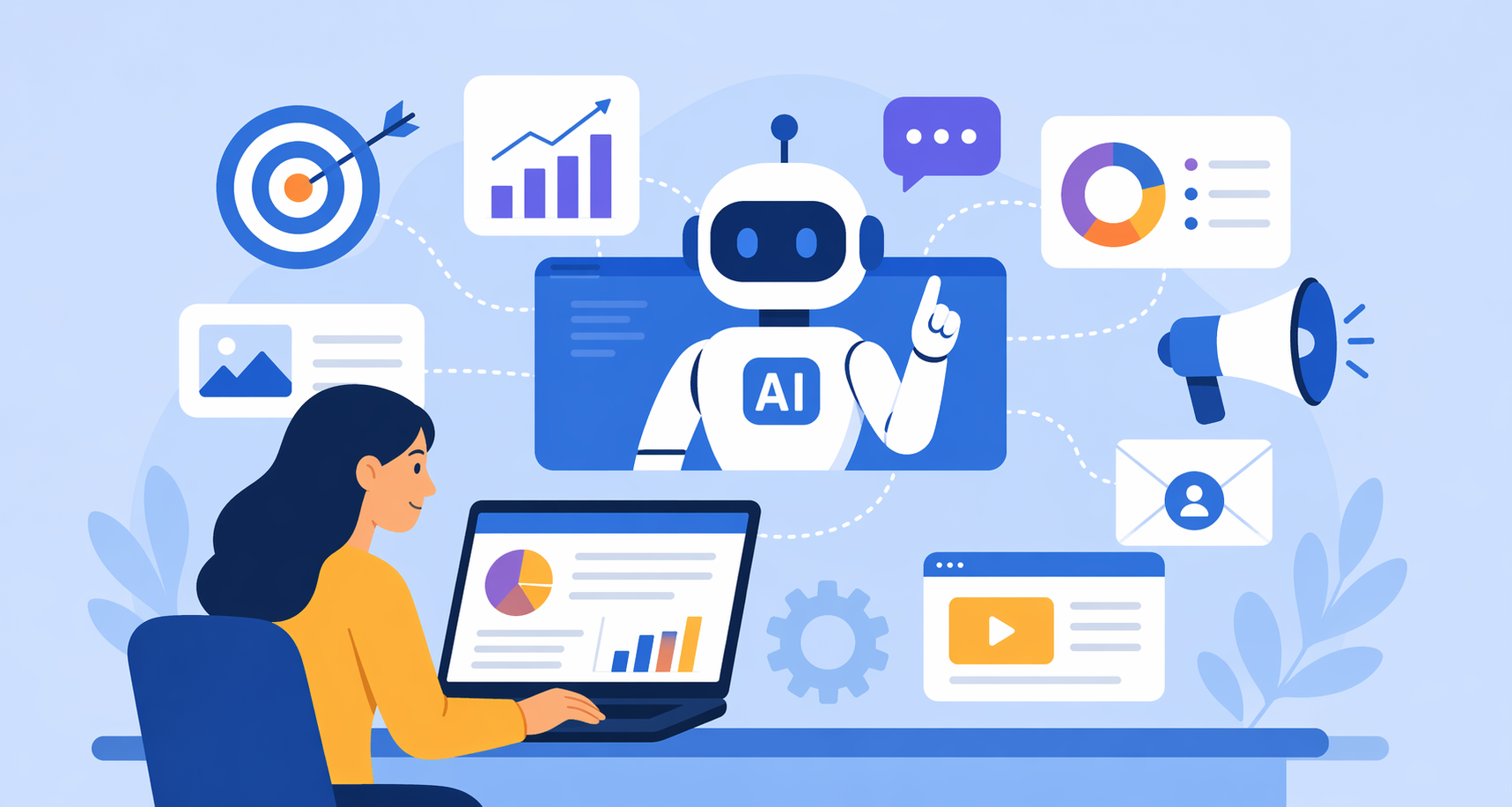
Artificial intelligence is changing digital marketing faster than most businesses expected. What used to take teams days to research, write, test, and refine can now happen in a fraction of the time. From smarter content planning to better ad targeting and more personalized customer experiences, AI is no longer a future trend. It is already shaping how brands attract attention, build trust, and drive conversions.
That shift matters for businesses of every size. Large companies are using AI to process huge amounts of customer data and automate decision-making at scale. Smaller businesses are using it to compete more efficiently, create better campaigns, and make faster marketing moves without expanding their teams. In both cases, the result is the same: digital marketing is becoming more data-driven, more adaptive, and more performance-focused.
Still, AI is not replacing strategy, creativity, or brand judgment. The businesses getting the best results are the ones using AI as a tool, not a shortcut. They understand that strong digital marketing still depends on clear messaging, smart positioning, and a polished user experience. AI simply gives marketers a more powerful way to execute those fundamentals.
In this article, we will look at how AI is changing digital marketing, where it is delivering the biggest impact, what challenges brands should watch for, and how businesses can use it in a practical, effective way.
AI Is Making Marketing Faster and Smarter
One of the biggest changes AI brings to digital marketing is speed. Marketers can now move from idea to execution much faster than before. AI tools can help generate content drafts, identify keyword opportunities, segment audiences, analyze campaign performance, and even suggest the next best action based on data patterns.
That kind of speed matters in a competitive market. Businesses no longer have to wait for lengthy manual reviews just to understand what is working. AI can surface patterns in real time and help teams adjust campaigns while they are still active. Instead of relying only on past reports, marketers can make decisions with live insights.
But speed is only part of the story. AI also improves the quality of decision-making. It helps marketers look beyond surface-level metrics and understand customer behavior more clearly. When brands know what people are searching for, clicking on, ignoring, and buying, they can build campaigns that feel far more relevant.
This is especially useful in crowded digital spaces where businesses are fighting for limited attention. Whether the goal is lead generation, local visibility, or e-commerce growth, AI gives marketers more clarity and more control over how they spend time and budget.
Content Creation Is Becoming More Efficient
Content remains one of the foundations of digital marketing, and AI is changing how that content gets planned and produced. Businesses can now use AI to generate blog outlines, write first drafts, repurpose long-form content into shorter pieces, and identify related topics based on search demand.
That does not mean every AI-written piece is ready to publish. Strong content still needs a human touch. It needs a clear point of view, a natural voice, and an understanding of the audience. AI can make content production more efficient, but human editing is what turns a decent draft into something worth reading.
AI Helps Marketers Find Better Topic Opportunities
A major advantage of AI is its ability to process search trends and audience signals quickly. It can identify common questions, rising interest areas, and content gaps that businesses might miss when doing manual research alone.
This helps brands create content that is aligned with actual search intent instead of guessing what people want. For example, a business in a competitive service industry can use AI-backed insights to build content around the questions potential customers are already asking online. That makes the content more useful and more likely to rank.
Personalization Is Getting Stronger
AI also helps marketers tailor content for different audience segments. Instead of sending the same message to everyone, brands can create more specific experiences based on customer behavior, location, interests, and past engagement.
That level of personalization can improve email campaigns, landing pages, product recommendations, and even blog content. When people feel like a brand understands what they need, they are much more likely to stay engaged and move closer to a purchase.
SEO Is Becoming More Intent-Driven
Search engine optimization has always been about visibility, but AI is changing how marketers approach it. Rather than focusing only on keywords, businesses now have to think more deeply about context, relevance, and user intent.
Search engines are getting better at understanding what users really want. That means marketers need to create content that answers questions clearly, matches search intent, and offers genuine value. AI can help by analyzing search patterns, uncovering semantic keyword relationships, and suggesting content improvements based on performance data.
For service-based companies, this is especially important. A business that wants to attract qualified leads through search needs more than basic blog content. It needs pages and articles built around trust, relevance, and local buying intent. That is one reason why topics like high-value roofing search have become so important for companies trying to win better leads instead of just more clicks.
AI Supports Technical and On-Page SEO
AI tools can also assist with technical SEO tasks that used to take much longer to review. They can help identify broken links, duplicate pages, poor metadata, weak internal linking opportunities, and content cannibalization issues.
On the content side, AI can suggest title refinements, heading structures, missing subtopics, and readability improvements. That does not replace SEO expertise, but it makes optimization much more efficient.
Search Visibility Now Depends on Experience Too
Modern SEO is not only about what is written on the page. It is also about what happens after someone arrives. If a site is confusing, slow, or visually inconsistent, rankings alone will not save performance.
That is why businesses should pay attention to how design and messaging support search traffic. A strong website should not just attract visitors. It should also reinforce trust. In many cases, your website brand says as much about your business as the content or ads bringing people there.
Paid Advertising Is Becoming More Predictive
AI is also changing paid digital marketing in a major way. Platforms like Google Ads and Meta Ads increasingly rely on machine learning to optimize delivery, audience targeting, bidding, and placements.
Instead of manually adjusting every variable, marketers can now use AI-powered systems to identify where campaigns are most likely to perform well. These systems analyze large amounts of data to predict which users are more likely to click, convert, or engage based on behavior patterns.
This can improve efficiency, especially when campaigns have enough clean data to work with. Businesses can often reduce wasted spend and improve conversion rates when AI is allowed to optimize delivery intelligently.
Still, human oversight remains essential. If the campaign strategy is weak or the creative is unclear, AI will only scale bad inputs faster. The technology can improve performance, but it cannot fix unclear positioning or poor offers.
Better Data Leads to Better Ad Decisions
AI-powered ad systems perform best when businesses have strong data hygiene. That includes accurate conversion tracking, well-structured campaign goals, and consistent creative testing.
When those pieces are in place, AI can uncover patterns that manual optimization might miss. It can detect audience segments with stronger buying intent, find better timing windows, and improve bidding based on expected outcomes rather than rough estimates.
This is one reason why modern paid media management now requires both strategic thinking and technical precision. AI improves the tools, but marketers still need to guide the direction.
Customer Experience Is Becoming a Marketing Priority
Digital marketing does not stop at traffic. If users arrive on a website or app and feel friction, confusion, or hesitation, performance suffers quickly. AI is making that more visible by highlighting where people drop off, what they respond to, and where experiences break down.
As a result, customer experience is becoming more central to marketing success. Businesses are realizing that conversion rates depend not only on strong campaigns, but also on intuitive digital experiences.
AI can help analyze behavior flows, heatmaps, interaction trends, and retention patterns. It can suggest where pages lose momentum or where app users get stuck. That insight helps marketers and product teams create better journeys from first click to final conversion.
For companies building digital products, this connection between marketing and experience is impossible to ignore. Traffic generation matters, but retention and usability matter just as much.
Email and Automation Are Getting More Personalized
Email marketing has always been one of the highest-return channels in digital marketing, and AI is making it much more effective. Instead of relying on broad email blasts, businesses can use AI to personalize timing, subject lines, segmentation, and content recommendations.
This allows brands to send emails that feel more relevant to each user. Someone browsing a service page may receive different messaging than someone who already downloaded a guide or booked a consultation. That kind of precision helps improve open rates, click-through rates, and conversions.
AI also strengthens automation workflows. Businesses can trigger follow-ups based on behavior, score leads more accurately, and move prospects through funnels with less manual effort. The end result is a system that feels more tailored and less generic.
Used well, this creates a better customer experience. People are more likely to engage with marketing that reflects their interests and timing rather than constant broad messaging.
Analytics Are Becoming More Actionable
One of AI’s most practical contributions to digital marketing is how it improves analytics. Most businesses already have access to data. The challenge is knowing what to do with it.
AI helps solve that by identifying meaningful patterns inside large datasets. It can highlight which channels produce higher-quality leads, which pages influence conversions, which campaigns are underperforming, and where users are losing momentum in the funnel.
This makes reporting more useful. Instead of reviewing dashboards full of disconnected numbers, marketers can focus on the metrics that actually influence growth. AI can shorten the distance between data collection and strategic action.
That is valuable for both in-house teams and agencies. Better analytics mean faster testing, clearer priorities, and stronger long-term planning.
The Risks of AI in Digital Marketing
Even with all its advantages, AI also introduces real challenges. One of the biggest is overreliance. When businesses publish AI-generated content without editing, automate messaging without reviewing tone, or trust machine recommendations without context, results can suffer.
AI can also create sameness. If every brand uses similar prompts, similar content structures, and similar messaging shortcuts, digital marketing becomes less distinctive. That is a problem because strong branding depends on clarity, personality, and differentiation.
Another issue is accuracy. AI tools can produce weak claims, generic language, or incorrect information if left unchecked. In marketing, even small errors can hurt trust. That is why every AI-assisted asset still needs human review.
Privacy and compliance are also important concerns. Businesses must be thoughtful about how customer data is used, stored, and interpreted. AI should support better marketing, not create risk through careless implementation.
How Businesses Should Use AI Moving Forward
The smartest way to use AI in digital marketing is to see it as an accelerator, not a replacement. It works best when paired with strong human strategy, clear brand standards, and a good understanding of the customer journey.
Businesses should start with practical use cases. That might include content planning, ad optimization, keyword research, analytics support, email personalization, or chatbot improvements. From there, they can identify where AI creates real efficiency without weakening quality.
It also helps to build systems around review and refinement. AI can generate ideas and speed up production, but people still need to shape messaging, protect brand voice, and make judgment calls.
Most importantly, businesses should stay focused on outcomes. The goal is not to use AI just because it is available. The goal is to improve visibility, create better experiences, and generate stronger results.
That is where digital marketing still comes back to fundamentals: clear positioning, useful content, strong user journeys, and smart conversion strategy. AI improves the process, but those essentials still drive the outcome.
If your business is looking for smarter ways to strengthen search visibility, content strategy, user experience, and campaign performance, the best next step is to book marketing appointment and build a strategy that fits where digital marketing is headed.
Final Thoughts
AI is changing digital marketing in ways that are both practical and profound. It is helping businesses move faster, personalize better, optimize campaigns more intelligently, and understand customer behavior more clearly. At the same time, it is raising the standard for quality, strategy, and user experience.
The businesses that benefit most from AI will not be the ones using it carelessly or chasing trends. They will be the ones using it thoughtfully to support better decisions, stronger branding, and better customer journeys.
Digital marketing is not becoming less human. In many ways, it is becoming more human because AI allows marketers to focus less on repetitive tasks and more on strategy, creativity, and relevance. That is where the real value lies, and that is why AI is not just changing digital marketing. It is reshaping what effective marketing looks like from the ground up.