

What Are the Types of PPC? A Simple Guide to PPC Ads
September 16, 2026
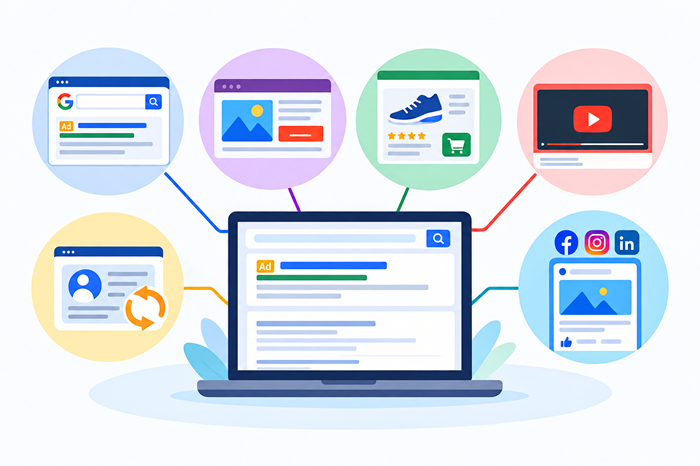
Pay-per-click advertising gives businesses a practical way to reach people who are already searching, browsing, comparing products, or discovering new services online. However, PPC is not a single advertising format. There are several approaches designed for different goals, audiences, and stages of the buying journey. Understanding the types of PPC can help businesses choose campaigns that support traffic, leads, sales, and brand visibility.
Key Takeaways
-
Types of PPC include search, display, shopping, video, remarketing, and paid social campaigns.
-
Each format reaches potential customers at a different stage of the buying journey.
-
Campaign goals, audience intent, budget, and conversion data should guide format selection.
-
Effective PPC management connects targeting, creative, landing pages, bidding, and measurement.
What Is PPC Advertising?
PPC stands for pay-per-click, a digital advertising model where advertisers generally pay when someone clicks an ad. Search engines, social platforms, shopping networks, websites, and apps can all support paid campaigns.
The concept is straightforward: rather than waiting for organic visibility, a business pays for targeted exposure. Advertisers establish objectives, audiences, budgets, bids, keywords, and creative assets, while the advertising platform determines where eligible ads appear.
PPC can support different business objectives. A local service company may focus on calls and quote requests, while an e-commerce company may prioritize product purchases. A B2B organization could concentrate on qualified leads, while a growing brand may focus on awareness.
Businesses exploring digital marketing services often combine paid advertising with SEO, content, email, and other channels to reach customers at different stages.
The Main Types of PPC
Types of PPC are best understood by considering where advertisements appear and what users are doing when they encounter them. Search, display, shopping, video, remarketing, and paid social are among the most common formats.
1. Search PPC Ads
Search advertising places paid listings on search engine results pages. These advertisements appear when someone enters a query related to a product, service, problem, or solution.
For example, someone searching for “emergency plumber near me” may see sponsored plumbing businesses before organic listings. Search campaigns are useful for capturing existing demand because the user has already demonstrated interest through a search query.
Understanding PPC in marketing also means understanding user intent. Keyword selection, match types, negative keywords, ad relevance, landing-page quality, and conversion tracking can all influence campaign performance.
2. Display PPC Ads
Display advertising uses visual advertisements across websites, apps, and digital properties within an advertising network. Unlike search campaigns, display can reach people before they actively search for a particular solution.
Banner-style creative and responsive ads can help introduce an offer, build brand awareness, or bring previous visitors back to a website.
This format can be useful for product launches, events, promotions, and campaigns where visual communication plays an important role.
3. Shopping PPC Ads
Shopping campaigns are designed for products and can show product images, prices, store information, and other details directly within search or shopping environments.
This makes product comparison easier because potential customers can see important information before clicking. Retailers can use product feeds, categories, pricing, inventory information, and campaign settings to manage product promotion.
Shopping is particularly relevant to e-commerce businesses because advertising can connect product searches with purchase opportunities.
4. Video PPC Ads
Video campaigns place paid video content on platforms such as YouTube and across supported video placements. They can support awareness, consideration, website traffic, leads, or conversions.
Video gives advertisers more room to demonstrate products, explain services, answer questions, and communicate brand stories. Strong opening seconds, clear messaging, relevant targeting, and a suitable call to action are important elements.
5. Remarketing PPC Ads
Remarketing targets people who have already interacted with a website, app, product, or other digital property. Audiences may include previous visitors, product viewers, abandoned-cart users, or people who completed a particular action.
The purpose is to reconnect with people who already know the business. Someone who viewed a service page but did not submit a form could later receive a relevant reminder advertisement.
Audience exclusions and frequency controls are important because excessive repetition can create a poor advertising experience.
6. Paid Social PPC
Paid social campaigns run on social media platforms and can use image ads, video ads, carousel ads, lead forms, and sponsored content.
Social advertising can reach defined audience segments through platform-supported interests, behaviors, demographics, and other targeting signals. Campaigns can support awareness, engagement, website traffic, lead generation, and sales.
The key distinction is intent. Search usually begins with an explicit query, while social advertising can introduce an offer while someone is browsing content for another reason.
How Different Types of PPC Fit the Customer Journey
The different types of PPC can work together instead of operating as isolated campaigns.
Search can capture high-intent demand. Display and video can introduce a brand to new audiences. Shopping can connect product searches with purchase opportunities. Remarketing can re-engage previous visitors, while paid social can build awareness and generate demand.
This means campaign planning should consider what the audience already knows, what action matters, and which advertising format can realistically support that action.
Types of PPC Campaigns and When to Use Them
The right campaign structure depends on the business model and objective. Lead-generation campaigns can focus on form submissions, calls, or consultations. Sales campaigns can prioritize purchases, while awareness campaigns may focus on reach or video engagement.
Local businesses may need geographic targeting, location-based messaging, call tracking, and carefully controlled budgets. Information about local PPC management packages can be useful when campaigns require a stronger local focus.
Small businesses also need to understand how paid search fits within their broader customer-acquisition strategy. A practical guide explaining how google ads PPC helps small businesses can clarify the potential role of search advertising.
How to Choose the Right PPC Approach
Choosing among the types of PPC should begin with the business objective rather than the advertising platform.
Define the conversion
First, determine what success means. It could be a purchase, qualified lead, phone call, appointment, registration, or another measurable action.
Match the format to intent
Search tends to suit active demand. Shopping works naturally for product discovery and comparison. Display and video can support awareness, while remarketing reconnects with previous visitors.
Consider budget and data
A campaign needs sufficient budget and conversion data for meaningful optimization. Dividing a limited budget across too many formats can make performance harder to evaluate.
Build around the landing page
The advertisement is only part of the customer experience. The landing page should match the promise made in the ad, load efficiently, provide useful information, and make the desired action clear.
Measure business outcomes
Clicks and impressions provide useful information, but they do not tell the entire story. Conversion rate, cost per conversion, qualified lead volume, revenue, return on ad spend, and customer value provide stronger indicators of business performance.
For businesses comparing providers, choosing a PPC agency should involve questions about strategy, tracking, reporting, communication, and optimization rather than advertised pricing alone.
Why PPC Management Matters
PPC management involves much more than launching an advertisement. Campaigns require ongoing attention to keyword performance, search terms, bids, budgets, audience signals, creative assets, landing pages, and conversion data.
Poorly managed campaigns can spend money on irrelevant searches or audiences. Strong management creates a feedback loop where performance data informs adjustments and future campaign decisions.
JNA presents its PPC offering as a strategy-led service built around structured targeting, optimization, and measurable goals. This approach can help businesses treat paid advertising as part of a broader customer-acquisition strategy.
Common PPC Mistakes to Avoid
One common mistake is sending every advertisement click to the homepage. A campaign promoting a specific service generally makes more sense when visitors arrive on a page dedicated to that service.
Weak conversion tracking is another problem. Without reliable tracking, it becomes difficult to distinguish website traffic from meaningful business outcomes.
Broad targeting without adequate controls can also consume budget quickly. Regular search-term reviews, audience analysis, exclusions, and budget adjustments help maintain campaign relevance.
Changing too many variables at once can make optimization difficult as well. Structured testing provides clearer evidence about which changes influence performance.
How to Build a Balanced PPC Strategy
A balanced strategy begins with audience research and a clear business goal. Campaigns can then be organized around intent, geography, products, services, audiences, or stages of the buying journey.
Start with the format that most directly supports the primary conversion goal. Once tracking is reliable and enough data is available, additional formats can expand reach or support people who are not ready to convert immediately.
Creative and landing-page testing should happen alongside campaign optimization. Strong advertising cannot compensate for an unclear offer or confusing website experience.
Conclusion
Understanding the types of PPC helps businesses make more informed advertising decisions. Search captures active demand, display and video expand visibility, shopping supports product discovery, remarketing reconnects with previous visitors, and paid social can reach targeted audiences across social platforms.
The right combination depends on the audience, offer, sales process, budget, and conversion goal. A thoughtful strategy connects advertising formats with relevant landing pages, accurate tracking, and continuous optimization.
JNA positions its PPC services around structured campaign planning, ongoing optimization, and performance tracking. For businesses exploring paid acquisition, combining suitable advertising formats with clear objectives can create a stronger path from online attention to measurable business results.
FAQs
What are the types of PPC?
The types of PPC commonly include search, display, shopping, video, remarketing, and paid social advertising.
Which PPC format is best for local businesses?
Search and location-focused campaigns can help capture people actively looking for nearby products or services.
Are PPC ads suitable for small businesses?
Yes, PPC can be scaled around defined locations, audiences, budgets, and measurable conversion goals.
How long does PPC take to work?
PPC can generate traffic quickly, while meaningful optimization usually requires ongoing testing and conversion data.
Does PPC require ongoing management?
Yes, regular monitoring and optimization help control spending, improve relevance, and respond to performance data.