

Tips for Troubleshooting Common Internet Connection Issues
September 21, 2026
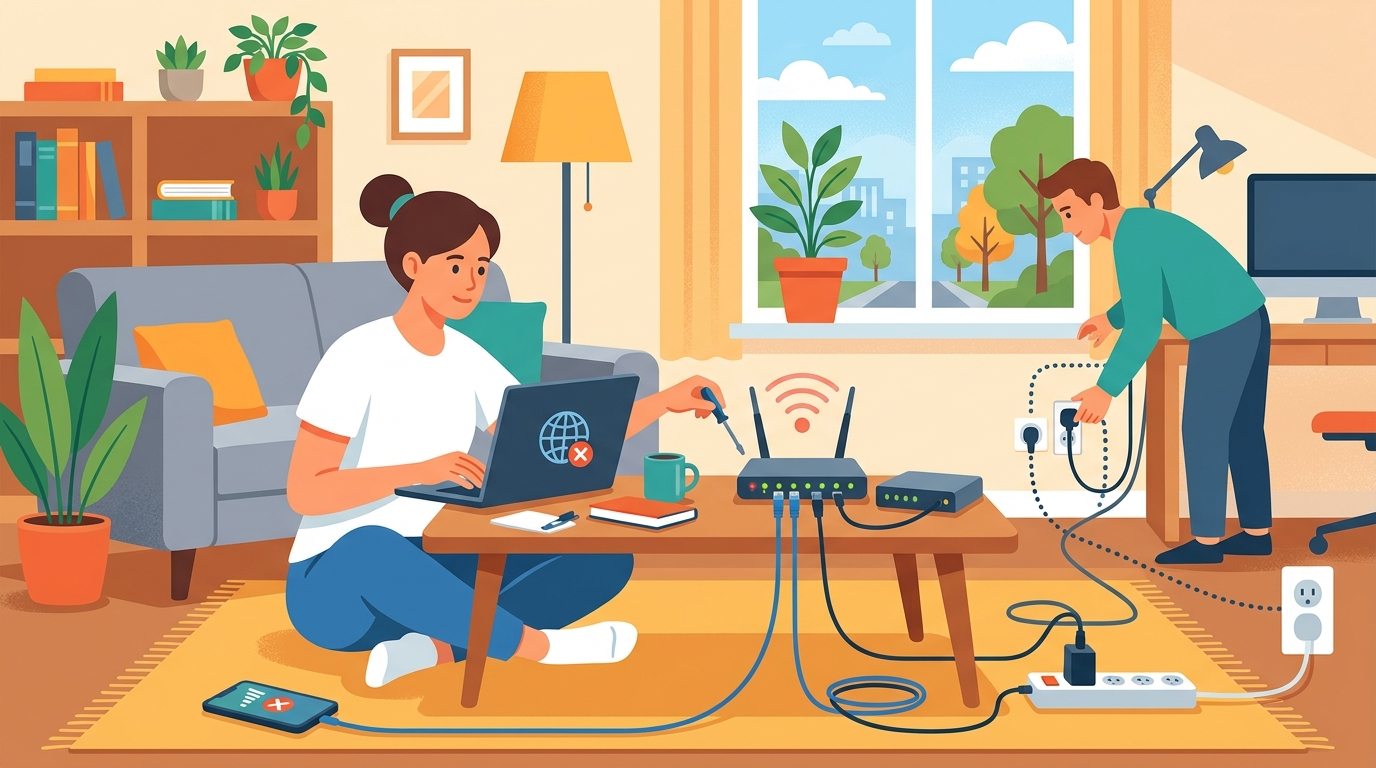
Internet connection problems can come from your modem, router, Wi-Fi signal, device settings, network congestion, outdated software, or your Internet Service Provider (ISP). The quickest way to troubleshoot is to start with basic hardware checks, then test your Wi-Fi, device, network settings, and connection speed before contacting your ISP.
A slow, unstable, or completely disconnected internet connection can interrupt work, streaming, gaming, video calls, and everyday browsing. Fortunately, many common connection problems can be resolved without replacing equipment or calling for professional help. The key is to troubleshoot one possible cause at a time.
What Should You Check First When Your Internet Stops Working?
Start by checking your modem and router, then restart them and inspect the cables. After that, check whether the problem affects one device or multiple devices, because this can help identify whether the issue is with your device or the network itself.
Try these basic steps first:
-
Check whether the modem and router are powered on.
-
Inspect the power and Ethernet cables.
-
Restart your modem and router.
-
Check whether other devices can connect.
-
Move closer to the router if you are using Wi-Fi.
-
Turn Wi-Fi off and back on on your device.
-
Run an internet speed test if you can connect.
-
Contact your ISP if the problem continues.
Starting with these simple checks can help you identify common problems before moving on to more technical troubleshooting.
Check Your Modem, Router, and Cables
A loose cable, power problem, or temporary router glitch can cause an internet connection to stop working. Checking the physical equipment should be one of the first troubleshooting steps because it is quick and does not require changing complicated settings.
Check the following:
-
Make sure the modem and router are receiving power.
-
Check that power cables are securely connected.
-
Inspect Ethernet cables for visible damage.
-
Make sure Ethernet cables are firmly plugged into the correct ports.
-
Check the indicator lights on your modem and router for unusual behavior.
How Do You Restart a Modem and Router?
Restarting your network equipment can clear temporary connection problems. Turn off or unplug the modem and router, wait about a minute, and then reconnect them.
If you have separate modem and router devices, allow the modem to finish starting up before reconnecting or restarting the router. Wait for the equipment to establish a connection before testing the internet again.
A restart can resolve temporary software or connection issues, but it will not fix physical equipment damage, an ISP outage, or a permanently faulty device.
Check Your Wi-Fi Signal
A weak Wi-Fi signal can make your internet appear slow, unstable, or disconnected even when your internet service itself is working properly. Distance from the router, walls, floors, and electronic interference can all affect wireless performance.
If your connection is weak, try moving closer to the router and testing the connection again. If performance improves significantly, the problem may be related to Wi-Fi coverage rather than your internet service.
For better Wi-Fi performance:
-
Place the router in a relatively open and central location.
-
Keep the router away from unnecessary obstructions.
-
Reduce the distance between your device and router when possible.
-
Test your connection in different areas of your home.
-
Check whether other nearby electronic devices may be interfering with the wireless signal.
Why Does Wi-Fi Work Near the Router but Not Far Away?
Wi-Fi signals generally become weaker as the distance between your device and router increases. Physical obstacles can also reduce signal strength.
If your connection consistently becomes unreliable in certain parts of your home, consider improving Wi-Fi coverage rather than immediately changing your internet plan. Depending on the situation, better router placement or additional networking equipment may help.
Check Your Device’s Network Settings
Sometimes the internet connection is working correctly, but your device is not connected to the network properly. Checking your network settings can help determine whether the problem is isolated to one computer, phone, tablet, or other device.
First, confirm that Wi-Fi is enabled and that your device is connected to the correct network. If Wi-Fi is already enabled, turn it off and back on, then try reconnecting.
You can also try forgetting the saved Wi-Fi network and reconnecting with the correct password. This can resolve certain connection problems caused by an incorrect or outdated saved network configuration.
How Can You Tell If the Problem Is Your Device or Your Internet Connection?
Test another device on the same network. If multiple devices cannot connect, the problem may involve your router, modem, ISP, or wider network. If only one device has trouble while others work normally, the issue is more likely related to that device or its network configuration.
This simple comparison can prevent you from changing your entire network when the actual problem is limited to one device.
Restart Your Device
Restarting your computer, phone, tablet, smart TV, or other connected device is another simple troubleshooting step. A reboot can clear temporary software problems and refresh the device’s network connection.
Before restarting, save any important work and close applications as needed. Once the device starts again, reconnect to your Wi-Fi network and test a few websites or online services.
If other devices are working normally but one device continues to have connection problems after a restart, continue troubleshooting that specific device rather than changing the router immediately.
Update Router Firmware and Network Drivers
Outdated router firmware or device network drivers can contribute to connection problems. Keeping networking software updated can help maintain compatibility, stability, and performance.
Check the manufacturer’s instructions for your router to determine whether a firmware update is available. For computers, check for updates to the operating system and network adapter drivers through the appropriate system settings or manufacturer.
Before updating router firmware, follow the manufacturer’s instructions carefully. Interrupting a firmware update or installing an incorrect file can create additional problems.
Check for Too Many Connected Devices
A network with many active devices can experience reduced performance, especially when several devices are using large amounts of bandwidth at the same time. Streaming, downloads, cloud backups, gaming, and video calls can all contribute to network demand.
Check the devices currently connected to your network. If several are actively using the internet, temporarily disconnect devices that are not needed and test the connection again.
If performance improves after reducing network activity, congestion or bandwidth usage may be contributing to the problem.
Check Your Bandwidth Usage
High-bandwidth activities can make an internet connection feel slow even when the service itself is functioning normally. For example, streaming high-resolution video while downloading large files can place substantial demand on your available connection.
Try pausing large downloads, reducing simultaneous streaming, or temporarily stopping other bandwidth-heavy activities. Then test the connection again.
Common activities that can use significant bandwidth include:
-
High-resolution video streaming
-
Large file downloads
-
Cloud backups and synchronization
-
Online gaming updates
-
Video conferencing
-
Multiple simultaneous streams
-
Large software or operating-system updates
Managing these activities can help determine whether your connection is actually experiencing a service problem or simply handling heavy network traffic.
Run an Internet Speed Test
An internet speed test can help determine whether your connection is performing differently from what you normally expect. It can also provide useful information when discussing a persistent problem with your ISP.
Use an internet speed test and compare the result with the speed associated with your internet plan. For a more useful comparison, run tests at different times and from different devices.
Keep in mind that a speed test result can be affected by several factors, including Wi-Fi signal strength, the device being tested, network congestion, and the test server.
What Should You Check in a Speed Test?
Pay attention to the main measurements reported by the test:
-
Download speed: How quickly data can be received from the internet.
-
Upload speed: How quickly data can be sent to the internet.
-
Latency: The time it takes for data to travel between your device and a destination.
-
Consistency: Whether performance remains relatively stable across multiple tests.
A single low result does not necessarily prove that your ISP is responsible. Testing more than once can provide a clearer picture of your connection.
Check Whether the Problem Affects One Website or Everything
Not every internet problem affects the entire connection. If one website or online service is unavailable while other websites load normally, the issue may be specific to that website or service.
Try opening several unrelated websites or online services. If they all fail to load, investigate your local network connection. If only one service is affected, check whether that service is experiencing an outage or technical issue.
This distinction can save time because restarting your router repeatedly will not necessarily fix a problem that exists outside your home network.
Scan Your Device for Malware
Malware and other unwanted software can affect device performance and, in some cases, network activity. If your connection seems unusually slow or your device is behaving strangely, running a security scan is a useful troubleshooting step.
Use reputable, up-to-date security software to scan the device. If malware is detected, follow the security software’s recommended removal process.
A malware scan is especially useful when connection problems occur alongside other unusual behavior, such as unexpected pop-ups, unfamiliar applications, or unexplained system activity.
When Should You Contact Your Internet Service Provider?
Contact your ISP when basic troubleshooting does not resolve the problem, especially if multiple devices cannot connect or your connection repeatedly drops. Your ISP may be able to identify service interruptions, line problems, equipment issues, or other problems that cannot be fixed from your device.
Before contacting your ISP, gather useful information such as:
-
When the problem started
-
Whether the connection is completely down or simply slow
-
Whether multiple devices are affected
-
Results from recent speed tests
-
Whether restarting the modem and router helped
-
Any unusual modem or router indicator lights
-
Whether the problem occurs consistently or intermittently
You can also check your Internet Service Provider (ISP) information to identify the appropriate provider and available service options.
What If Only One Device Cannot Connect?
If other devices can access the internet normally, tell your ISP that the issue appears limited to one device. You may need to focus on that device’s Wi-Fi settings, network drivers, operating system, or hardware rather than troubleshooting the entire internet service.
If no devices can connect, the problem is more likely to involve your router, modem, physical connection, or ISP service.
Common Internet Connection Problems and Possible Causes
Different symptoms can point toward different causes. The following table can help you narrow down where to start.
| Internet problem | Possible cause | What to try first |
|---|---|---|
| No internet on any device | Router, modem, cable, or ISP issue | Check equipment, cables, and restart |
| Wi-Fi is weak in one area | Distance or interference | Move closer to the router and test |
| Only one device cannot connect | Device settings or driver issue | Restart and check network settings |
| Internet is slow during heavy use | Network congestion or bandwidth usage | Reduce simultaneous high-bandwidth activities |
| One website will not load | Website or service issue | Test other websites |
| Connection keeps dropping | Wi-Fi, equipment, line, or ISP issue | Restart equipment and test multiple devices |
| Speed is lower than expected | Wi-Fi conditions, congestion, or service issue | Run multiple speed tests |
These symptoms are not definitive diagnoses, but they can help you choose the next troubleshooting step.
What Should You Do If Internet Problems Keep Happening?
Recurring connection problems should be documented rather than treated as isolated incidents. Record when the connection fails, which devices are affected, and whether the issue occurs at particular times.
Also note whether restarting your equipment temporarily fixes the problem. If the same issue returns repeatedly, this information can help your ISP or a technician identify a pattern.
If possible, compare results using different devices and, when practical, a wired connection. This can help distinguish a Wi-Fi-specific problem from an issue affecting the broader internet connection.
Frequently Asked Questions
Why is my internet connected but not working?
Your device may be connected to the router but unable to reach the internet. Restart the modem and router, check cables, test another device, and see whether multiple websites are affected.
Why is my internet suddenly slow?
Sudden slowdowns can result from heavy bandwidth usage, network congestion, weak Wi-Fi, device problems, or an issue with your ISP. Run a speed test and compare the results across devices.
Does restarting the router fix internet problems?
Restarting the router can resolve temporary connection and software problems, but it cannot fix every issue. Persistent problems may involve equipment, cables, Wi-Fi coverage, or your ISP.
How do I know if my Wi-Fi signal is the problem?
Move your device closer to the router and test the connection. If performance improves significantly nearby, distance, physical obstacles, or wireless interference may be contributing to the problem.
Should I restart my modem or router first?
If you have separate devices, restarting both can refresh the network connection. Follow the equipment manufacturer’s recommended restart procedure and allow the devices time to reconnect before testing.
Why does only one device have internet problems?
If other devices work normally, the issue may be specific to the affected device. Check its Wi-Fi connection, network settings, software updates, and network drivers.
Can too many devices slow down my internet?
Yes. Multiple devices can consume available bandwidth, particularly when they are streaming, downloading large files, backing up data, or performing other high-bandwidth activities at the same time.
When should I call my ISP about an internet problem?
Contact your ISP when basic troubleshooting does not resolve the issue, particularly if multiple devices cannot connect or the connection repeatedly drops. Provide details about the problem and any speed-test results you collected.
Conclusion
Troubleshooting internet connection issues is easiest when you work from the simplest possibilities to the more complex ones. Start with your modem, router, cables, and Wi-Fi signal, then check device settings, software, connected devices, bandwidth usage, and connection speed.
If the problem affects multiple devices and continues after these steps, your ISP may need to investigate the connection. By testing one factor at a time and documenting recurring problems, you can identify the likely cause more efficiently and provide your ISP with useful information if professional assistance is needed.