

Do Solar Panels Work at Night? Here’s How You Still Have Power
June 25, 2026
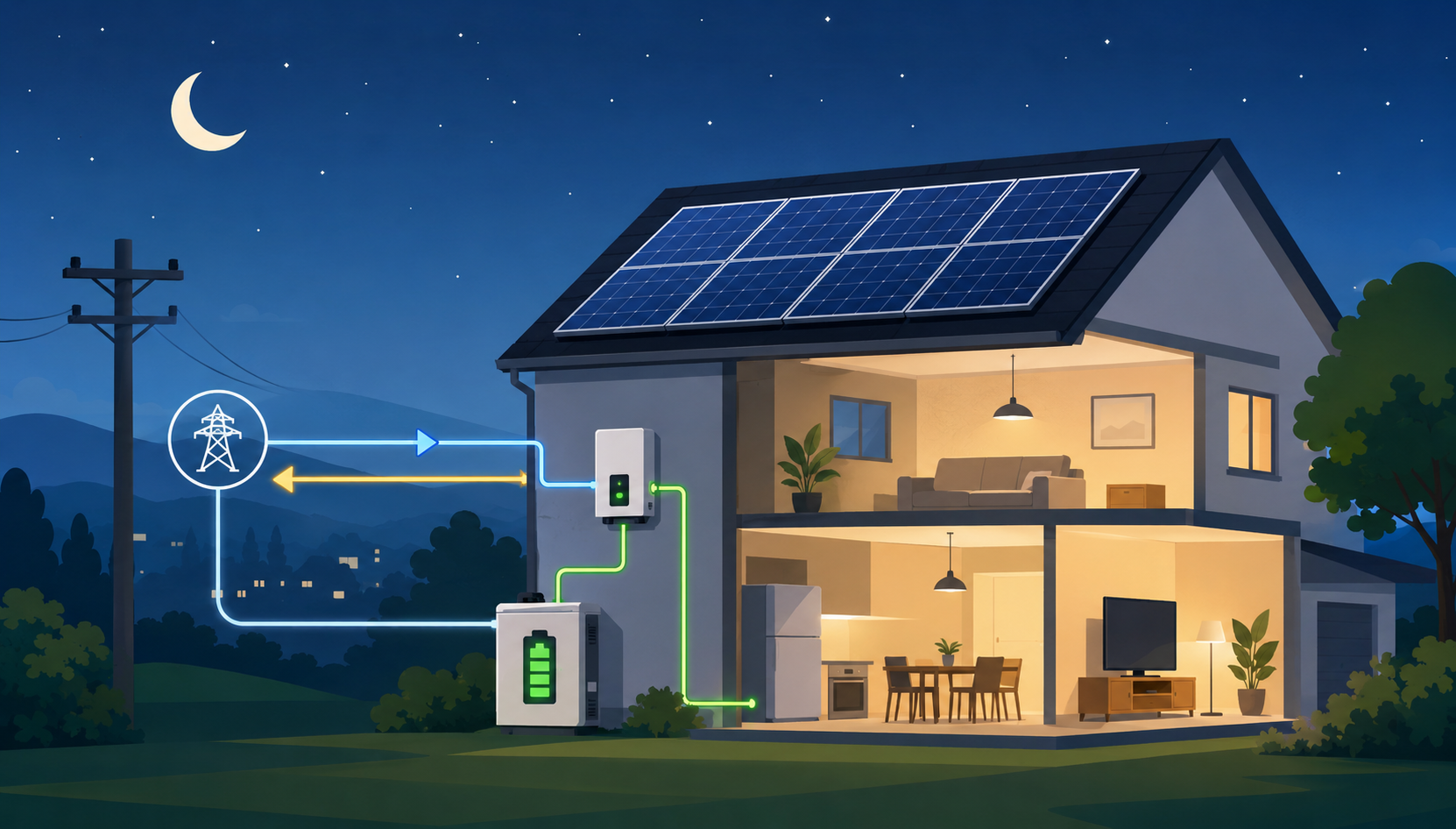
If you’re considering switching to solar energy, one of the most common questions is: Do solar panels work at night? The simple answer is no—solar panels do not generate electricity after sunset because they rely on sunlight to produce power.
However, that doesn’t mean your home is left without electricity at night. Modern solar energy systems are designed to keep your home powered around the clock through solar battery storage, net metering, or a combination of both.
Understanding how solar panels work after dark can help you make a smarter investment and decide whether battery storage or a grid-connected system is the best fit for your home. Here’s everything you need to know.
Why Solar Panels Stop Producing Power at Night
Solar panels generate electricity using photovoltaic (PV) cells, which convert sunlight into usable electrical energy. Without sunlight, this process simply cannot happen.
During daylight hours, your solar panels continuously generate electricity to power your home’s appliances. If your system produces more energy than your household is using, the excess electricity doesn’t go to waste. Instead, it’s either:
- Stored in a solar battery for later use, or
- Sent back to the electrical grid through net metering.
This means your solar investment continues to provide value long after the sun goes down—even though the panels themselves are no longer producing electricity.
If you’re still evaluating whether solar is worth the investment, learning about the major advantages of installing residential solar panels can help you understand the long-term savings and energy benefits.
How Do Solar Panels Power Your Home at Night?
Although solar panels stop generating electricity after sunset, your home can still run on solar energy through two primary methods:
- Solar battery storage
- Net metering
Many homeowners choose one option, while others combine both to maximize energy savings and improve reliability.
Solar Battery Storage: Saving Daytime Energy for Nighttime Use
How Solar Batteries Work
A solar battery stores the extra electricity your panels generate during the day.
Instead of sending all unused energy back to the grid, your battery keeps it available for later. Once the sun sets, your home automatically begins drawing power from the battery before using electricity from the utility company.
This process is seamless and requires no manual switching.
Benefits of Solar Battery Storage
Adding battery storage to your solar system offers several advantages:
- Greater energy independence
- Lower reliance on utility companies
- Reduced electricity bills
- Backup power during outages
- Better use of the energy your system generates
Battery storage is especially valuable in areas that experience severe weather, rolling blackouts, or unstable electrical grids.
Instead of relying entirely on the power company, you’ll have stored energy ready whenever your solar panels aren’t producing electricity.
Battery Storage Isn’t Just for Nighttime
Many homeowners assume batteries are only useful after sunset, but they provide value throughout the day.
Stored solar energy can help during:
- Cloudy weather
- Heavy storms
- Grid failures
- Peak electricity pricing periods
- Emergency power outages
By reducing dependence on the utility grid, battery storage helps maximize every kilowatt your solar panels produce.
If you’re wondering how much electricity your system can realistically generate, understanding how much power a residential solar panel can produce throughout the day provides a helpful estimate.
Net Metering: Using the Electric Grid Like a Giant Battery
Not every solar homeowner installs battery storage.
Instead, many connect their solar system to the utility grid through net metering, one of the most valuable incentives available in many areas.
What Is Net Metering?
Net metering allows your home to send unused solar electricity back to the utility grid during the day.
In return, your utility company provides credits based on the electricity you contributed.
When your solar panels stop producing at night, your home draws electricity from the grid using those accumulated credits.
Think of it like making deposits during the day and withdrawals after sunset.
How Net Metering Works
Here’s a simplified example:
- Your solar panels produce more electricity than your home needs during the afternoon.
- The excess energy flows into the electrical grid.
- Your utility records the exported electricity as energy credits.
- At night, your home pulls electricity from the grid.
- Those credits help offset your nighttime energy costs.
For many homeowners, this approach eliminates the need for large battery systems while still reducing monthly electric bills.
Can You Use Both Battery Storage and Net Metering?
Absolutely.
In fact, many modern solar installations combine both technologies to maximize efficiency.
A hybrid solar system gives homeowners more flexibility because the battery supplies power first, while the grid acts as a secondary backup.
Typical priority looks like this:
- Solar panels power your home.
- Extra electricity charges your battery.
- Additional excess energy goes to the utility grid.
- At night, your home uses stored battery power.
- Once the battery is depleted, electricity automatically comes from the grid.
This combination offers both financial savings and increased energy security.
If you’re still planning your project, it’s worth reviewing important factors to consider before installing home solar panels to understand system sizing, roof conditions, and long-term expectations.
Which Option Is Better: Batteries or Net Metering?
The right choice depends on your goals.
Battery Storage Is Best If You Want:
- Backup power during outages
- Greater energy independence
- Protection from rising electricity costs
- Less reliance on your utility company
Net Metering Is Best If You Want:
- Lower upfront installation costs
- Monthly utility bill savings
- No battery maintenance
- A simple grid-connected solar system
Many homeowners eventually choose both, especially as battery technology becomes more affordable.
What Happens During a Power Outage?
This is one area that often surprises new solar owners.
A standard grid-connected solar system usually does not continue operating during a power outage.
For safety reasons, solar inverters automatically shut down to prevent electricity from feeding into damaged power lines while utility crews are making repairs.
However, if your system includes battery storage with backup capability, your battery can continue supplying electricity to selected appliances—or even your entire home—depending on your system’s design.
This makes battery storage particularly valuable in regions that experience hurricanes, winter storms, or frequent outages.
Are Solar Panels Still Worth It If They Don’t Work at Night?
Yes.
Solar panels generate the majority of your home’s electricity during daylight hours, which significantly reduces the amount of electricity you need to purchase from your utility company.
When combined with battery storage or net metering, solar provides clean, renewable electricity around the clock.
The long-term benefits include:
- Lower monthly utility bills
- Increased home value
- Reduced carbon footprint
- Protection from rising electricity prices
- Greater energy independence
Even though solar panels stop producing electricity after sunset, the energy they generated during the day continues working for you.
Find the Right Solar System for Your Home
Every home has different energy needs.
The ideal solar setup depends on factors like your location, electricity usage, roof size, available incentives, and whether battery storage makes financial sense.
You can compare trusted solar providers in your area and request personalized quotes by entering your ZIP code to explore options that fit your home and budget.
Frequently Asked Questions
Do solar panels generate electricity at night?
No. Solar panels require sunlight to generate electricity. After sunset, your home uses stored battery power or electricity from the utility grid.
Can solar batteries power an entire house overnight?
Yes, depending on the battery’s capacity and your household’s electricity usage. Larger battery systems can power most or all of a home throughout the night.
What happens if I don’t have a solar battery?
Without battery storage, your home typically draws electricity from the utility grid. If your area offers net metering, the energy credits earned during the day can offset your nighttime electricity use.
Does cloudy weather affect solar panels?
Yes, solar panels generate less electricity on cloudy days because less sunlight reaches the photovoltaic cells. However, they still produce power under most daylight conditions.
Is battery storage necessary for every solar system?
No. Many homeowners save money using net metering alone. Battery storage is most beneficial for people who want backup power, greater energy independence, or protection from outages.
Can I add a battery after installing solar panels?
In many cases, yes. Many existing solar systems can be upgraded with compatible battery storage later.
Final Thoughts
Solar panels don’t generate electricity at night, but that doesn’t mean your home stops benefiting from solar energy after sunset.
With battery storage, you can use electricity collected during the day whenever you need it. With net metering, the electrical grid effectively stores excess energy through utility credits that help offset nighttime consumption.
For many homeowners, combining both solutions provides the best balance of savings, reliability, and energy independence. Whether you’re just beginning your solar journey or upgrading an existing system, understanding how solar works after dark will help you make a more informed investment.