

How to Choose the Right Size Solar Power System
June 17, 2026
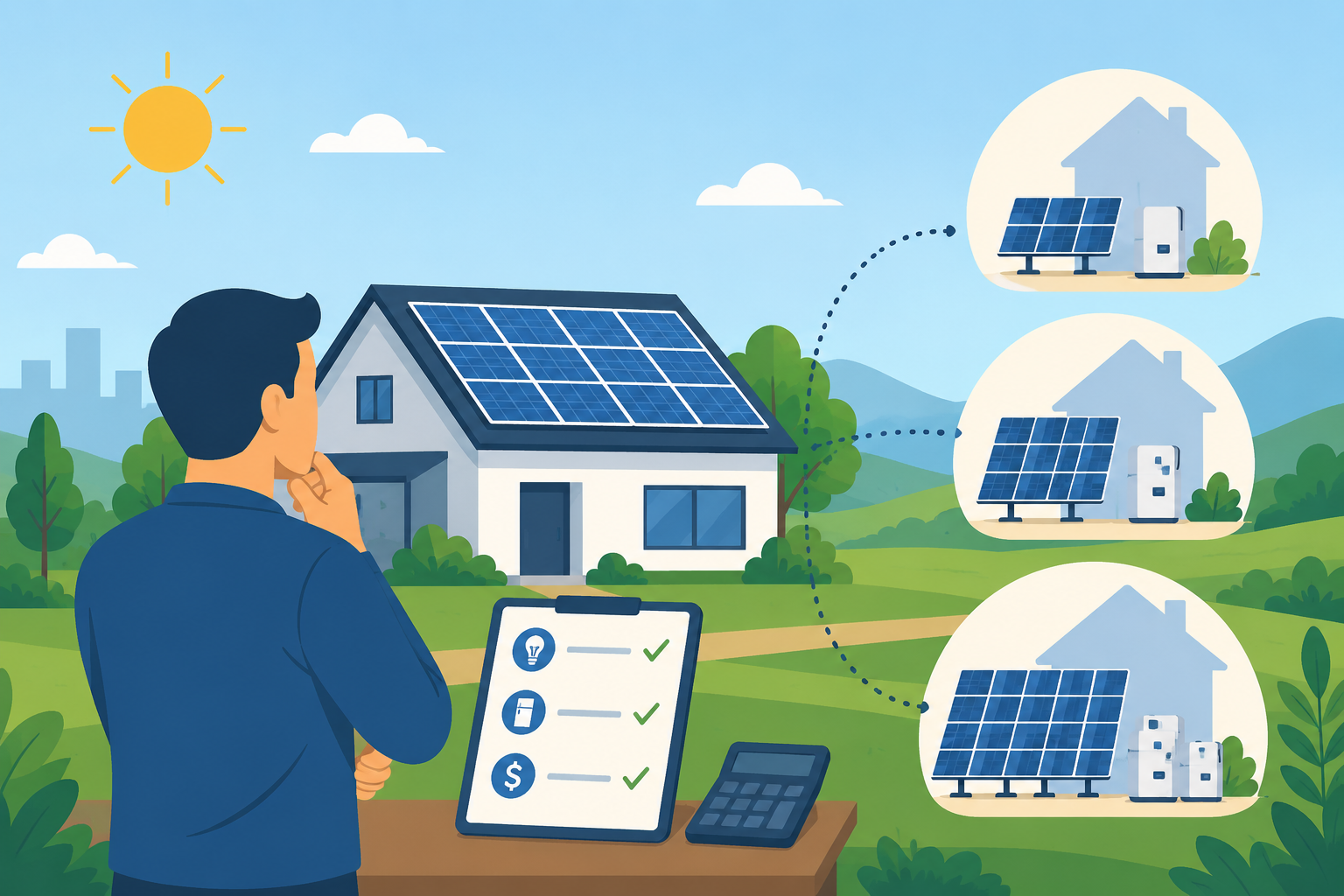
Installing solar panels is one of the smartest long-term investments you can make for your home or business. The right system can significantly reduce electricity bills, increase your property’s value, and provide reliable renewable energy for decades. However, choosing the correct solar system size is just as important as deciding to go solar in the first place.
An undersized system may not generate enough electricity to meet your daily energy needs, while an oversized system could cost more than necessary. Understanding your property’s energy consumption, roof space, and future electricity requirements will help you make a well-informed decision.
Although every property benefits from a professional assessment, understanding the basics makes it much easier to evaluate your options before requesting a quote. Whether you’re planning a residential installation or a large commercial project, this guide explains the key factors that determine the ideal solar power system size.
One of the most accurate ways to begin is by requesting a professional solar assessment, which evaluates your property’s unique characteristics before recommending a system.
Why Choosing the Right Solar System Size Matters
Your solar system should be designed to produce enough electricity to offset a large portion—or even all—of your energy usage without paying for unnecessary capacity.
A properly sized system offers several advantages:
- Lower monthly electricity bills
- Better return on investment
- Maximum use of available roof space
- Improved long-term energy independence
- Greater overall system efficiency
Every home consumes electricity differently, so there isn’t a one-size-fits-all solution. A household with electric vehicles, air conditioning, and a swimming pool will naturally require more solar generation than a smaller household with minimal electrical usage.
Start with Your Energy Consumption
Before choosing panel sizes or inverter capacities, understand how much electricity you actually use.
Your monthly utility bill provides valuable information, including:
- Average monthly electricity consumption
- Seasonal usage patterns
- Daily energy demand
- Annual electricity usage
Most American homes consume approximately 12–18 kWh per day, although larger households often exceed this amount.
As a general guideline, many parts of the United States receive enough sunlight for each installed kilowatt (kW) of solar panels to generate roughly 4 kWh of electricity per day. While actual production varies by location, weather, and panel orientation, this estimate provides a useful starting point.
Example Calculation
Suppose your household uses:
- 20 kWh per day
Divide that by:
- 4 kWh generated per installed kW
20 ÷ 4 = 5 kW
In this scenario, a 5 kW solar system would closely match your daily electricity consumption, helping reduce dependence on utility power.
Properties with lower electricity usage may find that a 3 kW system delivers substantial savings, while larger homes often benefit from systems ranging between 6 kW and 10 kW or more.
Evaluate Your Available Roof Space
Roof size plays a major role in determining how many solar panels can be installed.
A larger roof generally allows for a larger system, but usable space is often more important than total roof size.
Factors that affect installation include:
- Roof orientation
- Roof pitch
- Chimneys and vents
- Skylights
- Shade from nearby trees
- Neighboring buildings
South-facing roof sections in many regions may not always provide the best performance depending on local conditions, while east- and west-facing sections can often deliver excellent production throughout the day.
Working with experienced installers who understand optimal panel placement strategies helps maximize energy production using the available roof area.
Modern Solar Mapping Improves Accuracy
Today’s installers use advanced satellite imaging and solar modeling software to eliminate much of the guesswork.
Professional solar mapping evaluates:
- Roof dimensions
- Sun exposure
- Seasonal shading
- Panel layout
- Estimated annual production
- Projected electricity savings
Rather than relying on rough estimates, these digital tools produce highly accurate forecasts that allow homeowners to compare expected savings over the lifetime of the system.
This technology also ensures the recommended system will physically fit your roof while maximizing performance.
Consider Future Electricity Needs
Many homeowners only think about today’s electricity usage.
Instead, consider how your energy needs may change over the next 20 to 30 years.
Future increases may include:
Electric Vehicles
Charging an electric vehicle at home can significantly increase electricity consumption.
Home Additions
Additional bedrooms, home offices, or entertainment spaces often increase daily power usage.
Growing Families
More occupants generally mean greater energy demand from lighting, appliances, heating, and cooling.
Electric Appliances
Replacing gas-powered appliances with electric alternatives can substantially increase electricity consumption while improving energy efficiency.
Planning for future usage often makes slightly larger solar systems a smarter long-term investment.
Understand Local Sunlight Conditions
Solar production depends heavily on your geographic location.
Areas with more annual sunshine naturally generate more electricity than regions with frequent cloud cover.
Professional installers calculate local solar irradiance, weather history, and seasonal performance when recommending system sizes.
Rather than simply installing as many panels as possible, they optimize production based on your specific location.
Battery Storage Can Affect System Design
Adding battery storage changes how your solar system operates.
Instead of sending excess electricity back to the grid, batteries allow homeowners to store energy generated during the day for use at night or during outages.
Battery storage may be beneficial if you:
- Experience frequent power outages
- Want greater energy independence
- Have time-of-use electricity pricing
- Plan to expand your solar system later
A professional installer can determine whether battery capacity should influence your overall system size.
Residential vs. Commercial Solar Systems
Residential and commercial properties require different design approaches.
Residential Systems
Most homes typically install systems ranging from:
- 3 kW
- 5 kW
- 6.6 kW
- 8 kW
- 10 kW
The ideal size depends on electricity usage and roof space.
Commercial Systems
Businesses often require systems exceeding 30 kW, with many installations producing over 100 kW of solar power.
Commercial systems must account for:
- Business operating hours
- Equipment loads
- Seasonal demand
- Future expansion
- Utility rate structures
Professional engineering ensures commercial installations deliver maximum financial returns.
Don’t Base Your Decision on Price Alone
Choosing the cheapest solar system isn’t always the best financial decision.
A lower-priced installation may include:
- Lower-efficiency panels
- Smaller inverter capacity
- Shorter warranties
- Reduced long-term performance
Instead, compare overall value, including:
- Equipment quality
- Installation experience
- Warranty coverage
- Expected energy production
- Company reputation
Solar is a long-term investment, so quality installation often delivers better savings over the system’s lifetime.
Grid-Tied or Off-Grid?
Another important consideration is how your solar system connects to the electrical grid.
Most homeowners choose grid-tied systems because they offer reliable electricity while reducing utility bills.
Others prefer complete energy independence through off-grid systems combined with battery storage.
Understanding the differences between grid connected solar options can help determine which configuration best matches your goals and lifestyle.
Why Professional Solar Design Matters
Online calculators provide rough estimates, but they cannot evaluate every variable affecting system performance.
Professional solar designers consider:
- Roof structure
- Panel orientation
- Local climate
- Utility requirements
- Electrical infrastructure
- Shading analysis
- Future energy demand
These factors ensure your investment delivers maximum performance and long-term savings.
Experienced installers also identify opportunities to improve system efficiency before installation begins.
Work with Experienced Solar Professionals
A quality solar installation begins with expert planning.
From detailed roof analysis to customized energy modeling, experienced installers help homeowners avoid costly mistakes while maximizing their return on investment.
Whether you’re installing a compact 3 kW residential system or a large-scale commercial installation exceeding 100 kW, choosing the right size from the beginning ensures you’ll enjoy reliable clean energy for decades.
Frequently Asked Questions
What size solar system does the average home need?
Most homes require between 5 kW and 8 kW, although the ideal size depends on daily electricity consumption, roof space, and local sunlight conditions.
Can I install more solar panels later?
In many cases, yes. However, expansion depends on your inverter capacity, roof space, and electrical system. Planning ahead often makes future upgrades easier.
Does a larger solar system always save more money?
Not necessarily. The best system is one that closely matches your energy usage without significantly exceeding your electricity needs.
How do professionals determine the correct system size?
Installers analyze electricity bills, roof dimensions, shading, local weather patterns, and future energy requirements before recommending a system.
Is battery storage required?
No. Many homeowners use grid-connected systems without batteries. Battery storage is optional and depends on your energy goals and backup power needs.
Conclusion
Choosing the right-sized solar power system is about much more than counting solar panels. Your electricity usage, available roof space, future energy needs, and local climate all influence the ideal system size.
While general calculations provide a helpful starting point, a professional assessment delivers the most accurate recommendation and ensures your investment performs as expected for decades. With careful planning and expert installation, the right solar system can dramatically reduce electricity costs while providing clean, reliable renewable energy for years to come.
Go Solar & Get Smart Energy
