

Why Human Creativity Still Wins in AI Marketing
May 15, 2026
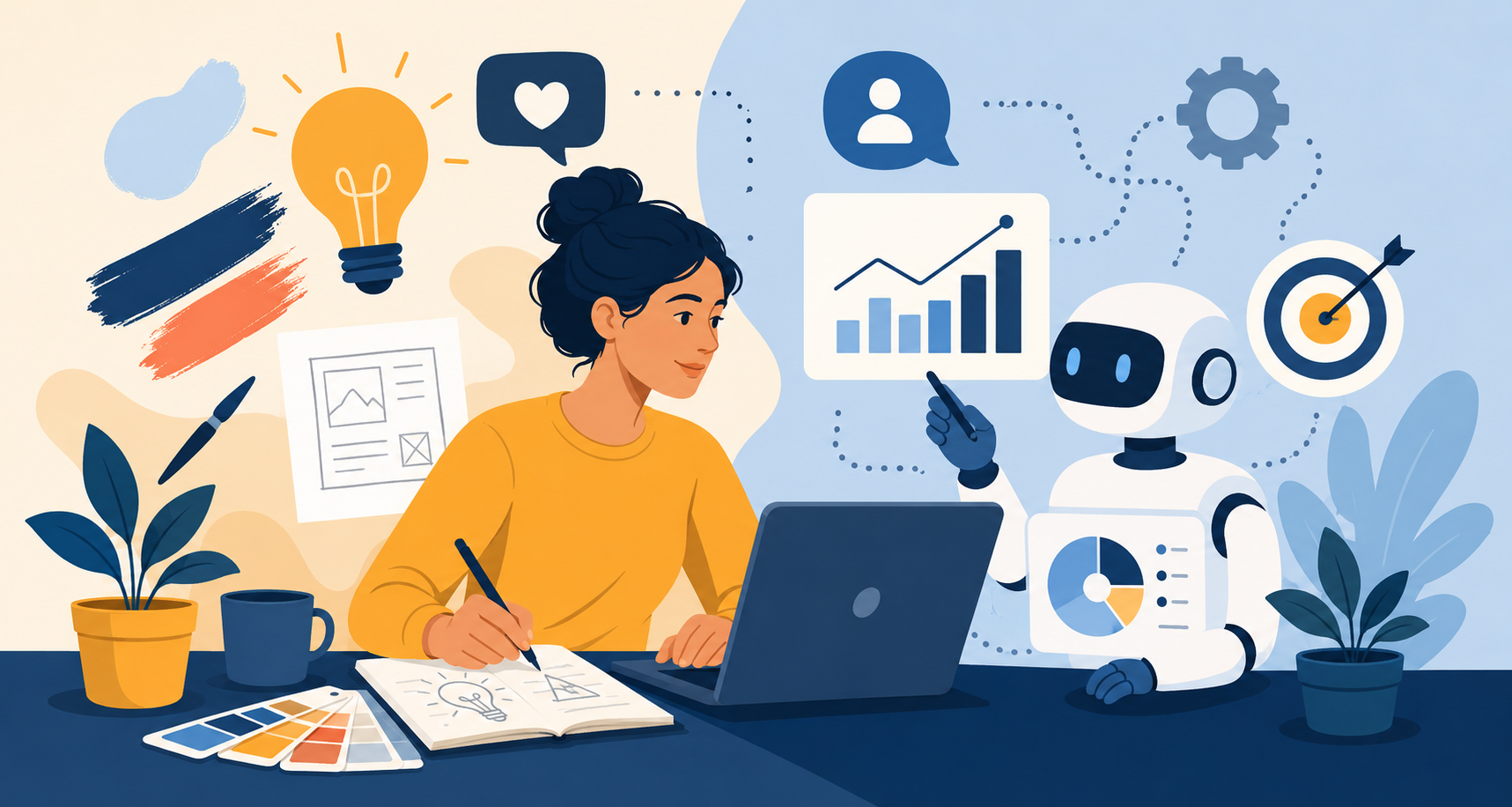
Artificial intelligence is changing the way businesses approach digital marketing. From automated content generation to predictive analytics and AI-powered ad targeting, brands now have access to tools that can produce campaigns faster than ever before. But while automation has improved efficiency, one thing remains impossible to replace completely: human creativity.
Businesses that rely entirely on AI-generated marketing often discover that their messaging starts to feel repetitive, generic, and emotionally disconnected. Customers may notice polished content, but they rarely feel a real connection to it. That’s because successful marketing is not only about speed or automation. It is about storytelling, emotion, strategy, and human understanding.
Today’s most effective digital marketing strategies combine AI technology with genuine human creativity. AI can support workflows and data analysis, but people still shape the ideas that inspire audiences, build trust, and create memorable brands.
Why AI Became a Major Force in Marketing
AI marketing tools have grown rapidly because businesses want faster production, lower costs, and more scalable systems. Companies now use AI to generate blog outlines, automate email sequences, analyze customer behavior, and even optimize advertising campaigns.
These tools can process large amounts of information in seconds, helping marketers make quicker decisions. AI also improves efficiency for repetitive tasks that once consumed valuable time.
For many businesses, automation creates opportunities to focus more on strategy rather than manual execution. Similar to how businesses compare the differences between manual and automated SEO audits, marketing teams are now balancing automation with human oversight to improve both speed and quality.
However, efficiency alone does not guarantee effective marketing.
The Problem With Fully Automated Marketing
Businesses that rely too heavily on AI-generated content often face a common issue: everything starts sounding the same.
AI systems learn from existing online data. Because of that, many automated outputs follow similar sentence structures, tones, and content patterns. Over time, this creates repetitive messaging that struggles to stand out.
Generic Content Creates Weak Brand Identity
When brands publish content without a strong human voice, they risk becoming forgettable. Consumers interact with thousands of advertisements, social media posts, and emails every day. Bland messaging disappears quickly in crowded digital spaces.
Creative marketers understand how to build unique brand personalities. They know how to adapt tone, humor, emotion, and storytelling to specific audiences in ways AI cannot naturally replicate.
Human creativity gives brands individuality.
Emotional Connection Still Drives Consumer Decisions
People make purchasing decisions emotionally first and logically second. Even in highly technical industries, customers still respond to authenticity, trust, and relatable communication.
AI can generate technically correct marketing copy, but it often lacks emotional nuance. Human marketers understand cultural references, customer frustrations, emotional triggers, and real-world experiences that influence decision-making.
This emotional understanding helps businesses create campaigns that feel genuine rather than manufactured.
Creativity Helps Brands Stand Out Online
Modern digital marketing is highly competitive. Every industry is flooded with content, advertisements, and promotional messaging. Businesses that simply publish more content are not always the ones that succeed.
The brands that consistently grow online are the ones that create memorable experiences.
Storytelling Creates Stronger Brand Recall
Stories make marketing more relatable and easier to remember. Whether through video campaigns, blog content, or social media storytelling, creative narratives help customers connect with businesses on a deeper level.
AI can summarize information, but human marketers create stories that feel personal and emotionally engaging.
For example, a moving company could technically explain its services using AI-generated descriptions. But a creative marketer may instead focus on the emotional experience of relocating a family, starting a new career, or transitioning into retirement. That emotional perspective creates stronger audience engagement.
Creative Campaigns Generate More Organic Sharing
People naturally share content that entertains, inspires, educates, or surprises them. Human creativity often drives the originality behind viral campaigns and memorable marketing concepts.
AI tools can help marketers brainstorm ideas, but they rarely create truly original cultural moments on their own.
That originality still comes from human insight.
AI Works Best as a Creative Assistant
The smartest marketing teams are not replacing creativity with AI. Instead, they are using AI to support creative professionals.
This balance allows businesses to improve efficiency while preserving originality.
Where AI Performs Extremely Well
AI can help marketers:
- Analyze customer behavior
- Identify keyword opportunities
- Generate data reports
- Automate repetitive tasks
- Speed up content research
- Improve audience segmentation
- Optimize ad bidding
- Create content drafts
These capabilities allow teams to focus more energy on high-level strategy and creative execution.
Where Human Creativity Remains Essential
Human marketers still lead areas such as:
- Brand storytelling
- Emotional messaging
- Creative direction
- Humor and cultural nuance
- Visual identity concepts
- Campaign originality
- Customer empathy
- Strategic positioning
AI can support these areas, but it cannot fully replace human instinct and emotional intelligence.
Consumers Can Often Detect AI-Generated Content
As AI-generated content becomes more common, audiences are becoming more aware of its patterns.
Consumers increasingly recognize content that feels overly polished, repetitive, or emotionally empty. In some cases, businesses using excessive AI-generated marketing may unintentionally damage trust with their audience.
This is especially important for local businesses and service-based brands where authenticity matters heavily.
Companies struggling with weak engagement sometimes discover that the issue goes beyond SEO or ad performance. In many situations, the deeper problem is that the brand lacks emotional visibility and connection online, similar to the challenges discussed in why your business feels invisible online right now.
Creative Marketing Builds Long-Term Trust
Short-term traffic spikes are useful, but long-term business growth depends on trust and reputation.
Creative marketing helps businesses develop recognizable brand voices that audiences remember over time.
Consistency Matters More Than Automation Alone
Many automated systems focus heavily on quantity. But publishing large amounts of content without clear branding often produces mediocre results.
Creative marketers ensure that every campaign supports a larger brand identity. They align messaging across websites, social media platforms, email campaigns, and advertisements.
That consistency strengthens customer trust.
Human Insight Improves Audience Targeting
AI can analyze audience data, but human marketers understand real-world customer psychology.
Experienced marketers recognize subtle behaviors, emotions, and trends that algorithms may not fully interpret. They understand why certain campaigns resonate emotionally while others fail.
This human insight improves personalization and customer engagement.
AI Cannot Replace Strategic Thinking
One of the biggest misconceptions about AI marketing is the belief that automation alone creates strategy.
In reality, AI executes instructions based on data patterns. Human marketers still define goals, positioning, messaging, and long-term business direction.
Marketing Requires Context
AI may suggest trends or optimize ad performance, but it does not fully understand business relationships, reputation risks, or cultural sensitivity in the same way humans do.
Creative professionals evaluate context before making decisions.
For example, retargeting campaigns may technically increase conversions, but poorly timed or overly aggressive ads can frustrate customers. Effective marketers balance automation with customer experience, much like retargeting strategies that actually bring sales.
Creativity Helps Businesses Adapt Faster
Marketing trends change constantly. Platforms evolve, consumer behavior shifts, and new technologies emerge rapidly.
Human creativity allows businesses to adapt more naturally during these changes.
Creative Teams Spot Emerging Trends Early
Great marketers often recognize emotional or cultural shifts before algorithms fully detect them. They identify changing consumer preferences, new communication styles, and evolving online behavior.
This flexibility gives businesses a competitive advantage.
Original Ideas Create Market Leaders
Many of the world’s most successful marketing campaigns succeeded because someone introduced an unconventional idea.
AI can optimize existing patterns, but revolutionary ideas often come from human imagination.
Businesses that continue investing in creativity are more likely to develop innovative campaigns that differentiate them from competitors.
The Future of Marketing Is Human + AI
AI will continue transforming digital marketing over the next several years. Businesses that ignore automation may eventually fall behind in efficiency and scalability.
At the same time, businesses that depend entirely on automation may struggle to build authentic customer relationships.
The future of successful marketing is not AI versus humans. It is AI working alongside creative professionals.
Businesses Need Both Efficiency and Authenticity
AI helps marketers work faster.
Human creativity helps marketers connect deeper.
When combined properly, businesses gain the benefits of automation without sacrificing originality or emotional impact.
That balance is becoming one of the biggest competitive advantages in modern digital marketing.
Ready to Build Smarter Marketing That Still Feels Human?
Businesses that combine automation with strong creative strategy often see better engagement, stronger branding, and higher-quality leads over time.
Hire a Digital Marketing Agency
Why Creativity Still Matters for Local Marketing
Local businesses especially benefit from human-driven marketing because their audiences value trust and personal connection.
Whether it is a local contractor, dental office, law firm, or retail shop, customers often choose businesses that feel approachable and relatable.
Personal Branding Builds Community Trust
AI can generate local SEO content, but community trust usually develops through authentic storytelling, real customer interactions, and personalized communication.
Creative marketers know how to reflect local culture, values, and customer expectations in their campaigns.
Final Thoughts
AI has permanently changed digital marketing, and its capabilities will continue improving. Automation now helps businesses scale campaigns, improve efficiency, and analyze customer data more effectively than ever before.
But technology alone does not create meaningful brand relationships.
Human creativity remains the driving force behind storytelling, emotional connection, originality, and strategic thinking. These qualities help businesses stand out in increasingly crowded digital spaces.
The brands that succeed in the future will not be the ones that automate everything. They will be the ones that combine intelligent automation with authentic human creativity.
That combination creates marketing people actually remember.
FAQ
Can AI completely replace human marketers?
No. AI can automate many tasks and improve efficiency, but human marketers still provide creativity, emotional intelligence, strategic thinking, and originality that AI cannot fully replicate.
Is AI-generated content bad for SEO?
Not necessarily. AI-generated content can support SEO when properly reviewed and improved by humans. Problems usually happen when businesses publish low-quality automated content without originality or value.
Why does human creativity matter in branding?
Creative branding helps businesses develop emotional connections with customers. It creates memorable experiences, stronger trust, and clearer differentiation from competitors.
How should businesses use AI in marketing?
Businesses should use AI as a support tool rather than a complete replacement for human creativity. AI works best for automation, research, and optimization, while humans handle strategy and storytelling.
Will AI continue changing digital marketing?
Yes. AI will continue shaping advertising, SEO, content creation, analytics, and customer targeting. However, human creativity will remain essential for authentic communication and brand identity.