

UGC vs. Influencer Marketing: Which Drives Better Paid Ad ROI?
June 15, 2026
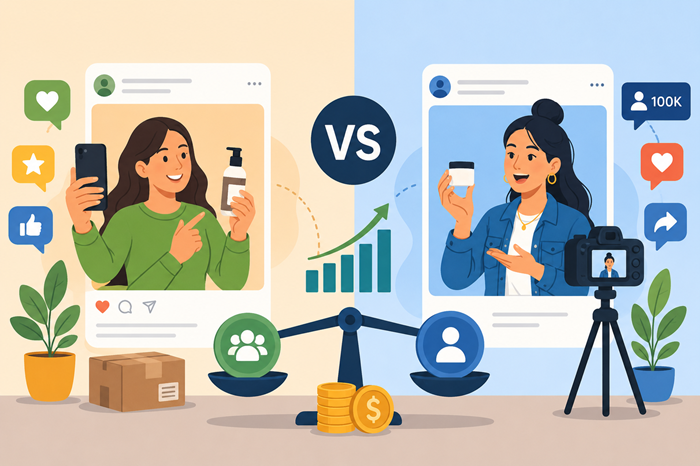
In today’s competitive digital landscape, brands are under constant pressure to maximize advertising performance while keeping acquisition costs under control. Every marketing dollar needs to generate measurable results, and that has sparked a growing debate among marketers: should brands invest more heavily in user-generated content or traditional creator partnerships?
Both approaches can significantly impact campaign performance, but they serve different purposes and deliver different outcomes. Understanding where each strategy excels is essential for building profitable advertising campaigns that scale efficiently.
As businesses continue exploring new ways to improve engagement and conversions, many rely on professional digital marketing services to evaluate which content formats produce the strongest return on investment.
This guide explores the differences between UGC and influencer-led campaigns, compares their strengths and limitations, and helps determine which approach delivers the highest paid advertising ROI.
Understanding User-Generated Content
User-generated content refers to content created by customers, product users, or hired creators that mimics authentic customer experiences. The focus is typically on showcasing a product or service in a relatable and natural way.
Unlike celebrity endorsements or large creator collaborations, this content often feels less promotional and more trustworthy. It is designed to resemble genuine customer feedback, product demonstrations, testimonials, or real-life usage scenarios.
Why Brands Love UGC
Consumers have become increasingly skeptical of polished advertisements. They want to see how products work in real situations before making purchasing decisions.
Because of this, ugc often performs exceptionally well in paid advertising campaigns. The authentic presentation can reduce resistance, increase trust, and improve conversion rates.
Many brands use ugc content across social media ads, landing pages, email campaigns, and product pages because it feels more relatable than traditional advertising.
Common Formats of User-Generated Content
Some of the most effective formats include:
- Product demonstrations
- Customer testimonials
- Unboxing videos
- Before-and-after showcases
- Lifestyle content
- Problem-solving tutorials
The flexibility of these formats makes them highly adaptable across different marketing channels.
What Is Influencer Marketing?
Influencer collaborations involve partnering with creators who have built an audience and established credibility within a specific niche.
These creators promote products through their personal channels and leverage their relationship with followers to increase awareness, engagement, and sales.
Over the past decade, influencer marketing has evolved from celebrity endorsements into a sophisticated marketing channel that includes creators of all audience sizes.
Why Brands Invest in Creator Partnerships
Influencers bring built-in audiences that brands can immediately access.
Instead of starting from zero, companies can place products in front of thousands or even millions of targeted consumers who already trust the creator’s recommendations.
This makes creator partnerships particularly valuable for:
- Brand awareness campaigns
- Product launches
- Community building
- Audience expansion
- Social proof generation
When executed correctly, campaigns can produce significant visibility and engagement.
The Core Difference Between UGC and Influencer Campaigns
While these strategies are often grouped together, they serve different business goals.
UGC focuses primarily on content creation.
Influencer campaigns focus primarily on audience distribution.
With user-generated content, brands are typically paying for creative assets they can use across marketing channels.
With creator partnerships, brands are paying for both content creation and audience access.
This distinction has a major impact on advertising ROI.
How Paid Ad ROI Is Measured
Before comparing performance, it’s important to understand what paid ad ROI actually means.
Most brands evaluate campaigns using metrics such as:
- Cost per acquisition (CPA)
- Return on ad spend (ROAS)
- Conversion rate
- Click-through rate (CTR)
- Customer acquisition cost (CAC)
- Revenue generated
The content that produces the highest conversions at the lowest acquisition cost generally delivers the strongest return.
Why UGC Often Outperforms in Paid Advertising
When brands run paid ads, authenticity matters more than production quality.
Consumers scrolling through social feeds tend to ignore overly polished advertisements. Content that feels native to the platform often receives better engagement.
Increased Consumer Trust
People trust other consumers more than branded messages.
User-generated content frequently appears less scripted, making it easier for viewers to connect with the message.
This trust factor often translates into stronger conversion rates.
Lower Creative Costs
Producing UGC is typically more affordable than large-scale creator collaborations.
Brands can generate multiple content variations without committing significant budget to a single campaign.
This allows marketers to test more creative concepts and identify top-performing assets faster.
Better Ad Fatigue Management
Paid campaigns require a constant stream of fresh creative.
Because user-generated content is relatively inexpensive to produce, brands can continuously rotate new assets and reduce audience fatigue.
This helps maintain performance over longer advertising periods.
Greater Control Over Creative Assets
When brands acquire content rights, they can repurpose assets across numerous channels.
This flexibility improves the lifetime value of each creative investment.
Businesses looking to consistently improve campaign performance often focus on strategies that help them create relevant content tailored to audience behavior and search intent.
When Influencer Campaigns Deliver Strong ROI
Although UGC frequently excels in direct-response advertising, influencer partnerships remain highly valuable in certain scenarios.
Building Awareness Quickly
Creators can expose products to large audiences almost instantly.
This makes them particularly effective for:
- New product launches
- Emerging brands
- Market expansion initiatives
- Seasonal promotions
Leveraging Established Trust
Influencers spend years building relationships with followers.
When recommendations feel authentic, audiences may be more willing to explore a brand.
This credibility can accelerate customer discovery and improve top-of-funnel performance.
Reaching Highly Targeted Communities
Niche creators often attract specific demographics.
Whether targeting fitness enthusiasts, technology buyers, parents, or business professionals, influencer partnerships can help brands connect with highly relevant audiences.
Comparing Cost Efficiency
One of the biggest differences between the two approaches is budget allocation.
UGC Costs
Brands typically pay for:
- Content production
- Creator fees
- Licensing rights
There is no audience access fee because the content is primarily intended for brand-owned channels and paid advertisements.
Influencer Costs
Brands usually pay for:
- Content production
- Audience distribution
- Creator fees
- Campaign management
As audience size increases, costs can rise substantially.
For many organizations, this makes influencer partnerships less efficient for direct-response advertising compared to user-generated content.
Which Strategy Generates Better Conversions?
In many paid advertising environments, UGC wins because it feels authentic and conversion-focused.
The content is created specifically to drive action.
Influencer content, on the other hand, is often optimized for audience engagement rather than direct sales.
This distinction can significantly impact advertising performance.
UGC Excels at Bottom-Funnel Marketing
Consumers close to making a purchase typically seek reassurance.
Testimonials, demonstrations, and real customer experiences can provide the final push needed to convert.
As a result, user-generated content frequently performs better in retargeting campaigns and sales-focused advertisements.
Influencers Support Top-Funnel Growth
Creator partnerships often perform best during the awareness stage.
They introduce products to new audiences and generate interest before consumers enter the buying process.
For many brands, the ideal solution combines both approaches.
The Hybrid Strategy: Why Many Brands Use Both
The highest-performing brands rarely choose one strategy exclusively.
Instead, they use creator partnerships to generate awareness and then repurpose content into paid campaigns.
This approach creates a powerful marketing funnel.
Awareness Stage
Creators introduce the brand to new audiences.
Consideration Stage
Consumers encounter testimonials and educational content.
Conversion Stage
Paid ads featuring authentic user experiences encourage purchases.
This integrated model often delivers stronger results than relying on a single tactic.
Many organizations also strengthen campaign effectiveness by regularly reviewing content quality, authority signals, and overall website credibility through best practices related to e-e-a-t in seo.
How Technology Is Changing the Landscape
Brands now have access to sophisticated tools that simplify creator discovery and campaign management.
An influencer marketing platform can help businesses identify suitable creators, manage collaborations, track performance, and measure results more effectively.
These technologies make it easier to combine creator partnerships with user-generated content strategies.
At the same time, the growth of instagram influencer marketing continues to create new opportunities for brands seeking visibility among highly engaged audiences.
Choosing the Right Approach for Your Business
The best strategy depends on your goals.
Choose UGC If You Want:
- Higher conversion rates
- Lower advertising costs
- More creative testing opportunities
- Better direct-response performance
- Scalable ad creative production
Choose Influencer Campaigns If You Want:
- Greater brand awareness
- Access to established communities
- Product launch support
- Audience growth
- Social credibility
Choose Both If You Want Maximum ROI
A combined strategy often delivers the strongest results by leveraging awareness from creators and conversion-focused content within paid advertising campaigns.
Businesses that regularly optimize campaigns and update service pages for better seo often find that stronger content ecosystems improve both paid and organic marketing performance.
Additionally, brands evaluating whether modern creator partnerships still generate value should continue monitoring trends in influencer marketing, audience behavior, and platform evolution.
Conclusion
When measuring pure paid advertising ROI, user-generated content often has the advantage. Its authenticity, affordability, scalability, and strong conversion performance make it exceptionally effective for direct-response campaigns.
However, influencer partnerships remain powerful for building awareness, generating trust, and reaching new audiences. Rather than viewing these approaches as competitors, successful brands increasingly combine them into a unified strategy.
The most profitable campaigns frequently begin with creator-driven exposure and finish with conversion-focused content that turns interest into action. By understanding the strengths of each approach, marketers can allocate budgets more effectively and maximize overall advertising returns.
FAQs
1. What is the main difference between UGC and influencer campaigns?
UGC focuses on content creation, while influencer campaigns focus on content distribution and audience access.
2. Which strategy is more affordable?
UGC is generally more cost-effective because brands primarily pay for content creation.
3. Which delivers higher paid ad conversions?
UGC often produces stronger conversion rates in direct-response advertising.
4. Are influencer partnerships still effective?
Yes, they remain valuable for awareness, trust-building, and audience growth.
5. Should brands use both strategies together?
Yes, combining both approaches often creates the strongest overall marketing results.