

Traditional vs Digital Marketing: What Really Sets Them Apart Today
December 29, 2025
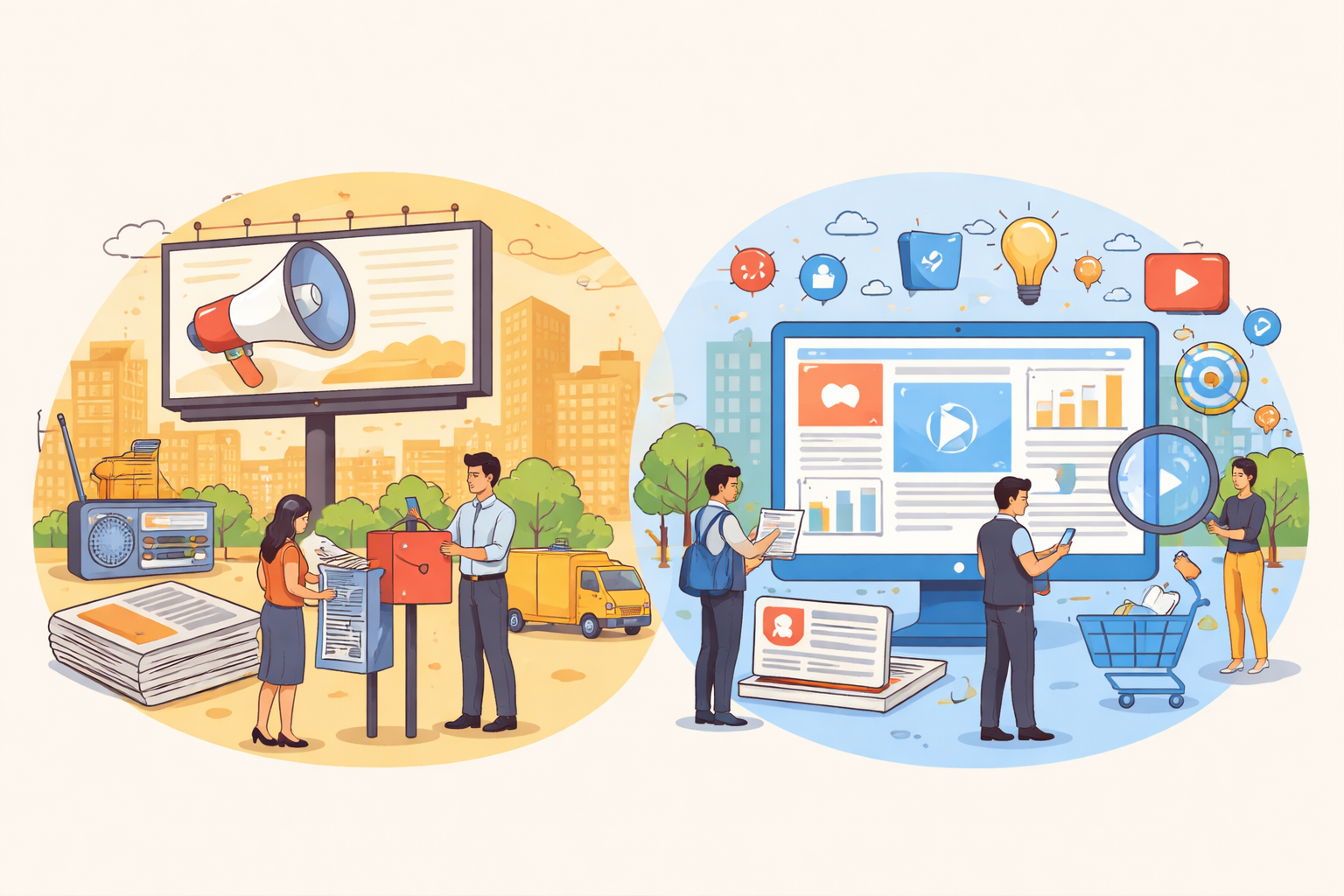
Marketing has always revolved around one essential goal: reaching the right audience with the right message at the right moment. What has changed over time is the way businesses achieve that connection. As consumer behavior shifts and technology evolves, the contrast between traditional marketing and digital marketing has become more pronounced than ever.
Understanding the difference between these two approaches helps businesses allocate budgets more effectively, set realistic expectations, and build sustainable growth strategies. Rather than viewing them as competing options, it’s more useful to understand how they function, where they differ, and why digital marketing has become the dominant force in modern brand building.
What Traditional Marketing Really Looks Like
Traditional marketing refers to offline promotional methods that were established long before the internet became central to everyday life. These channels focus on mass exposure through physical or broadcast formats.
Common Traditional Marketing Channels
Traditional marketing typically includes print advertisements in newspapers and magazines, billboards along major roads, flyers and brochures, radio spots, television commercials, and direct mail. These channels aim to place a brand directly in front of an audience, often without any guarantee that the message aligns with immediate interest.
For decades, these methods were the foundation of brand visibility. Seeing a company advertised repeatedly in print or on television helped establish recognition and familiarity within a community or region.
Strengths of Traditional Marketing
One of the key advantages of traditional marketing is its ability to create strong brand recall. Large-format visuals, radio jingles, and TV commercials can leave lasting impressions. For local businesses, physical exposure can reinforce trust and legitimacy, especially when combined with consistent messaging.
Traditional campaigns can also feel more tangible. Printed materials and physical signage create a sense of permanence that some audiences still value.
Limitations of Traditional Marketing
Despite its strengths, traditional marketing comes with notable limitations. Campaigns are often expensive, inflexible, and difficult to measure. Once an ad is printed or aired, changes are costly or impossible. Performance tracking usually relies on estimates rather than precise data.
Most importantly, traditional marketing casts a wide net. Messages are delivered to large audiences regardless of relevance, leading to wasted spend and lower efficiency.
How Digital Marketing Works Today
Digital marketing focuses on online channels that allow businesses to engage audiences through data-driven, targeted, and measurable strategies. It meets consumers where they already spend time—on search engines, websites, and mobile devices.
The Digital Marketing Ecosystem
At the center of digital marketing is a strong online presence. A well-structured website supported by thoughtful web design ensures visitors can easily navigate, understand, and trust a brand. Visibility is further strengthened through search engine optimization, which allows businesses to appear when users actively look for relevant solutions.
Paid advertising models such as pay per click campaigns provide immediate exposure while maintaining complete control over spending and audience targeting. Content amplification through guest posting builds authority and reach by placing brand messages within trusted external platforms. Together, these elements create a connected system rather than isolated efforts.
Why Digital Marketing Delivers Stronger Results
Digital marketing is built on flexibility and insight. Campaigns can be launched quickly, adjusted in real time, and optimized based on performance data. Audience targeting is precise, allowing brands to reach users based on intent, behavior, location, and interests.
This level of control makes digital marketing particularly effective for businesses offering specialized services, products, or experiences that require trust and clarity.
Traditional Marketing vs Digital Marketing: Core Differences
While both approaches aim to promote products and services, they differ significantly in execution, efficiency, and outcomes.
Targeting and Audience Reach
Traditional marketing focuses on broad exposure. A newspaper ad reaches every reader, whether or not they are interested. Digital marketing targets specific users, delivering messages only to those most likely to engage.
This precision improves relevance and increases the likelihood of conversion.
Cost Structure and Budget Flexibility
Traditional campaigns often require significant upfront investment, especially for television, print, and outdoor advertising. Digital campaigns allow businesses to start small, test performance, and scale gradually.
With digital platforms, budgets can be adjusted instantly based on results, ensuring money is spent where it performs best.
Tracking and Performance Measurement
One of the most critical differences lies in measurability. Traditional marketing provides limited insight into performance. Digital marketing offers real-time analytics, showing exactly how users interact with content and ads.
This transparency empowers businesses to make informed decisions rather than relying on assumptions.
Speed and Adaptability
Digital marketing moves quickly. Campaigns can be launched within hours and refined instantly. Traditional marketing requires longer production timelines and fixed schedules, limiting responsiveness in fast-changing markets.
Brand Building in the Digital Era
Brand perception today is shaped largely online. A company’s website, content, and search visibility often create the first impression. Businesses investing in app development ensure smooth mobile experiences that align with modern user expectations.
Digital marketing allows brands to maintain consistency across channels while reinforcing authority through valuable content and optimized visibility. Traditional marketing can support recognition, but digital channels shape ongoing relationships.
Consumer Behavior Has Fundamentally Changed
Today’s consumers research before making decisions. They search, compare, and evaluate options long before contacting a business. Digital marketing aligns seamlessly with this behavior by ensuring brands are present throughout the buyer journey.
Search visibility captures high-intent users. Strategic content reinforces trust. Paid campaigns address immediate demand. These elements work together to support long-term growth.
Integration Creates Stronger Marketing Systems
Effective marketing strategies don’t isolate channels. Traditional efforts can drive awareness, while digital channels capture, nurture, and convert interest. Offline campaigns often direct audiences online, where deeper engagement happens.
Digital marketing frequently serves as the foundation, supported by integrated marketing services that align branding, messaging, and performance tracking across platforms.
ROI and Long-Term Value
Digital marketing consistently delivers stronger return on investment due to its trackability and scalability. Businesses can identify high-performing channels, refine messaging, and reduce wasted spend over time.
Traditional marketing may still serve awareness goals, but digital strategies provide the accountability and optimization needed for sustained growth.
The Direction Marketing Is Headed
As technology advances, marketing continues to become more personalized, data-driven, and automated. Digital platforms adapt quickly to user behavior, delivering relevant messages at optimal moments.
Businesses that prioritize digital marketing position themselves for long-term relevance, stronger customer relationships, and competitive advantage.
Final Thoughts
The debate between traditional marketing and digital marketing isn’t about choosing one over the other. It’s about understanding reach versus relevance, visibility versus measurability, and static messaging versus adaptive engagement.
Traditional marketing still plays a role in specific contexts. Digital marketing, however, offers the tools modern businesses need to grow efficiently in a connected world. Understanding these differences allows brands to build smarter, more resilient marketing strategies.