

Difference Between Solar Panel Manufacturer and Performance Warranties
July 3, 2026
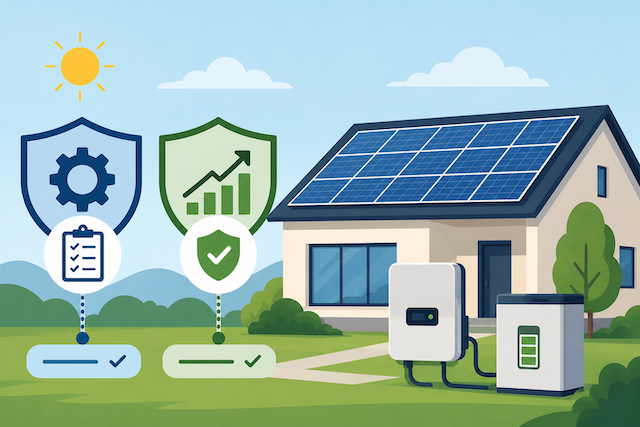
Investing in solar energy is a long-term decision, and understanding your solar panel warranty is just as important as choosing the right equipment. While homeowners often compare panel efficiency, pricing, and installation costs, many overlook the protection that comes with their purchase.
Two warranties are commonly included with residential solar panels: the manufacturer’s warranty and the performance warranty. Although both are designed to protect your investment, they serve very different purposes. One focuses on the quality of the product itself, while the other guarantees how well your panels will generate electricity over time.
Knowing the difference between these warranties can help you avoid unexpected costs, compare solar products more effectively, and choose a system that delivers reliable performance for decades.
What Is a Manufacturer’s Warranty for Solar Panels?
A manufacturer’s warranty protects you against defects in the solar panel itself. If a panel develops a problem because of poor materials or manufacturing errors, the manufacturer is responsible for repairing or replacing the affected product within the warranty period.
This warranty essentially guarantees that the solar panel was built to meet quality standards when it left the factory.
What Does a Manufacturer’s Warranty Cover?
A manufacturer’s warranty may include coverage for:
- Manufacturing defects
- Faulty materials
- Defective electrical components
- Premature equipment failure caused by production issues
- Workmanship issues related to the panel itself
Coverage typically ranges between 10 and 25 years, although many premium manufacturers now offer product warranties lasting 25 years or more.
It’s important to remember that this warranty does not guarantee energy production. Instead, it guarantees the physical condition and functionality of the product.
If you’re interested in how long solar equipment is designed to last, learning about how 260W solar panels perform over their lifespan provides additional insight into durability and long-term reliability.
What Is Usually Not Covered?
Most manufacturer’s warranties exclude:
- Storm or weather damage
- Improper installation
- Physical accidents
- Unauthorized modifications
- Lack of maintenance
- Damage caused during transportation after installation
Because warranty terms differ between manufacturers, reading the fine print before purchasing is always recommended.
What Is a Performance Warranty?
A performance warranty guarantees that your solar panels will continue producing electricity at a specified level throughout their expected lifespan.
Unlike a manufacturer’s warranty, this coverage isn’t concerned with whether the panel physically breaks. Instead, it measures how efficiently the panel converts sunlight into electricity over time.
Since all solar panels naturally lose a small amount of efficiency as they age, manufacturers provide a minimum performance guarantee.
How Does a Performance Warranty Work?
Most manufacturers promise that their panels will maintain a certain percentage of their original output after 25 years.
A typical performance warranty may look like this:
- Around 98% output after the first year
- Gradual degradation of approximately 0.4–0.7% annually
- Roughly 80–90% of original output after 25 years
If your panels degrade faster than the guaranteed rate, the manufacturer may repair, replace, or compensate for the affected panels depending on the warranty terms.
To better understand why efficiency naturally changes over time, it’s helpful to explore how home solar panels generate electricity throughout their lifespan.
Why Performance Warranties Matter
Solar panels are expected to operate for decades. Even a small difference in long-term efficiency can significantly affect the amount of electricity your system generates over its lifetime.
A strong performance warranty gives homeowners confidence that their system will continue delivering dependable energy savings year after year.
Manufacturer’s Warranty vs. Performance Warranty
Although both warranties protect your investment, they address different concerns.
Manufacturer’s Warranty
- Primary purpose: Covers manufacturing defects
- Defective materials: Yes
- Production efficiency: No
- Typical duration: 10–25 years
- Declining power output: No
- Physical defects: Yes
- Normal degradation: No
Performance Warranty
- Primary purpose: Guarantees long-term energy production
- Defective materials: No
- Production efficiency: Yes
- Typical duration: Usually 25 years
- Declining power output: Yes
- Physical defects: Only if related to the performance guarantee
- Normal degradation: Yes
Understanding both warranties allows you to evaluate solar products beyond just price and efficiency ratings.
Why Both Warranties Are Important
A solar system represents a significant investment, so relying on just one type of warranty isn’t enough.
A manufacturer’s warranty protects you if the equipment itself fails prematurely due to defects.
A performance warranty ensures your system continues generating electricity efficiently for decades.
Together, they provide comprehensive protection by covering both the physical product and its long-term energy production.
How to Compare Solar Panel Warranties
Not all warranties offer the same level of protection. Before purchasing solar panels, compare several key details.
Compare Warranty Length
Longer warranties generally indicate greater manufacturer confidence in product quality.
While some entry-level panels include 10- or 12-year product warranties, many premium manufacturers now provide 25-year coverage.
Review the Performance Guarantee
Look closely at the guaranteed power output after 25 years.
Higher guarantees usually indicate slower degradation rates, allowing your system to produce more electricity over its lifetime.
Understand the Degradation Rate
Rather than focusing only on the final efficiency percentage, examine the annual degradation rate.
Lower degradation means your panels maintain stronger performance over many years.
Check the Manufacturer’s Reputation
Warranty coverage is only valuable if the manufacturer remains in business and honors claims.
Research the company’s track record, customer reviews, financial stability, and years of experience in the solar industry.
If you’re evaluating complete system performance, understanding the different types of solar inverters for residential installations can also help you choose reliable components that complement your panels.
Common Misunderstandings About Solar Warranties
Many homeowners assume that every issue with their solar system is automatically covered. In reality, warranties have limitations.
Here are some common misconceptions.
“A 25-Year Warranty Means Everything Is Covered”
Not necessarily.
A 25-year performance warranty only guarantees energy production, while the manufacturer’s warranty may be significantly shorter.
Always verify the duration of each warranty separately.
“Physical Damage Is Always Covered”
Damage from hail, falling branches, flooding, or accidents is usually excluded from manufacturer warranties.
These situations may instead be covered by your homeowner’s insurance policy.
“Performance Warranties Guarantee Maximum Efficiency Forever”
Performance warranties account for normal aging.
Solar panels naturally become slightly less efficient each year, and warranties simply guarantee that the decline stays within acceptable limits.
Questions to Ask Before Buying Solar Panels
Before signing a solar contract, ask your installer these important questions:
- How long is the manufacturer’s warranty?
- How long is the performance warranty?
- What percentage of output is guaranteed after 25 years?
- What is the annual degradation rate?
- Who handles warranty claims?
- Does labor for replacement panels have separate coverage?
- Are shipping and installation costs included in warranty service?
These questions can help you compare products more accurately and avoid surprises later.
Choosing a Solar System That Delivers Long-Term Value
Price shouldn’t be the only factor when selecting solar panels.
Panels with stronger warranties often provide greater long-term value because they reduce financial risk while ensuring reliable energy production.
Some homeowners also consider alternatives such as solar shingles that combine energy production with modern roof design when comparing long-term roofing and solar investments.
Evaluating the complete warranty package alongside efficiency ratings, degradation rates, and manufacturer reputation leads to a smarter purchasing decision.
Frequently Asked Questions
Which warranty is more important?
Both are equally important because they protect different aspects of your investment. The manufacturer’s warranty covers product defects, while the performance warranty guarantees long-term electricity production.
What is a typical solar panel performance warranty?
Most residential solar panels include a 25-year performance warranty that guarantees approximately 80% to 90% of the panel’s original output after 25 years.
Can a solar panel fail even if it has a performance warranty?
Yes. A panel may experience physical defects covered under the manufacturer’s warranty or continue functioning while producing less electricity than guaranteed, which falls under the performance warranty.
Are installation mistakes covered by the manufacturer’s warranty?
Generally, no. Installation errors are usually covered by the installer’s workmanship warranty rather than the panel manufacturer.
How do I make a warranty claim?
The process varies by manufacturer. In most cases, you’ll contact either your solar installer or the panel manufacturer, provide proof of purchase, and document the issue through testing or inspection.
Final Thoughts
Understanding the difference between a manufacturer’s warranty and a performance warranty is essential before investing in solar panels.
The manufacturer’s warranty protects you against defects in materials and workmanship, while the performance warranty ensures your system continues generating electricity at expected levels for decades. Together, these warranties provide valuable protection and help maximize the return on your solar investment.
When comparing solar systems, don’t focus solely on upfront costs. Carefully review warranty terms, degradation rates, manufacturer reputation, and long-term performance guarantees to ensure you’re choosing equipment that will continue delivering clean, dependable energy for many years.