

How Much Revenue You're Losing Without Digital Marketing
April 20, 2026
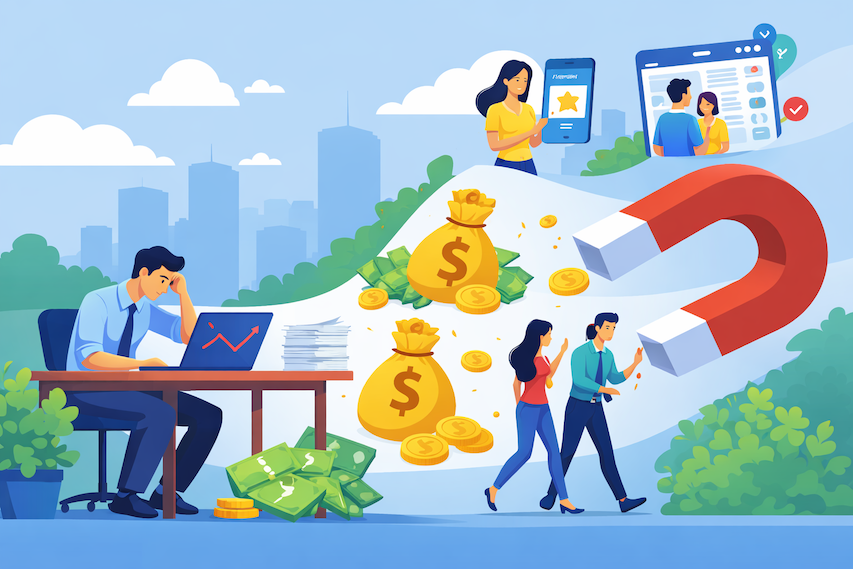
If you’re running a business without a strong digital marketing strategy, you’re almost certainly losing revenue—every single day.
Today’s customers don’t just walk into stores or rely on referrals. They search online, compare options, read reviews, and make decisions quickly. If your business isn’t visible during that process, your competitors are capturing those customers instead.
This isn’t about keeping up with trends—it’s about staying competitive in a market where digital presence directly impacts your bottom line.
So let’s get straight to it: how much revenue is your business losing without digital marketing?
The Cost of Being Invisible Online
If Customers Can’t Find You, They Can’t Buy
Think about how people search today. Whether it’s a local service, a product, or a solution to a problem, most buying journeys start online.
If your business:
- Doesn’t rank on Google
- Has little to no online presence
- Isn’t running targeted ads
Then you’re not even part of the conversation.
And in a competitive US market, that’s a serious problem.
Your Competitors Are Already Winning Online
Businesses across the US are investing heavily in:
- Search engine optimization (SEO)
- Google and social media ads
- Content marketing
- Conversion-focused websites
These aren’t optional strategies anymore—they’re standard.
If your competitors are doing this and you’re not, you’re essentially handing them your potential customers.
Let’s Break Down the Revenue Loss
A Realistic Example
Let’s say you own a local service business.
- Monthly searches in your area: 2,000
- Potential conversion rate: 3%
- Potential customers: 60
- Average sale value: $300
That’s $18,000 per month in potential revenue.
If your business isn’t visible online, most of that goes to competitors.
Over a year, that’s $216,000 in missed revenue—and that’s a conservative estimate.
Why This Happens
Without digital marketing:
- You don’t appear in search results
- You don’t capture high-intent traffic
- You don’t convert visitors efficiently
It’s not that demand isn’t there—it’s that you’re not capturing it.
Why Traditional Marketing Alone Doesn’t Work Anymore
Consumer Behavior Has Changed
Even if someone hears about your business through word-of-mouth, what’s the first thing they do?
They Google you.
If they find:
- An outdated website
- No reviews
- No social presence
They hesitate—or move on.
Trust is built online now, and without it, conversions drop.
Digital Presence Drives Credibility
Your website, search rankings, and online content all act as proof that your business is legitimate and professional.
Without these elements, you’re losing not just traffic—but trust.
Where Most Businesses Lose Revenue
1. Weak or Non-Existent SEO
If your business isn’t ranking on Google, you’re missing out on organic traffic.
SEO allows you to:
- Show up when people are actively searching
- Generate consistent leads
- Build long-term visibility
Without it, you rely on inconsistent sources of traffic.
2. Poor Website Performance
Your website should convert visitors into customers.
But many businesses lose leads because:
- Pages load too slowly
- Design looks outdated
- Navigation is confusing
Even small issues can cause potential customers to leave.
3. No Paid Advertising Strategy
Paid ads are one of the fastest ways to generate leads.
Without them:
- You miss immediate opportunities
- You can’t target high-intent audiences
- You rely solely on organic traffic
In a competitive US market, that puts you at a disadvantage.
4. Lack of Conversion Optimization
Getting traffic is only half the equation.
If your website isn’t designed to convert, you lose potential customers even after they find you.
This includes:
- Weak calls-to-action
- Poor layout
- Lack of trust signals
The Compounding Power of Digital Marketing
Growth That Builds Over Time
Digital marketing isn’t a one-time effort—it compounds.
- SEO rankings improve over time
- Content builds authority
- Ads become more efficient with data
- Retargeting increases conversions
The longer you invest, the stronger your results become.
Small Improvements, Big Results
Even modest improvements can significantly impact revenue:
- A 1% increase in conversion rate
- Better targeting in ads
- Improved website user experience
These changes add up quickly.
Industry-Specific Impact
The revenue loss varies by industry, but the pattern is the same.
For example:
- Travel businesses rely heavily on online visibility, making effective travel agent marketing essential for consistent bookings
- Interior designers depend on strong branding and online discovery, where smart interior design marketing can directly influence client acquisition
No matter the industry, digital marketing plays a critical role in revenue growth.
Why DIY Marketing Often Fails
Lack of Strategy
Many business owners try to handle marketing themselves—but without a clear plan, results are inconsistent.
Posting occasionally or running ads without targeting rarely leads to meaningful growth.
Time and Resource Limitations
Effective marketing requires:
- Continuous optimization
- Data analysis
- Testing and refinement
Most business owners simply don’t have the time to manage all of this effectively.
Costly Mistakes
Without experience, it’s easy to:
- Waste ad budget
- Target the wrong audience
- Miss SEO opportunities
- Overlook conversion issues
These mistakes lead to lost revenue.
How a Digital Marketing Agency Changes the Game
Turning Missed Opportunities into Revenue
A professional agency builds systems designed to generate results.
This includes:
- Strategic SEO implementation
- High-performing ad campaigns
- Conversion-focused design
- Data-driven decision-making
Focus on Running Your Business
Outsourcing marketing allows you to focus on:
- Operations
- Customer service
- Scaling your business
While experts handle growth.
Measurable ROI
One of the biggest advantages of digital marketing is transparency.
You can track:
- Traffic
- Leads
- Conversions
- Revenue
A well-executed strategy provides clear, measurable returns through a strong digital growth strategy.
Marketing Solutions that Scale
So, How Much Are You Losing?
By now, the answer is clear—it’s more than you think.
It’s:
- Lost daily opportunities
- Missed monthly revenue
- Slower long-term growth
And in a competitive US market, that gap only widens over time.
What You Should Do Next
The first step is understanding where your business stands.
Ask yourself:
- Are you showing up in search results?
- Is your website converting visitors?
- Are you reaching the right audience?
If you’re unsure, that’s where expert help makes a difference.
Conclusion
Digital marketing isn’t just a growth tool—it’s a necessity.
Every day without it means:
- Less visibility
- Fewer leads
- Lower revenue
Businesses that invest in digital marketing aren’t just surviving—they’re scaling.
The question isn’t whether you should start.
It’s how much longer you can afford to wait.