

B2B vs B2C Marketing: What Makes Their Strategies Different
March 18, 2026
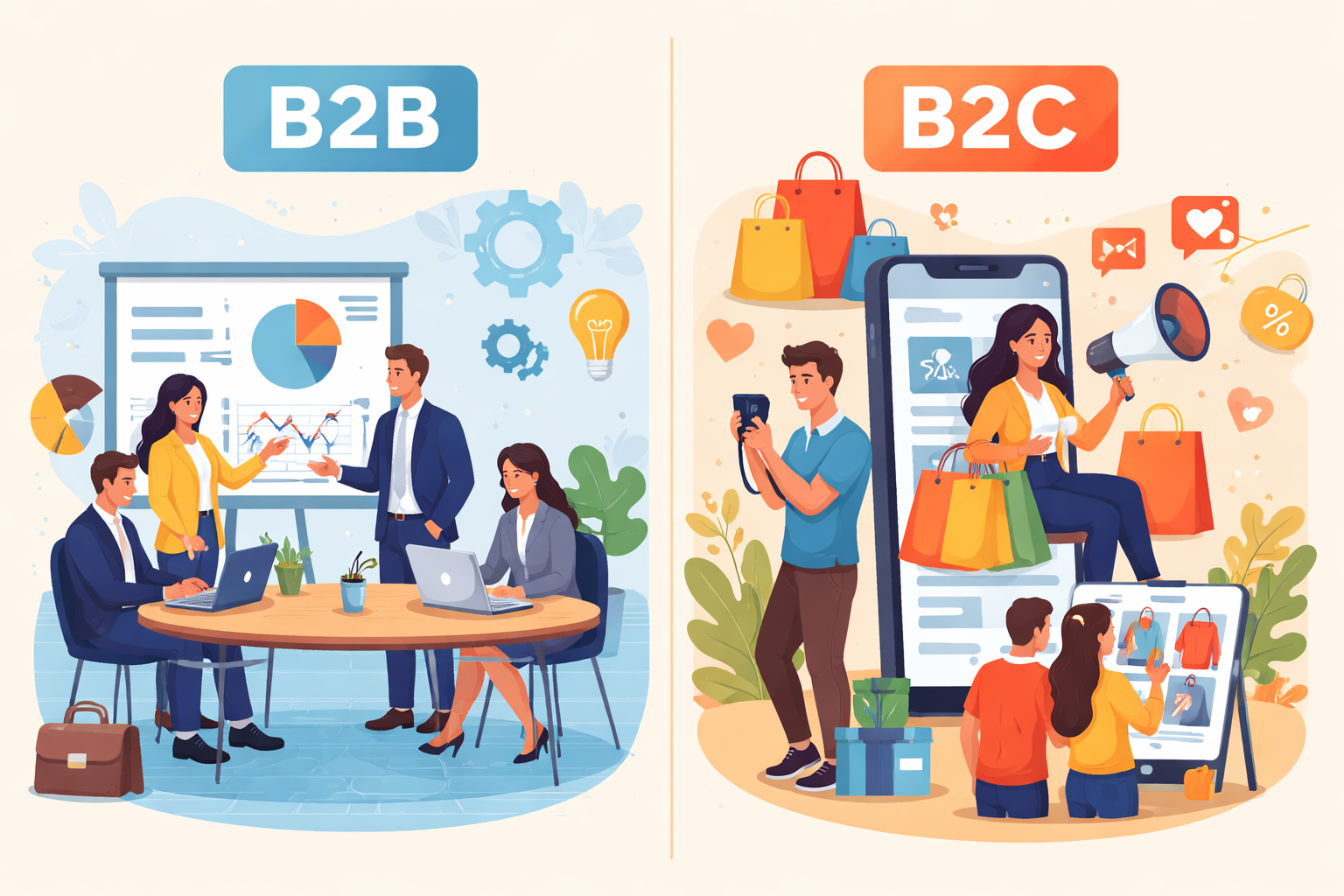
Digital marketing strategies vary widely depending on who a company is trying to reach. A business selling software to other companies approaches marketing very differently than a brand selling products directly to consumers.
These differences influence messaging, content creation, advertising channels, and conversion strategies.
Understanding how B2B (business-to-business) and B2C (business-to-consumer) marketing work helps companies design campaigns that attract the right audience and generate meaningful results.
This guide explores the key strategic differences between B2B and B2C digital marketing, how they influence campaigns, and how businesses can tailor their strategies accordingly.
Understanding B2B and B2C Marketing
Digital marketing generally falls into two categories depending on the target audience.
B2B Marketing
B2B marketing focuses on selling products or services to other businesses.
Examples include:
- Marketing agencies serving corporate clients
- SaaS companies selling enterprise software
- Logistics providers supporting supply chains
These transactions often involve higher budgets, longer research periods, and multiple decision-makers.
Businesses operating in this space often rely on structured digital marketing strategies designed to generate qualified leads and build long-term partnerships.
B2C Marketing
B2C marketing focuses on selling directly to individual consumers.
Examples include:
- Ecommerce brands
- Retail stores
- Restaurants and travel companies
These purchases are typically faster and more emotional, often influenced by brand perception, pricing, or convenience.
Key Difference #1: Buyer Decision Process
The first major difference between B2B and B2C marketing is how buyers make decisions.
B2B Decision-Making
In B2B marketing, buyers evaluate solutions carefully before committing.
Decisions often involve:
- Multiple stakeholders
- Budget approvals
- ROI calculations
- Long-term operational impact
Because of this, messaging must focus on logic, data, and business outcomes.
B2C Decision-Making
In B2C marketing, buyers usually make decisions more quickly.
Purchases are often influenced by:
- Emotions
- Price promotions
- Brand identity
- Personal preferences
Marketing campaigns therefore rely more on storytelling and visual engagement.
Key Difference #2: Sales Cycle Length
Another important difference is the length of the buying journey.
B2B Sales Cycles
B2B sales cycles are longer, sometimes lasting weeks or months.
The process often includes:
- Researching solutions
- Comparing vendors
- Reviewing case studies
- Internal discussions
- Negotiation and approval
Because of this, marketing strategies must nurture leads through informative content.
B2C Sales Cycles
B2C sales cycles are typically short.
Many consumer purchases happen within minutes.
Examples include:
- Buying products online
- Ordering food delivery
- Booking travel experiences
Marketing campaigns therefore focus on fast conversions and compelling offers.
Key Difference #3: Content Strategy
Content marketing plays a major role in both strategies, but the type of content differs significantly.
B2B Content Marketing
B2B content focuses on expertise and education.
Common formats include:
- Industry reports
- Whitepapers
- Case studies
- In-depth blog articles
- Webinars
These resources help build credibility and support longer decision processes.
Companies also rely on strong online platforms supported by professional website design to present expertise and generate leads effectively.
B2C Content Marketing
B2C content is designed to attract attention and create emotional engagement.
Typical formats include:
- Social media videos
- Product demonstrations
- Influencer collaborations
- Lifestyle blogs
The goal is to inspire purchases and strengthen brand identity.
Key Difference #4: Messaging Style
Messaging is another area where B2B and B2C strategies diverge.
B2B Messaging
B2B messaging focuses on value and efficiency.
Successful campaigns highlight:
- Productivity improvements
- Cost savings
- Operational efficiency
- Competitive advantage
Clear explanations help decision-makers justify purchases internally.
B2C Messaging
B2C messaging focuses on emotion and experience.
Brands often emphasize:
- Lifestyle benefits
- Personal enjoyment
- Convenience
- Aspirational branding
These elements help brands connect with audiences quickly.
Key Difference #5: Marketing Channels
Both marketing approaches use digital platforms, but some channels perform better depending on the audience.
B2B Marketing Channels
Professionals often discover services through research-driven platforms.
High-performing channels include:
- Email marketing
- Industry webinars
- Search engines
Because many buyers start with online research, businesses invest heavily in visibility through advanced SEO strategies.
B2C Marketing Channels
Consumers spend more time on entertainment and social platforms.
Popular channels include:
- TikTok
- YouTube
Many companies also generate immediate traffic using targeted paid advertising campaigns.
Key Difference #6: Lead Generation Strategy
Lead generation approaches also vary significantly.
B2B Lead Generation
B2B campaigns focus on capturing qualified prospects.
Common methods include:
- Whitepaper downloads
- Webinar registrations
- Strategy consultations
- Product demos
These leads are then nurtured through email and content marketing.
B2C Lead Generation
B2C campaigns focus on immediate conversions.
Typical tactics include:
- Discount offers
- Flash sales
- Loyalty programs
- Free shipping incentives
The goal is to reduce friction and encourage quick purchases.
Key Difference #7: Customer Relationships
The relationship between company and customer also differs.
B2B Relationships
B2B relationships are usually long-term.
Clients may remain with vendors for years if services continue to deliver value.
Trust, service quality, and ongoing support are critical.
B2C Relationships
B2C relationships are more transactional.
Consumers may switch brands frequently depending on:
- Price
- Trends
- New products
Because of this, companies must constantly engage audiences through marketing campaigns.
Final Thoughts
Understanding the differences between B2B and B2C digital marketing is essential for building effective campaigns.
Marketing aimed at organizations requires trust, expertise, and long-term relationship building, while marketing aimed at consumers relies on emotion, convenience, and fast purchasing experiences.
Businesses that adapt their digital marketing strategy to match their audience will generate stronger engagement, higher-quality leads, and better overall growth.