

Why Cheap Websites Often Cost Businesses More Later
March 11, 2026
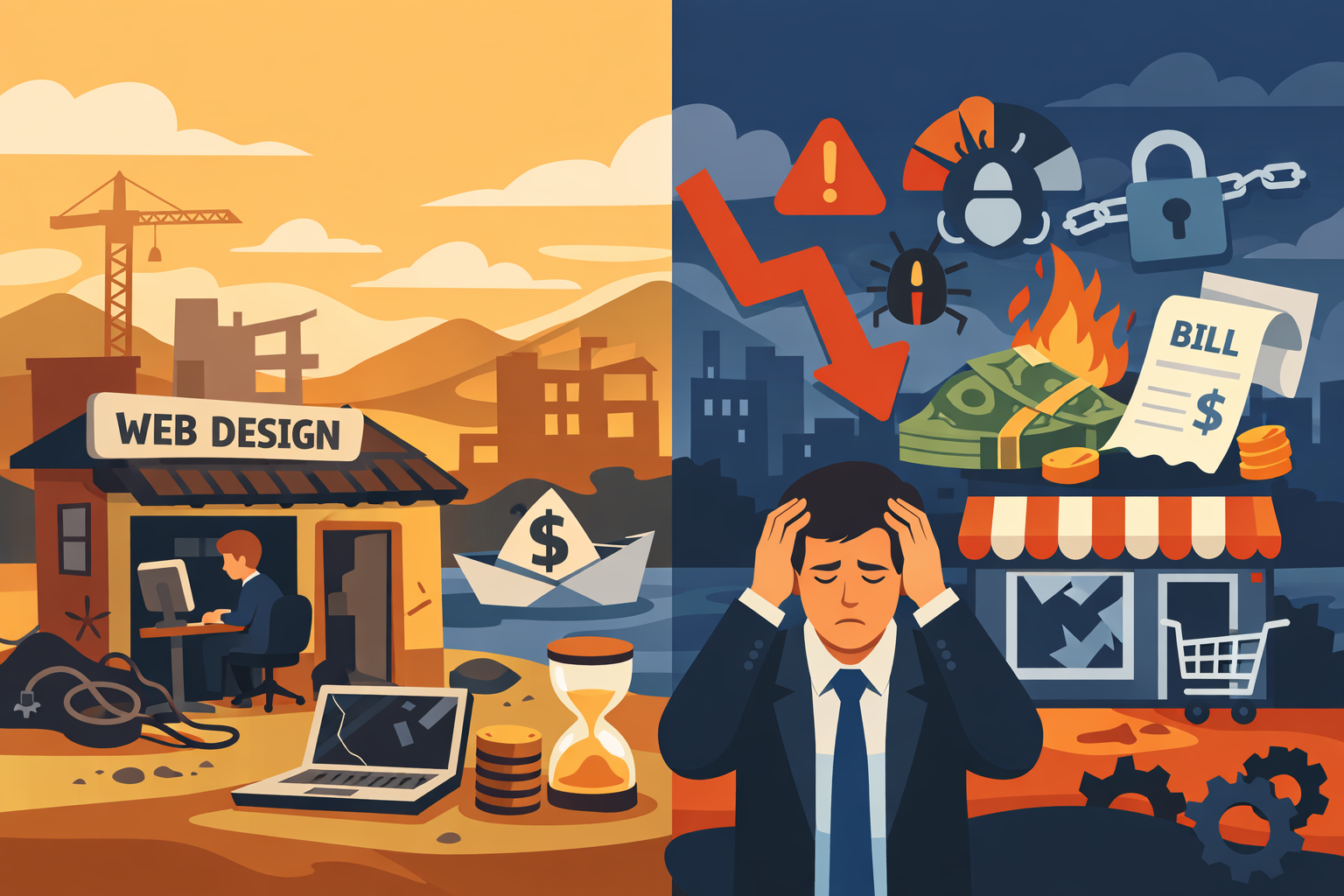
For many businesses, launching a website starts with one question: How much will it cost? It’s understandable. Every company wants to manage expenses, especially when building an online presence for the first time.
But when it comes to websites, the lowest price often comes with hidden trade-offs. What looks like an affordable solution today can quickly turn into a series of costly problems down the road.
Cheap websites frequently lack performance optimization, security, scalability, and strategic design. Over time, these weaknesses lead to lost leads, poor search visibility, and expensive fixes. In many cases, businesses end up paying far more to repair or rebuild a low-quality website than they would have spent investing in a well-built site from the start.
In this guide, we’ll explore why cheap websites end up costing more, what corners are usually cut during budget builds, and how investing in quality web development can save your business money in the long run.
The True Cost of a Website Isn’t Just the Price Tag
Many business owners focus on the upfront cost of building a website. While that’s an important factor, it’s only one part of the equation.
A website should function as a long-term asset for your business. It should generate leads, build credibility, and support marketing efforts for years to come.
When a website is built cheaply, the focus is often on getting something online as quickly as possible. Little attention is given to user experience, technical performance, or future growth.
As a result, businesses eventually face expenses such as:
- Website redesigns
- Performance optimization
- Security fixes
- Search ranking improvements
- Feature rebuilds
Investing in professional custom website design services from the start ensures your site is built with scalability, performance, and long-term success in mind.
Cheap Websites Often Use Poor Design Frameworks
One of the most common problems with low-cost websites is the use of generic templates or poorly structured frameworks.
These templates may look acceptable at first glance, but they often come with limitations that restrict customization and functionality.
Limited Customization
Template-based sites typically force businesses into rigid layouts. As your company grows and needs change, modifying these templates can become difficult or even impossible.
This lack of flexibility often leads businesses to rebuild their entire site sooner than expected.
Poor User Experience
A well-designed website should guide visitors toward taking action, whether that’s contacting your company, booking a service, or making a purchase.
Cheap websites rarely include thoughtful user experience design. Without clear navigation and conversion-focused layouts, visitors may leave your site without engaging with your business.
Over time, this lost engagement directly affects revenue.
Slow Websites Lose Visitors and Sales
Website speed is one of the most important factors in online success. Modern users expect pages to load almost instantly.
Cheap websites often suffer from slow loading speeds due to poor coding, oversized images, or unreliable hosting.
The Impact of Slow Page Speed
A slow website creates several problems:
- Higher bounce rates
- Lower search engine rankings
- Reduced user engagement
- Lost sales opportunities
Studies consistently show that visitors abandon websites that take more than a few seconds to load.
When a website is slow, businesses lose potential customers before they even see the services offered.
Cheap Websites Rarely Include SEO Optimization
Search engines are a major source of traffic for businesses. However, many inexpensive websites are built without proper search engine optimization.
Without SEO foundations, your website may struggle to appear in search results.
This means potential customers searching for your services may never find your business online.
A properly optimized website includes elements such as:
- Clean site architecture
- Fast loading performance
- Structured page hierarchy
- Mobile responsiveness
- Optimized metadata
Businesses that invest in professional search engine optimization strategies gain a significant advantage in visibility and online traffic.
Security Risks Are Higher With Budget Websites
Security is another area where cheap websites often fall short.
Low-cost developers sometimes use outdated plugins, unsupported frameworks, or poorly configured servers. These vulnerabilities create opportunities for cyberattacks.
If a website becomes compromised, the consequences can be severe.
Potential Security Issues
Security breaches can result in:
- Website downtime
- Data theft
- Malware infections
- Search engine penalties
- Loss of customer trust
Repairing hacked websites often costs far more than building a secure site from the beginning.
A professional web development process includes secure coding practices, regular updates, and proper hosting configuration.
Cheap Websites Are Difficult to Scale
Businesses rarely remain static. As your company grows, your website should grow with it.
Cheap websites are often built without scalability in mind. Adding new features, integrations, or pages later can become complicated and expensive.
Examples of Growth Limitations
A business may later want to add:
- Online booking systems
- E-commerce capabilities
- Customer portals
- Marketing automation tools
- CRM integrations
If the website’s foundation is weak, implementing these features may require rebuilding large portions of the site.
Investing in a scalable development structure prevents these issues and allows your website to evolve alongside your business.
Cheap Websites Can Hurt Brand Credibility
Your website is often the first interaction a potential customer has with your business.
If the design feels outdated, cluttered, or difficult to navigate, visitors may question the credibility of the company behind it.
First Impressions Matter
A professionally designed website communicates trust, professionalism, and expertise.
On the other hand, poorly designed websites can create impressions such as:
- The business is outdated
- The company lacks attention to detail
- The service may not be reliable
Even if your services are excellent, a weak website can undermine that reputation.
Hidden Costs Appear Over Time
One of the biggest misconceptions about cheap websites is that they save money.
In reality, many hidden costs emerge over time.
These may include:
- Frequent bug fixes
- Plugin replacements
- Performance upgrades
- Security patches
- Design corrections
Each of these issues requires additional developer time and expense.
Eventually, many businesses decide it’s more efficient to rebuild the website entirely.
At that point, the total cost of the cheap website plus the rebuild often exceeds the cost of building a quality website from the beginning.
Cheap Websites Often Ignore Marketing Strategy
A successful website is not just a digital brochure. It should actively support your business marketing efforts.
Budget websites frequently overlook important marketing considerations such as conversion optimization, landing page design, and lead capture systems.
A strong website works hand-in-hand with broader digital marketing strategy initiatives to generate traffic, nurture leads, and convert visitors into customers.
Without this strategic integration, businesses may struggle to turn website visitors into actual clients.
When a Cheap Website Might Make Sense
There are limited situations where a low-cost website may be acceptable.
For example:
- Temporary landing pages
- Personal projects
- Simple informational websites with no growth plans
However, businesses that rely on their website for leads, credibility, and customer acquisition should view their website as an investment rather than an expense.
A well-built website can generate revenue for years, making the initial investment worthwhile.
How to Avoid the Cheap Website Trap
Choosing the right development approach requires careful planning.
Here are a few key factors to consider before hiring a web developer.
Focus on Value, Not Just Price
The goal should be a website that supports your business objectives, not simply the lowest upfront cost.
Look for developers who prioritize performance, scalability, and strategy.
Review the Developer’s Portfolio
Past work reveals the quality and capabilities of a web developer. Examine previous projects to ensure they match the level of professionalism you want for your own site.
Ask About SEO and Performance
A strong website should be built with search visibility and speed optimization from the start.
Developers who understand these elements will build sites that perform well in search results.
Consider Long-Term Support
Websites require updates, maintenance, and occasional improvements. Working with a development partner who offers ongoing support ensures your site remains secure and effective.
Investing in the Right Website From the Start
A website is one of the most important tools your business has for attracting customers, building credibility, and growing revenue.
While cheap websites may seem appealing at first, the long-term costs often outweigh the initial savings.
Poor performance, weak design, limited scalability, and missing SEO foundations can all prevent your website from achieving its full potential.
By investing in a professionally developed website from the beginning, businesses gain a digital platform that supports growth, marketing, and customer engagement for years to come.
The result is not just a better website, but a stronger foundation for long-term online success.