

SEO Link Building: What It Is and How It Works for Growth
September 21, 2026
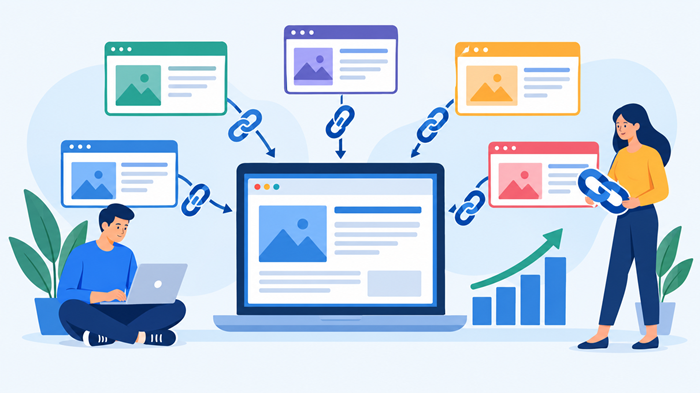
SEO link building is the process of earning or creating relevant links from other websites to pages on your own site. These links can help search engines discover content, understand relationships between pages, and assess a website’s authority within a topic. For businesses, the goal is not simply to collect as many links as possible. The objective is to earn relevant mentions that support visibility, referral traffic, credibility, and organic growth.
Key Takeaways
-
Quality and relevance matter more than collecting large numbers of links.
-
Useful content gives publishers a genuine reason to reference your website.
-
A balanced approach combines content, digital PR, outreach, internal links, and technical SEO.
-
Google warns against manipulative link practices designed primarily to influence rankings.
What Is SEO Link Building?
SEO link building means acquiring hyperlinks from external websites that point to useful pages on your domain. A hyperlink connects two web resources, helping readers and search engines move between pages.
Search engines can discover pages through links, which can also provide context. A link does not automatically make a page authoritative; source, relevance, placement, and context matter.
Google specifically identifies practices such as buying links for ranking purposes, excessive link exchanges, automated link creation, and low-quality directory links as examples of link spam.
That makes modern SEO link building less about shortcuts and more about earning genuine editorial references.
Why Link Building Matters for Business Websites
SEO link building can support a business website when relevant pages earn references from credible sources. Relevant links can also create referral traffic, brand discovery, and publisher relationships.
A professional agency who provide digital marketing services can helps businesses build a broader organic search presence by combining content, technical optimization, outreach, and that align with business goals.
How SEO Link Building Works
A thoughtful SEO link building campaign begins with relevance, not volume.
The process starts with research into valuable pages, relevant websites, content gaps, publishers, partners, and legitimate opportunities. Next, a business creates useful assets and connects them with appropriate publishers through relevant outreach. Results are then measured through referring domains, referral traffic, rankings, conversions, and link quality.
This is also why expectations need to be realistic. Search visibility rarely changes overnight, and the answer to how long does organic seo take to generate leads depends on competition, site condition, content quality, demand, and implementation.
Types of Links in SEO
Editorial Links
Editorial links appear naturally within articles, research, news coverage, interviews, or resource pages because the publisher considers the destination useful to readers. These links benefit from genuine editorial context.
Resource and Reference Links
Resource pages can link to useful guides, studies, tools, organizations, and educational materials. Creating a genuinely helpful resource gives publishers a practical reason to reference it.
Local and Industry Links
Businesses can earn relevant mentions through local organizations, professional associations, suppliers, community initiatives, and industry publications. Relevance is particularly important because a link connected to the business’s location or field can provide useful context.
Internal Links
Not every link needs to come from another domain. Internal links connect related pages on the same website and help visitors discover additional information. A well-planned internal architecture also gives search engines clearer paths through important content.
Businesses working on site structure can learn how to build an internal linking structure to make related pages easier to discover and navigate.
Effective Ways to Build Quality Links
Strong SEO link building depends on useful assets and relationships that make references worthwhile.
Create Link-Worthy Content
Original data, expert commentary, practical tutorials, visual resources, original surveys, and detailed industry guides can attract references because they provide information other publishers want to cite.
The strongest assets solve a specific problem. A study, calculator, dataset, or comprehensive guide gives publishers a clear reason to reference it.
Use Digital PR and Expert Outreach
Digital PR can put useful business expertise in front of journalists, editors, bloggers, and industry publications. Expert commentary can earn brand mentions while building relationships that become valuable over time.
Outreach should be selective. A focused list of relevant prospects is more useful than sending the same pitch to hundreds of unrelated websites.
Reclaim Unlinked Mentions
Sometimes a business is already mentioned online without receiving a hyperlink. Monitoring brand mentions can uncover opportunities to contact the publisher and request a relevant citation.
The request should make sense for readers, with a suggested page that genuinely adds useful information.
Build Relationships
Partnerships with suppliers, associations, complementary businesses, event organizers, and professional communities can create legitimate opportunities for references.
Relationship-driven acquisition is different from mass link exchanges. Google considers excessive exchanges intended primarily to manipulate rankings a form of link spam.
SEO Link Building Tools and Measurement
Professional campaigns often use seo link building tools to research referring domains, discover content opportunities, monitor brand mentions, review competitor link profiles, identify broken links, and measure campaign progress.
Tools are useful for research, but software does not replace editorial judgment. A database can identify thousands of prospects, yet only a fraction may be genuinely relevant to a business.
Useful measurements include:
-
Referring domains and their topical relevance
-
Newly earned and lost links
-
Referral traffic
-
Organic visibility for priority pages
-
Rankings for target queries
-
Leads and conversions influenced by organic search
-
Brand mentions and publisher relationships
Reporting should connect acquisition to business outcomes rather than celebrating raw link counts.
Building a Quality Link Strategy
An effective seo link building strategy starts with the pages that matter most to the business. Those may include service pages, product pages, research assets, category pages, or high-value educational resources.
The next step is identifying why another website would reference each asset. This question changes the campaign from link collection to value creation.
Anchor text also deserves attention. Descriptive anchor text can help readers understand what they will find after clicking. At the same time, forcing exact-match commercial phrases into every external mention can look unnatural and create unnecessary risk.
A varied link profile is realistic because genuine editorial references come from different people, reasons, and wording.
For readers new to search optimization, SEO for beginners provides a useful foundation.
How Link Building Supports Content
SEO link building becomes stronger when every promoted asset has a clear audience and purpose.
That means content planning should come before aggressive outreach. Start with audience needs, search intent, commercial priorities, and gaps in existing resources. Then create assets that provide a stronger answer or a more useful reference.
A professional services business could publish an industry report, cost guide, checklist, or case study. Each asset gives publishers a reason to reference the brand.
SEO link building should be integrated into the wider content strategy instead of treated as a monthly numbers game.
On-Page SEO and Link Building Work Together
External authority cannot compensate for a poor user experience, weak content, broken technical elements, or unclear page structure.
A campaign should therefore review page titles, headings, content depth, search intent, internal links, indexability, mobile experience, and conversion paths alongside external acquisition.
Understanding on-page vs off-page SEO helps clarify this relationship. On-page work improves the page itself, while off-page activities help build signals and visibility beyond the site.
The destination page should be strong before promotion begins.
Choosing an SEO Link Building Service
When evaluating an seo link building service, ask how the provider defines quality. A credible process should emphasize relevance, editorial value, transparent reporting, and sustainable acquisition rather than guaranteed rankings or huge monthly link counts.
Ask where links come from, how prospects are vetted, and what reporting is provided.
It is also useful to review the wider scope of SEO services, because link acquisition works best when technical SEO, content, local visibility, analytics, and conversion goals are considered together.
At JNA, our agency helps business websites build sustainable organic visibility through practical SEO strategies. The emphasis is on understanding the business, identifying realistic opportunities, improving valuable content, and building authority through relevant digital activity.
Common Link Building Mistakes to Avoid
One of the biggest mistakes is chasing volume. Hundreds of weak or irrelevant links do not automatically create a stronger website.
Another problem is using automated systems to generate links at scale. Google explicitly lists automated link creation among manipulative practices that can violate its spam policies.
Paid links also require care. Google distinguishes advertising and sponsorship from ranking manipulation and recommends appropriate link qualification for paid relationships.
Other mistakes include identical anchor text everywhere, thin guest content created solely for links, weak internal architecture, and measuring success only by link counts.
How to Build a Sustainable Link Building Plan
Start with business priorities and the pages that support them. Audit existing mentions and referring domains, then develop a small group of strong content assets.
Research publishers by topical relevance, audience fit, editorial standards, and usefulness. Run personalized outreach, track responses, and build relationships rather than treating every contact as a one-time transaction.
Review performance regularly while allowing enough time for meaningful trends to emerge. Organic search is cumulative, and a consistent process can become more efficient as the site builds stronger content and relationships.
Google’s current Search Central guidance also emphasizes following Search Essentials and spam policies when improving search visibility.
Conclusion
SEO link building grows through consistency, relevance, and useful content rather than shortcuts.
SEO link building is most effective when it is treated as an authority-building process rather than a race for backlink volume. Strong content, relevant relationships, thoughtful outreach, internal architecture, and technical SEO all contribute to a healthier organic search strategy.
For businesses, SEO link building should create useful resources, earn legitimate references, measure meaningful outcomes, and improve the website that receives traffic.
Frequently Asked Questions
What is SEO link building?
SEO link building is the process of earning relevant external links that point to useful pages on a website.
Why is SEO link building important?
It can support discovery, referral traffic, authority signals, brand visibility, and organic search growth.
Are all backlinks valuable?
No, relevance, context, source quality, and how the link was acquired all influence its usefulness.
Can buying links improve rankings?
Buying links specifically to manipulate rankings can violate Google’s spam policies.
How long does link building take to show results?
Results vary based on competition, website strength, content quality, authority, and the consistency of the campaign.