

What Are Technical SEO Parameters and Why Do They Matter?
August 24, 2026
Search engine optimization is not just about writing good content and adding keywords to a page. A website also needs a strong technical foundation that allows search engines to crawl, understand, index, and rank its pages properly.
This is where seo parameters become important. From site speed and crawlability to structured data and URL structure, technical factors can directly influence how efficiently your website performs in search results. Understanding these elements helps businesses identify weaknesses before they turn into bigger visibility problems.
Key Takeaway
-
SEO success depends on crawlability, indexability, speed, structure, and user experience.
-
Technical issues can prevent strong content from reaching its ranking potential.
-
Regular audits help uncover hidden errors that affect search visibility.
-
A clear optimization strategy makes it easier to maintain long-term organic growth.
What Are Technical SEO Parameters?
Technical SEO parameters are the measurable website elements that affect how search engines access, interpret, crawl, and index your content. Unlike content-focused optimization, technical work focuses on the infrastructure behind your website.
These factors help search engines understand whether your pages are accessible, properly structured, secure, fast, and suitable for users across different devices.
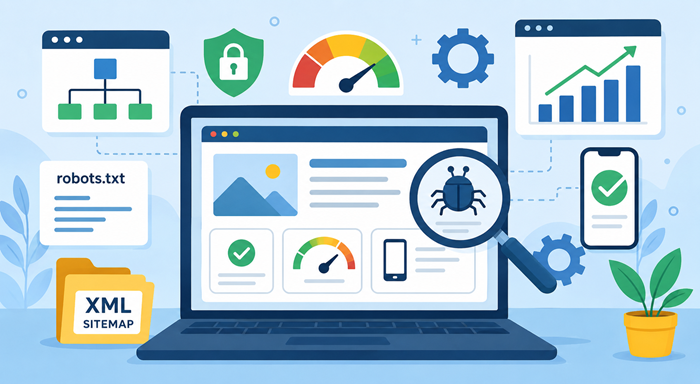
A complete seo parameters list may include crawl errors, XML sitemaps, robots.txt directives, canonical tags, page speed, mobile usability, HTTPS, structured data, internal linking, and duplicate content checks.
The goal is simple: remove technical barriers that make it difficult for search engines to discover and evaluate your website.
Why Technical SEO Matters for Search Performance
A beautifully designed website can still struggle to rank if search engines cannot crawl or understand it properly.
For example, important pages may accidentally be blocked from crawling. Duplicate versions of the same page may compete against each other, or slow loading times may create a poor experience for visitors.
Strong technical seo creates the foundation that supports content, backlinks, and other optimization efforts.
It also becomes increasingly important as websites grow. Large websites often contain thousands of pages, dynamic URLs, filters, redirects, and other technical elements that require careful management.
Businesses that want professional support can benefit from working with a reliable provider offering digital marketing services that align technical improvements with broader growth goals.
The Most Important Technical SEO Parameters
1. Crawlability
Crawlability refers to a search engine’s ability to access and navigate your website.
Search engine bots follow links and examine website resources to discover new and updated pages. If your pages are blocked or hidden behind poor site architecture, important content may never receive proper attention.
Common crawlability issues include:
-
Broken internal links
-
Incorrect robots.txt rules
-
Server errors
-
Endless redirect chains
-
Orphan pages with no internal links
A healthy website structure helps search engines move naturally from one page to another.
2. Indexability
Crawling and indexing are not the same thing.
A search engine may crawl a page without adding it to its searchable index. Indexability depends on whether search engines consider the page eligible and valuable enough to include in search results.
Problems such as noindex tags, duplicate content, canonical conflicts, and poor-quality pages can affect indexability.
Regularly reviewing index status helps ensure your most important pages have a realistic opportunity to appear in search results.
3. URL Structure
URLs provide useful context about the content of a page when they are clean, logical, and easy to understand.
When reviewing seo parameters in url, focus on simplicity, consistency, descriptive paths, and avoiding unnecessary strings or duplicate URL variations.
A good URL structure should be readable for both users and search engines.
For example, a clear category and page structure is usually easier to manage than a long URL filled with random numbers, session IDs, or unnecessary parameters.
4. Site Speed and Core Web Vitals
Website speed affects both user experience and search performance.
Slow pages can frustrate visitors and increase the likelihood that they leave before engaging with your content. Performance optimization often includes improving image delivery, reducing unnecessary scripts, optimizing code, and using efficient caching.
Core Web Vitals also provide useful signals about loading performance, visual stability, and responsiveness.
Instead of treating speed as a one-time project, monitor it regularly because new plugins, scripts, media, and design changes can gradually slow a website down.
5. Mobile Friendliness
Most websites now receive a significant portion of their traffic from mobile devices.
Your content should display properly across different screen sizes, with readable text, accessible navigation, and touch-friendly elements.
Mobile optimization is more than simply shrinking a desktop layout. Pages should remain fast, functional, and easy to use on smaller screens.
Responsive design and regular mobile testing can help prevent usability problems before they affect visitors.
Important On-Page Technical Elements
Technical optimization also overlaps with page-level improvements. Several on page seo parameters help search engines understand individual pages more accurately.
Title Tags and Meta Descriptions
A clear title tag communicates the main subject of a page.
Meta descriptions do not directly guarantee rankings, but a compelling description can encourage users to click when your page appears in search results.
Every important page should have unique and relevant metadata that accurately reflects its content.
Header Structure
Proper heading hierarchy improves readability and helps organize information.
Your H1 should clearly communicate the primary topic, while H2 and H3 headings should divide the content into logical sections.
Avoid using headings only for visual styling. Their structure should support the meaning and organization of the page.
Canonical Tags
Canonical tags help search engines understand which version of a page should be treated as the preferred version.
They are especially useful when similar or duplicate pages exist because of product filters, tracking parameters, HTTP and HTTPS versions, or other URL variations.
Incorrect canonical implementation can cause important pages to be ignored, so this area deserves careful attention.
XML Sitemaps and Robots.txt
XML Sitemap
An XML sitemap provides search engines with a structured list of important URLs on your website.
It can help search engines discover pages more efficiently, particularly on large websites or websites with complex navigation.
However, a sitemap should not replace strong internal linking. The best approach is to make important pages accessible through both logical navigation and a properly maintained sitemap.
Robots.txt
The robots.txt file provides instructions about which areas of a website search engine crawlers should or should not access.
A small mistake can unintentionally block important sections of your website.
Always review changes carefully, especially after migrations, redesigns, or CMS updates.
Structured Data and Search Understanding
Structured data provides additional context about a webpage using standardized formats.
Depending on the page type, it can help search engines understand information related to articles, products, organizations, FAQs, reviews, events, and more.
Structured data does not guarantee enhanced search results, but accurate implementation can improve search engines’ understanding of your content.
It should always reflect visible and accurate information on the page rather than attempting to manipulate search results.
Internal Linking and Website Architecture
Internal links guide both users and search engines through your website.
A well-planned structure helps distribute authority between related pages and makes important content easier to discover.
Pages should not exist in isolation. Every valuable page should have a logical connection to relevant sections of the site.
Understanding on-page vs off-page SEO can also help clarify why internal architecture works alongside content improvements and external authority-building efforts.
For large or complex websites, auditing the internal structure requires a more systematic approach. Learning the smart way to audit a large-scale website can help identify crawl inefficiencies, weak internal linking, and structural issues.
HTTPS and Website Security
HTTPS protects data exchanged between users and websites.
Modern websites should use secure connections across all important pages, with HTTP versions properly redirected to HTTPS where appropriate.
Security issues can reduce user trust and create unnecessary technical complications.
It is also important to check for mixed content problems, where secure pages attempt to load insecure resources.
How to Monitor Technical SEO Parameters
Monitoring should be ongoing rather than something done only when rankings decline.
Search engine tools, crawling software, analytics platforms, and performance testing tools can help identify problems across your website.
A regular review can include:
-
Crawl errors and broken pages
-
Index coverage
-
Redirect issues
-
Page speed
-
Mobile usability
-
Duplicate content
-
Canonical implementation
-
Structured data errors
-
XML sitemap health
Google’s search systems consider many signals when evaluating websites, which is why there is no single checklist that guarantees rankings. Still, monitoring seo parameters google commonly evaluates helps maintain a healthier and more accessible website.
For businesses developing a long-term strategy, understanding how to choose seo services can make it easier to identify whether an agency is addressing technical fundamentals rather than focusing only on surface-level changes.
When Should You Hire Professional Help?
Small websites can often manage basic maintenance internally. However, technical challenges become more complicated when a website has hundreds or thousands of pages.
Website migrations, JavaScript-heavy websites, international targeting, ecommerce platforms, and large content libraries may require specialized expertise.
Professional technical seo services can help identify deeper issues that are difficult to spot during routine website maintenance.
A qualified seo agency should review your site’s technical condition, explain the issues clearly, prioritize fixes based on impact, and provide a practical implementation plan.
For websites preparing for the changing search landscape, following a technical seo roadmap for aeo & geo can also help businesses think beyond traditional ranking strategies.
Common Mistakes to Avoid
Many technical problems develop gradually rather than appearing overnight.
One common mistake is making website changes without testing their SEO impact. A redesign, CMS migration, or plugin update can unintentionally create broken links, redirect problems, or indexing issues.
Another mistake is focusing on minor details while ignoring major barriers such as blocked pages, poor site architecture, or widespread duplicate content.
The most effective strategy is to prioritize problems according to their potential impact. Fix issues preventing search engines from accessing important pages before spending excessive time on minor refinements.
Final Thoughts
Understanding seo parameters gives you a clearer picture of what happens behind the visible pages of your website.
Strong content, useful information, and quality backlinks are important, but they work best when supported by a technically healthy website. Crawlability, indexability, speed, mobile usability, structured data, and site architecture all contribute to that foundation.
By monitoring your seo parameters regularly, you can catch technical problems early and make informed improvements before they limit your organic visibility.
The key is consistency. Review your website, prioritize meaningful fixes, and treat technical maintenance as an ongoing part of your search strategy.
Frequently Asked Questions
What are SEO parameters?
SEO parameters are measurable factors that influence how search engines crawl, understand, and rank webpages.
What is included in technical SEO?
Technical SEO includes crawlability, indexing, speed, mobile optimization, security, structured data, and site architecture.
Why are SEO parameters important?
They help ensure search engines can access, understand, and properly evaluate your website.
How often should technical SEO be checked?
A basic review should be performed regularly, with deeper audits after major website changes.
Can technical SEO improve rankings?
Yes, fixing technical barriers can improve search accessibility and support stronger overall organic performance.