

Commercial Solar Panel Installation: A Step-by-Step Guide for Businesses
June 19, 2026
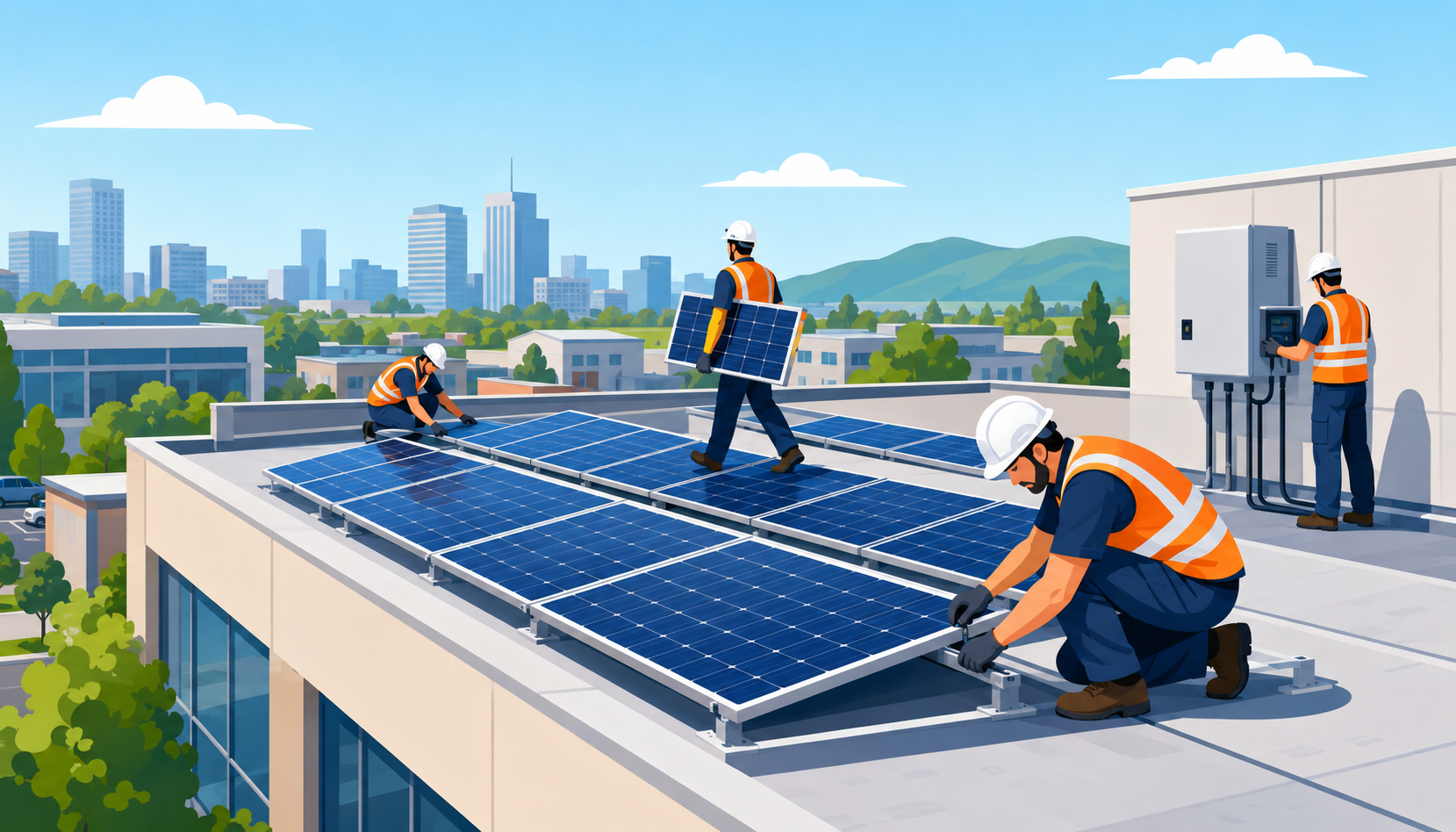
Investing in commercial solar panel installation is one of the smartest long-term decisions a business can make. Beyond lowering monthly electricity costs, solar energy helps companies reduce their environmental impact, improve energy independence, and increase the value of their commercial properties.
Whether you’re managing an office building, warehouse, retail center, manufacturing facility, or other commercial property, understanding the installation process makes it easier to plan your investment with confidence.
This guide walks you through every stage of a commercial solar installation project so you’ll know exactly what to expect before, during, and after construction.
Understanding the Commercial Solar Installation Process
Every commercial property has unique energy requirements, building characteristics, and operational needs. Because of this, no two installations are exactly alike. However, most commercial solar projects follow the same core process:
- Site evaluation
- System design and engineering
- Permitting and approvals
- Solar panel installation
- Commissioning and system activation
Each phase is designed to ensure your solar energy system delivers reliable performance for decades.
Step 1: Comprehensive Site Evaluation
Every successful commercial solar project begins with a detailed site assessment. This initial evaluation helps determine whether your property is suitable for solar and identifies the best system configuration for maximum energy production.
During this phase, the installation team gathers technical information about your building, energy usage, and structural conditions.
Property Assessment
Your solar contractor will inspect several important factors, including:
- Roof condition and remaining lifespan
- Roof size and available installation space
- Building orientation
- Structural integrity
- Existing electrical infrastructure
- Nearby trees or buildings that may create shading
For ground-mounted systems, the evaluation also includes land conditions, grading, soil stability, and available installation area.
Energy Consumption Analysis
Understanding how your business uses electricity is essential.
Your installer will review:
- Utility bills
- Peak demand periods
- Annual electricity usage
- Seasonal consumption trends
- Future business expansion plans
This information ensures your system is appropriately sized to meet your operational goals.
Local Regulations and Utility Requirements
The assessment also includes reviewing local building regulations, zoning requirements, utility interconnection standards, and permitting requirements.
Completing this due diligence early helps prevent costly delays later in the project.
If you’re still evaluating whether solar is right for your facility, understanding the most effective locations for installing commercial solar panels can help you determine how your property compares.
Step 2: Designing Your Commercial Solar Energy System
Once the site evaluation is complete, engineers begin designing a custom solar energy system tailored to your business.
This stage transforms collected site data into detailed engineering plans that maximize performance, efficiency, and long-term reliability.
Custom System Design
Your engineering team determines:
- Solar panel placement
- Panel orientation
- Tilt angle
- Mounting system
- Electrical layout
- Inverter locations
- Safety equipment
- Monitoring systems
The objective is to generate the highest possible energy output while working within the physical limitations of your property.
Engineering Drawings
Professional design documents typically include:
- Site plans
- Electrical diagrams
- Structural calculations
- Equipment specifications
- Panel layouts
- Wiring diagrams
These drawings serve as the blueprint for the installation team.
Permit Documentation
Commercial solar projects typically require multiple permits before construction begins.
Your installer prepares the necessary documentation for local building departments, utility companies, and electrical inspectors.
Handling permits professionally helps keep your project moving according to schedule.
Step 3: Permitting and Project Planning
Although permitting often happens behind the scenes, it’s one of the most important stages of the project.
Depending on your location, approvals may come from:
- Local municipalities
- Utility providers
- Building departments
- Fire departments
- Electrical inspectors
While permits are being processed, your installer also finalizes project schedules, orders equipment, and coordinates deliveries.
Good project planning minimizes disruptions to your daily business operations.
Step 4: Commercial Solar Panel Installation
Once permits have been approved and materials arrive, installation begins.
Construction timelines vary depending on the size of the project, roof complexity, weather conditions, and system capacity. Most commercial installations take anywhere from six to twelve weeks from construction start to completion.
Preparing the Job Site
Before installation begins, crews prepare the work area by:
- Delivering equipment
- Establishing safety procedures
- Protecting existing structures
- Setting staging areas
- Coordinating with facility managers
Communication is especially important if your business remains operational during construction.
Installing the Mounting System
The mounting system forms the structural foundation of the solar array.
Installers securely attach mounting hardware to the roof or ground structure while ensuring waterproofing measures remain intact.
Proper installation helps the system withstand decades of weather exposure.
Installing Solar Panels
After the mounting structure is complete, technicians install the solar panels according to the approved engineering plans.
Each panel is carefully positioned to maximize sunlight exposure and overall system efficiency.
Electrical Installation
Licensed electricians then install:
- Inverters
- Electrical conduit
- Disconnect switches
- Monitoring equipment
- Safety devices
- Utility connections
Every electrical component must meet applicable building and electrical codes.
Throughout construction, project managers monitor quality control and verify that work follows engineering specifications.
Businesses often ask about installation budgets during this phase. Understanding the key factors that influence commercial solar installation costs can help you better prepare your investment.
Step 5: Commissioning and Final Inspection
Once construction is complete, the project enters the commissioning phase.
This final stage verifies that every component functions safely and efficiently before the system begins generating electricity.
System Testing
Technicians perform extensive testing that may include:
- Electrical performance verification
- Voltage testing
- Inverter testing
- Safety inspections
- Monitoring system setup
- Equipment calibration
Every connection is carefully inspected before activation.
Utility Approval
Before your business can begin producing solar power, the local utility company performs its final review.
After receiving approval, the utility grants permission to operate (PTO), allowing your system to connect to the electrical grid.
Once PTO is issued, your commercial solar system officially begins generating clean, renewable electricity.
What Happens After Installation?
Installing solar panels isn’t the end of the journey.
Modern commercial solar systems include monitoring software that allows you to track:
- Daily energy production
- Monthly savings
- System performance
- Equipment status
- Historical energy trends
Routine maintenance is generally minimal, consisting of occasional inspections, panel cleaning when necessary, and monitoring system alerts.
With proper maintenance, commercial solar systems commonly operate efficiently for 25 years or longer.
Benefits of Commercial Solar Panel Installation
Businesses continue investing in solar because the advantages extend well beyond reducing utility bills.
Some of the biggest benefits include:
Lower Operating Costs
Electricity represents a major operating expense for many businesses. Solar energy can significantly reduce monthly utility costs while providing more predictable energy expenses.
Long-Term Return on Investment
Although solar requires an upfront investment, the long-term savings often generate an attractive return over the life of the system.
Improved Sustainability
Switching to renewable energy demonstrates your company’s commitment to environmental responsibility while helping reduce greenhouse gas emissions.
Increased Property Value
Commercial properties equipped with solar systems often become more attractive to buyers and investors due to lower operating costs.
Greater Energy Independence
Producing your own electricity reduces dependence on fluctuating utility rates and can improve resilience when paired with battery storage.
If you’re still comparing providers, taking time to understand how to choose the right commercial solar company for your business can make a significant difference in your project’s long-term success.
Choosing the Right Commercial Solar Installer
Not all solar contractors offer the same level of experience or expertise.
When evaluating potential installers, look for companies that provide:
- Commercial project experience
- Licensed and insured installation teams
- Transparent proposals
- Strong customer reviews
- Performance monitoring
- Ongoing maintenance support
- Manufacturer warranties
- Clear project timelines
Working with an experienced commercial installer helps ensure your investment delivers reliable performance for decades.
Make the Switch to Commercial Solar Today
Commercial solar panel installation is more than an energy upgrade—it’s a strategic investment in your business’s future.
From the initial site evaluation to final commissioning, every phase is designed to maximize efficiency, safety, and long-term savings. With the right installation partner, you can reduce operating expenses, increase energy independence, and demonstrate your commitment to sustainability.
Whether you’re planning a new commercial development or upgrading an existing facility, investing in solar today can provide measurable financial and environmental benefits for years to come.
If you’re ready to explore your options, connect with the experts at JNA for a customized commercial solar solution designed around your business goals.

Frequently Asked Questions
How long does a commercial solar installation take?
Most commercial solar installations take between six and twelve weeks once construction begins. Larger or more complex projects may require additional time for permitting, engineering, and utility approvals.
Will solar installation interrupt business operations?
Most installations are carefully scheduled to minimize disruptions. Your contractor will coordinate construction activities so your business can continue operating whenever possible.
How much can businesses save with commercial solar?
Savings vary depending on your location, electricity rates, system size, and energy consumption. Many businesses significantly reduce monthly electricity costs after installation.
Do commercial solar panels require a lot of maintenance?
No. Commercial solar systems require minimal maintenance. Periodic inspections, occasional cleaning, and performance monitoring are typically all that’s needed to keep the system operating efficiently.
How long do commercial solar panels last?
Most commercial solar panels have performance warranties of 25 years or more and can continue generating electricity well beyond that timeframe with proper maintenance.