

Native App vs Progressive Web App: Which Is Better?
November 4, 2026
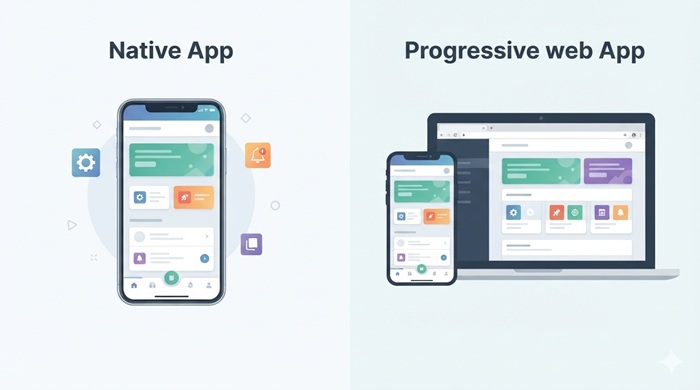
Choosing the right application technology is an important decision for any business planning to establish a strong digital presence. One of the most common questions businesses face is the native app vs progressive web app debate. Both options offer unique advantages, but the right choice depends on your business objectives, target audience, budget, and required functionality.
Native applications are designed specifically for operating systems such as Android and iOS, while progressive web solutions combine web accessibility with app-like experiences. Understanding the differences can help businesses invest in a solution that delivers better performance, usability, and long-term value.
Key Takeaways
-
Native applications provide deeper device integration and optimized performance.
-
Progressive web solutions offer easier access, wider compatibility, and simpler distribution.
-
Development costs and maintenance requirements vary depending on the chosen technology.
-
The best option depends on user expectations, business requirements, and future scalability.
What Is the Difference Between a Native App and a Progressive Web App?
The primary difference between a native app vs progressive web app is how each application is developed, accessed, and integrated with a device.
A native application is built for a particular operating system using platform-specific programming languages and development tools. Users generally download it through an application marketplace before accessing its features.
A progressive web solution, on the other hand, uses web technologies to deliver an application-like experience through a browser. Users can access it through a URL and install it on supported devices without following the traditional application installation process.
According to MDN’s documentation on progressive web applications, these solutions combine the accessibility of websites with several capabilities traditionally associated with platform-specific applications.
Both approaches can deliver excellent user experiences, but their technical foundations create important differences.
Native App vs Progressive Web App: Key Differences
Understanding the main comparison points makes it easier to identify which technology suits a particular business model.
1. Development Technology
Native applications use programming languages and frameworks designed for individual operating systems. Android applications commonly use Kotlin or Java, while iOS applications often use Swift.
This approach allows developers to optimize features according to the operating system’s architecture.
By comparison, progressive web solutions use HTML, CSS, and JavaScript alongside modern browser technologies. Developers can create a consistent experience across multiple devices using a shared codebase.
Businesses exploring cross-platform frameworks can also compare flutter vs react native app development approaches before finalizing their technical direction.
2. Performance and Speed
Performance is another major consideration in the native app vs progressive web app comparison.
Native applications can deliver highly optimized performance because they are developed specifically for their target operating systems. They are particularly suitable for applications involving advanced graphics, complex animations, intensive processing, or frequent hardware interactions.
Progressive web solutions can also provide fast and responsive experiences through caching, optimized resources, and modern browser technologies. However, their performance may depend on browser capabilities, device specifications, and network conditions.
For businesses building applications with demanding processing requirements, native technology may offer greater control.
3. Installation and Accessibility
Native applications generally require users to download and install software through platforms such as the Apple App Store or Google Play Store.
This creates an additional step before users can access the application.
Progressive web solutions simplify the process. Customers can visit a website directly through a browser, access its functionality, and install it on supported devices when available.
This accessibility can benefit businesses targeting customers who prefer quick access without committing to a traditional download.
4. Device Features and Integration
Native applications provide extensive access to device capabilities, including cameras, GPS, Bluetooth, biometrics, sensors, and system-level functionality.
This makes them suitable for applications that depend heavily on hardware integration.
Progressive web solutions can access several device capabilities through browser APIs. However, feature availability varies across operating systems and browsers.
For example, a business application requiring advanced Bluetooth integration or specialized hardware functionality may benefit more from native development.
5. Development Cost and Maintenance
Budget is an important factor when comparing a native app vs progressive web app.
Native development can require separate platform-specific implementation, testing, and maintenance efforts. Although cross-platform frameworks can reduce duplication, platform-specific considerations still matter.
Web-based solutions generally offer a more centralized development approach. Updates can be deployed through the web server, allowing users to access improvements without manually downloading a new application version.
Microsoft’s PWA documentation also highlights the cost advantages of maintaining a shared codebase across devices.
The final investment depends on application complexity, integrations, security requirements, and ongoing maintenance.
6. Offline Functionality
Offline accessibility is particularly important for applications used during travel, field operations, and situations with inconsistent connectivity.
Native applications can store information locally and support offline workflows through device storage and synchronization mechanisms.
A progressive web app (pwa) can also support offline functionality through service workers and caching strategies. Developers can store essential resources and selected information so users can continue accessing supported features without an active connection.
However, offline functionality must be planned carefully. Not every feature will work without server connectivity.
7. Security and Data Protection
Security should never be treated as an afterthought when selecting an application architecture.
Native applications can use operating-system security features, encrypted local storage, biometric authentication, and platform-specific protections.
Progressive web solutions can implement HTTPS, secure authentication, appropriate access controls, and modern web security practices.
Neither technology is automatically secure. The quality of implementation, server configuration, data handling, and regular security testing determine how effectively an application protects its users.
Businesses should also understand common app development risks before beginning a project.
When Should You Choose Native App Development?
Native technology is a strong option for businesses that need extensive device integration, high performance, or a highly customized mobile experience.
Consider this approach for:
-
Gaming applications with demanding graphics.
-
Banking applications requiring advanced device-level security.
-
Healthcare applications using specialized device integrations.
-
Navigation platforms requiring extensive location functionality.
-
Applications involving complex background processing.
Native app development is particularly valuable when the mobile experience is central to the product rather than simply another way to access business services.
When Is a Progressive Web App the Better Choice?
A web-based approach can be more practical for businesses prioritizing accessibility, faster distribution, and compatibility across different devices.
Consider this solution for:
-
E-commerce platforms and online shopping experiences.
-
Business dashboards and customer portals.
-
Content publishing and information platforms.
-
Booking and appointment management systems.
-
Internal business tools and service applications.
Businesses looking to build progressive web app solutions can benefit from a shared development structure, easier deployment, and browser-based accessibility.
The approach is especially useful when reaching customers quickly is more important than accessing every available device capability.
Native App vs Progressive Web App: Which Is Better for Your Business?
There is no universal winner in the native app vs progressive web app comparison. The right decision depends on what your application needs to accomplish.
A native solution is generally preferable when performance, device integration, and platform-specific functionality are priorities.
A web-based solution is often more practical when accessibility, development efficiency, and simplified updates matter most.
Some businesses may also benefit from combining both approaches. For example, a company could maintain a web platform for general customer access while offering a dedicated mobile application for customers who need advanced functionality.
Before making a decision, consider your expected user base, technical requirements, available investment, and long-term product roadmap.
You should also evaluate choosing between native and cross-platform app development to understand which implementation strategy offers the right balance.
Why Choose JNA for Your Application Development Project?
Selecting the right development partner is just as important as selecting the right technology.
JNA is the best web app development agency as well as providing other services in the US for businesses seeking professional application development solutions, strategic technical guidance, and scalable digital experiences.
A reliable development partner should understand your business requirements before recommending a technology. This includes evaluating your target audience, expected application performance, essential integrations, security requirements, and future expansion plans.
JNA helps businesses approach application projects with a focus on functionality, usability, and long-term value. Whether your project requires a browser-based solution or a more customized application architecture, choosing the right development strategy can make a significant difference.
Explore our web app development agency services to understand how the right technical expertise can support your next application project.
Final Thoughts
Choosing between these two technologies requires more than comparing development costs or technical features. Businesses must understand their customers, application requirements, and long-term objectives.
The native app vs progressive web app decision ultimately comes down to the experience you want to deliver. Native applications offer deeper platform integration and performance optimization, while web-based solutions provide accessibility and flexible distribution.
With the right development strategy and an experienced technology partner, businesses can build an application that supports customer expectations and future growth.
Frequently Asked Questions
1. What is the main difference between native and progressive web applications?
Native applications are developed for specific operating systems, whereas progressive web applications run through browsers and can offer installable, app-like experiences.
2. Are progressive web applications cheaper to develop?
They can be more cost-effective because developers can maintain a shared codebase across multiple platforms.
3. Can progressive web applications work offline?
Yes. Service workers and caching can support offline access to selected content and functionality.
4. Are native applications faster than progressive web applications?
Native applications can offer better optimized performance, particularly for demanding tasks and advanced device interactions.
5. Which application type is better for a startup?
A progressive web solution can be a practical starting point for startups prioritizing accessibility and development efficiency, while native technology suits products requiring advanced mobile capabilities.