

Why Human Experience Is Your Ultimate GEO Blueprint
August 11, 2026
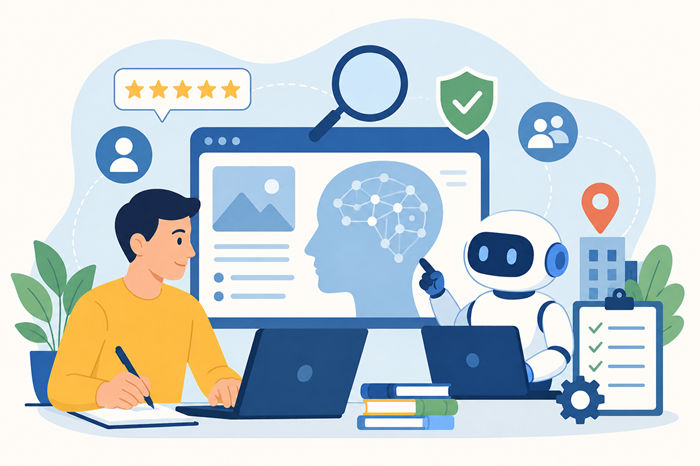
AI search is changing how people discover businesses, compare recommendations, and decide which sources deserve attention. Search engines and generative systems can summarize huge amounts of information in seconds, but they still need reliable signals showing that a business understands real customers, real problems, and real outcomes.
A strong GEO blueprint connects first-hand knowledge with useful content, credible evidence, clear expertise, and a customer-first website experience. Instead of trying to sound authoritative, businesses can demonstrate why they are qualified to answer the questions their audience is asking.
Key Takeaway
- First-hand experience gives AI-generated answers stronger reasons to trust a source.
- Useful content should prove expertise through examples, evidence, and practical guidance.
- E-E-A-T signals support traditional search visibility and AI-driven discovery.
- A consistent GEO blueprint turns real customer knowledge into scalable content assets.
Why Human Experience Matters More in AI Search
Generative search tools interpret questions, combine information, and present concise answers. Visibility is no longer only about ranking a webpage; content also needs to provide information that systems can understand, evaluate, and potentially cite.
A practical GEO blueprint starts with something machines cannot genuinely possess on their own: lived business experience. A contractor knows renovation problems, a dentist understands patient concerns, and a local retailer knows seasonal demand. These experiences become valuable content when documented clearly.
From E-E-A-T to Evidence-Based Content
Experience has always mattered to quality content, but AI search makes its value easier to see. Broad claims can be copied by thousands of websites; specific knowledge is harder to reproduce convincingly.
Businesses can strengthen a GEO blueprint by showing how they reached a conclusion, what they learned from customers, which methods they use, and what results a reader can reasonably expect. Original photographs, project examples, testimonials, demonstrations, data, and expert commentary can add meaningful context.
This approach also aligns with e-e-a-t, which emphasizes experience, expertise, authoritativeness, and trust. Strong pages do more than state that a company is experienced; they provide evidence that lets readers judge that experience.
For organizations building content at scale, seo and digital marketing services can help connect these signals with a broader search strategy. Optimization should amplify useful expertise rather than replace it.
How a GEO Blueprint Turns Experience Into Authority
The framework can follow five stages:
1. Collect Real Customer Questions
Start with sales calls, support tickets, consultations, reviews, conversations, and FAQs. These sources reveal the language customers actually use.
2. Turn Answers Into Useful Resources
Convert recurring questions into guides, comparisons, checklists, case studies, and service explanations. Each asset should solve a clear problem rather than exist only to target a keyword.
3. Add Proof and Context
Explain what happened, why a recommendation was made, what limitations exist, and what readers should consider before acting.
4. Make Expertise Visible
Identify knowledgeable authors, contributors, reviewers, or subject-matter experts. Include relevant credentials and practical experience where they genuinely help the reader.
5. Refresh What Changes
Review important pages when products, regulations, services, pricing, or customer expectations change. Useful information can quickly become outdated.
The Role of Local Experience in Search Visibility
Local businesses have an advantage that large generic publishers often cannot replicate: proximity to the customer. A local company can demonstrate knowledge of neighborhoods, service areas, common local issues, seasonal patterns, and community expectations.
That makes local seo especially dependent on authentic experience. A page that simply lists a city name may have limited value. A page that explains a real local problem, provides practical examples, and demonstrates familiarity with the area can be much more useful.
Businesses working with local seo services should look beyond citations and directory listings. Their content should reflect the actual experience of serving the community.
A local seo agency can organize this information into service pages, location pages, FAQs, review strategies, and supporting resources without making every page sound identical.
For businesses targeting nearby customers, understanding how to optimise your business website for local search can help connect on-site content with local intent.
GEO vs SEO: What Should Businesses Prioritize?
The debate around GEO vs SEO can make these strategies sound like competing disciplines. In practice, they work better together.
Traditional SEO helps search engines discover, understand, and rank content. Generative engine optimization focuses more heavily on making information useful, structured, distinctive, and easy for AI systems to interpret or reference.
A strong GEO blueprint should not abandon technical SEO. Pages still need clear structure, descriptive headings, crawlable content, strong internal linking, fast performance, and relevant search intent.
Why Reviews and Business Profiles Still Matter
AI-driven discovery does not eliminate local trust signals. Reviews, business information, customer feedback, and consistent company details can reinforce the credibility surrounding a brand.
Understanding how google reviews affect search performance is useful because reviews often reflect real customer experiences. They can reveal what customers value, which concerns appear repeatedly, and which services generate strong satisfaction.
Your google business profile also deserves careful attention. Accurate categories, services, descriptions, photos, hours, and customer interactions can make it easier for people to evaluate a business through local search.
For a practical guide, businesses can review how to optimize google business profile for business growth and connect those improvements with their wider content strategy.
Paid Search Can Support the Experience Strategy
Organic visibility takes time, and businesses often need ways to reach high-intent audiences while content assets mature. Paid search can provide that additional channel.
Well-planned local ppc management packages can help businesses reach people searching for immediate solutions in specific service areas. The landing page experience matters just as much as the ad.
Building Google E-E-A-T Into Everyday Content
Strong content does not need to mention quality guidelines repeatedly. It needs to demonstrate them through the way information is presented.
For e-e-a-t seo, businesses can document who created a piece, explain the practical experience behind recommendations, cite reliable sources when necessary, and distinguish facts from opinions. A service provider can also use project details, customer outcomes, and expert commentary.
A good GEO blueprint therefore treats trust as a content feature, not merely a branding statement.
What AI Search Cannot Replace
AI can summarize information, but it cannot replace the underlying experience that makes a business knowledgeable. The advantage belongs to organizations willing to capture that experience and make it accessible.
Consider a company with years of customer questions, completed projects, detailed feedback, and specialized knowledge. That information is a competitive asset. A GEO blueprint helps turn it into structured content instead of leaving it trapped in conversations and internal files.
The winning approach is not to create content that merely sounds human. It is to create content genuinely informed by humans.
A Practical Framework for the AI Era
Before publishing a major page, ask five questions:
- Does this content answer a real customer question?
- What first-hand experience supports the advice?
- Can we show evidence, examples, or outcomes?
- Is the information easy for people and search systems to understand?
- Does the page provide a clear next step?
These questions can become a simple editorial checklist. Every new GEO blueprint should be tested against usefulness, originality, credibility, and clarity before publication.
The Future of Search Belongs to Demonstrated Experience
AI search will continue to change how people discover information, but the value of trustworthy expertise is unlikely to disappear. Automated answers make credible source material more important.
Businesses should document what they know, explain what they have learned, and give customers evidence they can evaluate. A GEO blueprint built around genuine experience can support traditional rankings while preparing content for AI-driven discovery.
When human experience becomes the foundation, optimization becomes more than a visibility tactic. It becomes a way to make valuable knowledge easier to discover, understand, and trust.
FAQs
What does GEO mean in digital marketing?
It helps make content useful and understandable for generative AI search systems.
Why does human experience matter for AI search?
First-hand experience adds unique context, evidence, and credibility that generic content often lacks.
Is GEO replacing traditional SEO?
No. GEO and SEO can work together to improve discovery across search experiences.
How can businesses demonstrate experience online?
Use original examples, case studies, expert insights, customer feedback, and practical explanations.
Does local experience improve search visibility?
Yes. Genuine knowledge of customers, service areas, and local needs can make content more relevant.