

How Google’s Algorithm Works and What It Means for SEO
June 30, 2026
If you’ve been in digital marketing for any length of time, you’ve probably heard people say that “Google changed the algorithm again.” While that statement is true, many website owners still don’t fully understand how Google algorithm works or why those changes matter.
Understanding Google’s ranking system isn’t just for SEO professionals. Whether you run a business website, an online store, or a blog, knowing how search rankings work helps you create content that performs consistently instead of chasing temporary ranking tricks.
Rather than focusing on shortcuts, Google’s goal has always been to deliver the most relevant, trustworthy, and helpful results for every search. The better you understand this process, the easier it becomes to build a website that earns sustainable visibility.
What Is Google’s Algorithm?
Google’s algorithm is a complex collection of systems that evaluate billions of webpages before deciding which ones deserve to appear for a particular search.
Instead of relying on a single formula, Google considers hundreds of ranking signals. These signals help determine whether a page is useful, trustworthy, relevant, and capable of satisfying a user’s search intent.
Although Google never reveals every ranking factor, years of research and official guidance have shown that several elements consistently influence rankings, including:
- Content quality
- Search intent alignment
- Website authority
- Page experience
- Internal linking
- Mobile usability
- Page speed
- Freshness of content
These factors work together rather than independently, making SEO a long-term strategy instead of a one-time task.
How Google Finds and Indexes Your Website
Before Google can rank your content, it must first discover and understand it.
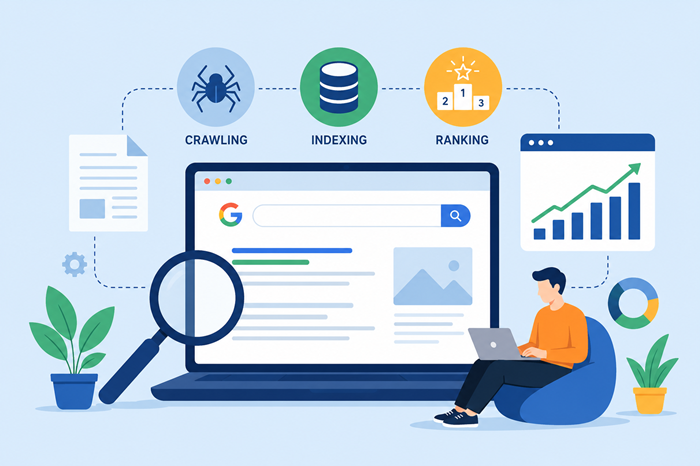
The process generally happens in three stages.
Crawling
Google uses automated bots called crawlers to discover new pages across the internet. These bots follow internal and external links to locate fresh content.
If your website has clear navigation and proper internal linking, crawlers can access your pages more efficiently.
Indexing
Once Google crawls a page, it evaluates its content and stores relevant information inside its search index.
Pages with duplicate, thin, or low-value content may not be indexed at all.
Ranking
When someone performs a search, Google instantly compares indexed pages and selects those that best answer the user’s query.
This ranking process happens in fractions of a second.
The Main Factors Google Uses to Rank Websites
Although Google evaluates hundreds of signals, several major categories influence rankings more than others.
Content Relevance
Google first determines whether your page actually answers the user’s search.
Content should directly address the topic while covering important supporting information naturally.
Avoid creating pages that simply repeat keywords without providing useful insights.
Search Intent
Matching user intent has become more important than matching exact keywords.
For example, someone searching “best running shoes” expects comparisons and reviews rather than a product category page.
Understanding intent helps create content that satisfies readers instead of merely attracting clicks.
Website Authority
Google prefers websites that demonstrate expertise and credibility.
Authority develops over time through:
- High-quality backlinks
- Helpful original content
- Positive user engagement
- Strong brand reputation
Authority cannot be built overnight, but consistent publishing gradually strengthens it.
User Experience
Visitors should be able to navigate your website easily.
Google values websites that offer:
- Fast loading times
- Mobile responsiveness
- Clear navigation
- Secure HTTPS connections
- Readable formatting
Good user experience encourages longer visits and better engagement.
Why Content Quality Matters More Than Ever
Years ago, publishing large amounts of keyword-focused content often worked.
Today, Google rewards genuinely useful information instead.
Helpful content typically includes:
- Original insights
- Practical examples
- Updated information
- Clear explanations
- Logical organization
Businesses investing in professional seo performance analysis often discover that improving content quality produces stronger long-term gains than simply publishing more articles.
The Role of Keywords Without Overusing Them
Keywords still help Google understand your content.
However, excessive repetition can hurt readability and rankings.
Instead of forcing the same phrase repeatedly, write naturally and cover related topics that users genuinely expect to find.
A balanced keyword strategy creates content that both readers and search engines appreciate.
Learning how poor keyword strategy hurting google rankings can help businesses avoid optimization techniques that limit long-term growth.
Why Google Regularly Updates Its Ranking System
Search behavior changes constantly.
New websites appear every day, technology evolves, and users expect increasingly accurate search results.
To keep improving search quality, Google frequently releases google algorithm updates that refine how pages are evaluated.
Some updates are minor and barely noticeable.
Others significantly change search rankings across entire industries.
These improvements generally target:
- Low-quality content
- Spam techniques
- Manipulative backlinks
- Poor user experience
- Thin affiliate websites
Rather than fearing updates, website owners should focus on building genuinely valuable content.
Common Reasons Rankings Change
Many businesses panic after noticing sudden ranking fluctuations.
However, ranking changes don’t always indicate a penalty.
Some common causes include:
Competitors Published Better Content
Another website may simply provide a more comprehensive answer.
Search Intent Shifted
Google occasionally changes which content formats best satisfy a particular search.
Website Technical Issues
Broken pages, indexing problems, or slow loading speeds can reduce visibility.
Content Became Outdated
Older articles often lose rankings when they no longer reflect current information.
If you’ve experienced organic traffic drops after google updates, reviewing content quality and technical health is usually the best first step instead of making drastic SEO changes.
Why Technical SEO Still Matters
Even excellent content can struggle if search engines cannot properly crawl your website.
Technical SEO helps ensure Google understands your pages efficiently.
Key technical areas include:
Website Speed
Fast websites improve user satisfaction while reducing bounce rates.
Mobile Optimization
Most searches now happen on mobile devices.
Responsive design has become essential.
Secure Website
HTTPS builds trust while protecting user information.
Structured Data
Schema markup helps search engines understand your content more clearly.
These improvements create a stronger foundation for long-term rankings.
The Importance of Internal Linking
Internal links help Google understand relationships between pages.
They also distribute authority throughout your website while guiding visitors toward additional helpful resources.
Instead of randomly linking pages together, create logical connections that support the user’s journey.
Businesses comparing different service levels often benefit from reviewing available SEO pricing packages before planning a long-term optimization strategy.
How to Measure SEO Success
Improving rankings is only one part of successful SEO.
Real success involves measuring overall seo performance using multiple indicators.
Useful metrics include:
- Organic traffic
- Click-through rate
- Average ranking position
- Time on page
- Conversion rate
- Indexed pages
- Backlink growth
Looking at multiple metrics provides a more accurate picture than focusing only on keyword rankings.
Mistakes That Can Hurt Rankings
Many websites unintentionally reduce their visibility by following outdated practices.
Common mistakes include:
Keyword Stuffing
Repeating keywords excessively makes content unnatural.
Thin Content
Short pages with little useful information rarely perform well.
Duplicate Pages
Similar content creates confusion for both users and search engines.
Ignoring User Intent
Ranking becomes difficult when content doesn’t answer what users actually want.
Best Practices for Long-Term SEO Success
Instead of chasing every new trend, focus on sustainable improvements.
Successful websites usually follow these principles:
- Publish original content consistently.
- Update older articles regularly.
- Improve website speed.
- Build trustworthy backlinks naturally.
- Strengthen internal linking.
- Focus on user experience.
- Create content that answers real questions.
- Track results through regular monitoring seo performance.
Consistency almost always outperforms shortcuts.
Preparing for Future Google Changes
Every google core update reinforces Google’s long-term direction.
The search engine continues rewarding websites that prioritize users over search engines.
Instead of asking, “How can I rank faster?”
A better question is:
“How can I create the most helpful resource on this topic?”
That mindset aligns naturally with Google’s long-term goals and reduces the impact of future updates.
Businesses working toward reaching on google’s first page generally achieve better results by consistently improving content quality instead of reacting to every ranking fluctuation.
Conclusion
Understanding how Google’s algorithm works removes much of the mystery surrounding SEO.
Rather than relying on hidden tricks, Google rewards websites that consistently provide accurate information, strong user experiences, and valuable content that satisfies search intent.
While rankings may fluctuate over time, businesses that invest in quality content, technical optimization, and continuous improvement are far more likely to build sustainable organic visibility.
Instead of trying to outsmart Google’s algorithm, focus on creating a website that genuinely deserves to rank. That’s the strategy that continues to work regardless of future algorithm changes.
If you’re planning long-term growth, investing in professional digital marketing services can help create content strategies built around real user intent instead of outdated optimization techniques.
Frequently Asked Questions
1. How does Google’s algorithm rank websites?
Google ranks websites by evaluating relevance, quality, authority, usability, and many other ranking signals.
2. How often does Google update its algorithm?
Google makes thousands of small changes every year along with several major updates.
3. Can a Google update lower my rankings?
Yes, rankings can change if your content becomes less relevant or competitors provide better information.
4. Is technical SEO still important?
Yes, technical SEO helps search engines crawl, index, and understand your website efficiently.
5. What’s the best long-term SEO strategy?
Create high-quality content, improve user experience, and continuously update your website.