

What’s the Difference Between SEO and AEO? A Simple Guide
November 9, 2026
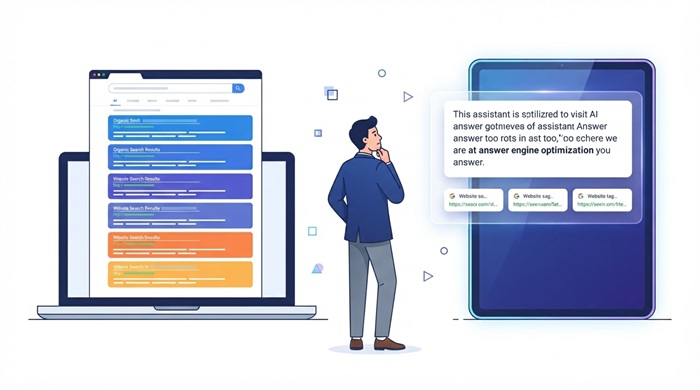
Understanding the difference between traditional search optimization and answer-focused search is becoming increasingly important for businesses. Search engines are no longer the only places where people discover information. Users now ask questions through AI-powered platforms, voice assistants, and conversational search tools to find direct, relevant answers.
This shift has changed how businesses approach online visibility. While traditional search strategies help websites appear in search engine results, newer approaches focus on making information easy for AI systems to understand, extract, and reference.
So, what separates these two approaches, and why should businesses consider both when building their online presence? Understanding seo and aeo can help businesses create a stronger digital strategy that reaches customers across traditional search engines and emerging AI-powered platforms.
Key Takeaways
-
SEO improves website visibility in traditional search engine results.
-
AEO focuses on providing clear answers to users’ questions.
-
Both approaches support organic visibility and help businesses reach potential customers.
-
Combining seo and aeo creates a more adaptable search strategy for changing user behaviour.
What Is SEO?
Search engine optimization is the process of improving a website so that search engines can discover, understand, and display its pages for relevant searches.
When someone searches for a product, service, or question on Google, the search engine evaluates several factors to determine which pages are most relevant and useful. These factors include content quality, relevance, website structure, backlinks, page experience, and technical accessibility.
The primary objective is to attract people who are actively looking for information, products, or services related to a business.
For example, a company offering website development might publish an article targeting the search query “best website design practices.” Through effective optimization, that article can appear in relevant search results and attract potential customers.
A well-planned strategy also involves keyword research, content development, internal linking, and technical improvements.
What Is AEO?
AEO stands for Answer Engine Optimization. It refers to improving digital content so that answer-focused platforms can understand it and potentially select it when responding to users’ questions.
Unlike traditional search experiences, where users often browse multiple website links, answer engines aim to provide direct responses. These responses may appear through voice assistants, featured snippets, AI-powered search experiences, and conversational AI platforms.
The aeo meaning becomes easier to understand through a simple example.
Imagine someone asks an AI assistant, “What should a small business include on its website?” Rather than displaying a list of websites alone, the platform may generate a response using information gathered from several online sources.
AEO aims to make your website’s information clear, relevant, trustworthy, and easy to interpret so it has a better opportunity to be selected as a supporting source.
This approach generally involves:
-
Answering specific questions directly.
-
Using descriptive headings and logical content structures.
-
Providing accurate, well-supported information.
-
Demonstrating subject knowledge and practical experience.
-
Maintaining consistent business information across relevant platforms.
AEO does not guarantee that an AI platform will mention or cite a particular website. Its purpose is to improve the quality and accessibility of information for answer-oriented discovery.
Difference Between SEO and AEO: Key Comparisons
The main difference between seo and aeo lies in their primary visibility goals. One focuses on improving the position of web pages in search results, while the other focuses on making content suitable for direct answers generated by search and AI platforms.
However, their underlying principles overlap considerably.
Here is a practical comparison:
| Comparison factor | SEO | AEO |
| Primary goal | Improve search rankings | Improve answer visibility |
| Main focus | Relevant web pages | Direct and useful answers |
| Content approach | Comprehensive, search-focused content | Clear, question-based responses |
| User behaviour | Browsing search results | Seeking immediate answers |
| Visibility | Organic search listings | Featured answers and AI responses |
| Success indicators | Rankings, clicks, traffic, conversions | Citations, mentions, answer visibility |
| Optimization | Keywords, links, technical health | Clarity, factual accuracy, structured information |
Both methods aim to connect businesses with relevant audiences. Their differences become more noticeable when considering how people search for information.
For a deeper explanation of how these approaches interact with AI-generated search experiences, read SEO vs GEO.
How SEO and AEO Work Together
Businesses do not necessarily need to choose one approach over the other. In fact, combining seo and aeo can create a more comprehensive digital visibility strategy.
Traditional search optimization helps search engines discover and evaluate website content. Answer-focused optimization makes that content easier to understand and use when platforms generate responses to specific questions.
Consider a business selling accounting software.
Its website might contain a detailed page explaining accounting software features, pricing, and benefits. A conventional strategy would focus on making that page relevant to commercial searches.
An answer-focused strategy would also include clear explanations of questions such as:
-
What is accounting software?
-
How does accounting software help small businesses?
-
Which features should businesses look for?
-
What is the difference between cloud-based and desktop accounting software?
These explanations provide useful information for readers while making individual sections easier for search systems to interpret.
The strongest approach is to build content around genuine customer needs rather than creating separate pages for every optimization trend.
7 Practical Ways to Improve SEO and AEO Performance
Understanding the concept is only the first step. Businesses also need a practical strategy to improve how their information appears across different discovery platforms.
Here are seven approaches worth incorporating into a content and website strategy.
1. Create Content Around Real Search Questions
Start by identifying what your audience wants to know before making a purchase or choosing a service.
Keyword research, customer conversations, search suggestions, and frequently asked questions can reveal useful content opportunities.
Develop articles that answer these questions naturally. Provide the main answer early, followed by explanations, examples, and additional context.
Learning how to write SEO content can help create articles that are useful for readers while maintaining a clear structure for search systems.
2. Use Clear Headings and Logical Content Structure
Organize website content using descriptive headings and relevant subheadings.
Each section should address a specific subject instead of combining unrelated information into lengthy paragraphs.
For example, an article about website security might include sections covering SSL certificates, secure hosting, password protection, and regular software updates.
This structure improves readability and makes important information easier to identify.
3. Provide Direct Answers Before Detailed Explanations
When writing informational content, address the main question within the opening sentences of the relevant section.
For example:
Question: Why does website speed matter?
Website speed matters because it affects user experience, page accessibility, and how easily visitors can interact with website content.
After providing the direct answer, explain the factors that influence loading performance and the steps businesses can take to improve it.
This format helps readers find information without searching through unnecessary paragraphs.
4. Build Credibility Through Accurate Information
Trust is an important consideration across traditional and AI-powered search experiences.
Publish information that is accurate, relevant, and supported by reliable sources. Include practical examples, original insights, and expert explanations wherever possible.
Review existing articles regularly to correct outdated information and replace unsupported claims.
Google’s guidance emphasizes helpful, reliable, people-first content rather than publishing material solely to influence rankings.
5. Improve Technical Website Performance
A technically accessible website provides a stronger foundation for online visibility.
Pay attention to:
-
Mobile responsiveness.
-
Page loading performance.
-
Crawlability and indexability.
-
Secure HTTPS connections.
-
Descriptive page titles and URLs.
-
Proper internal linking.
-
Accessible text and navigation.
Businesses should also ensure that structured data accurately represents the visible information on their pages.
A detailed technical SEO roadmap for AEO & GEO can help identify website improvements that support search accessibility and AI discovery.
6. Develop Consistent and Informative Business Profiles
Online visibility is not limited to website pages. Business information published across directories, professional profiles, and relevant industry platforms can also help customers understand a company’s services.
Maintain consistent business names, contact details, service descriptions, and location information.
Publish useful company updates, answer customer questions, and ensure that publicly available information accurately represents the business.
Consistency helps reduce confusion and creates a more reliable digital presence.
7. Monitor Performance and Improve Your Strategy
A successful strategy requires regular evaluation.
For traditional search visibility, monitor organic traffic, keyword performance, impressions, clicks, and conversions.
For answer-focused visibility, review available AI referral traffic, brand mentions, citations, and relevant customer discovery patterns.
Not every platform provides detailed reporting for AI-generated answers. Therefore, use measurable indicators where available and avoid treating individual AI responses as proof of consistent visibility.
Businesses should also evaluate whether visitors arriving through different channels are engaging with their content and completing meaningful actions.
Why Businesses Need Both Approaches in Modern Search
Online discovery is changing, but traditional search engines remain important. Customers continue to use search results to compare businesses, research products, evaluate services, and make purchasing decisions.
At the same time, conversational search and AI-generated responses are introducing new ways to discover information.
This makes seo and aeo valuable complementary approaches rather than competing strategies.
A business that invests only in traditional rankings may overlook opportunities to make its content more useful for direct-answer experiences. Similarly, concentrating entirely on AI visibility without maintaining a technically sound website and strong organic presence can weaken its overall digital foundation.
A balanced strategy should prioritize helpful information, accessible website architecture, accurate business details, and content that addresses customer questions.
The goal is not simply to appear in more places. It is to become a reliable source of information when potential customers need it.
How to Choose the Right Digital Marketing Partner
Implementing a successful search strategy requires technical knowledge, content planning, performance analysis, and a clear understanding of business goals.
Working with an experienced SEO agency can help businesses identify weaknesses in their existing websites and develop an effective plan for improving online visibility.
However, selecting a suitable partner requires more than comparing service packages. Look for a team that understands search engine guidelines, technical optimization, content quality, and emerging AI search experiences.
Before making a decision, review this guide on choosing an agency for aeo visibility.
Ask potential partners how they measure performance, develop content strategies, and adapt to changes in search behaviour. A reliable provider should explain its approach clearly without promising guaranteed rankings or AI citations.
How JNA Helps Businesses Improve Search Visibility
JNA provides professional SEO services designed to help businesses strengthen their online presence, attract relevant visitors, and build sustainable search visibility.
Our approach focuses on understanding business objectives, improving website performance, developing relevant content, and identifying opportunities for organic growth. By bringing traditional optimization principles together with emerging answer-focused search practices, We helps businesses prepare their digital presence for changing discovery habits.
Companies looking to improve their search performance can explore our digital marketing services to learn more about available solutions.
Conclusion
The way people discover information online continues to evolve. Traditional search results remain valuable, while AI-powered platforms are creating additional opportunities for businesses to reach their audiences.
Understanding seo and aeo allows businesses to approach these changes with a more balanced strategy. Rather than treating them as separate activities, companies should focus on creating helpful content, maintaining a technically accessible website, and answering customer questions accurately.
The long-term opportunity lies in building a digital presence that people can trust and search platforms can understand. A consistent strategy that combines seo and aeo can help businesses strengthen their visibility, connect with potential customers, and remain competitive as search behaviour develops.
Frequently Asked Questions
1. What is AEO in digital marketing?
AEO is the process of optimizing content to improve its chances of appearing in direct answers provided by search and AI platforms.
2. Can AEO replace traditional search optimization?
No. Both approaches serve different visibility goals and work best when combined into one strategy.
3. Does AEO help websites appear in AI-generated answers?
It can improve content clarity and accessibility, but inclusion in AI-generated answers is never guaranteed.
4. Is structured data important for AEO?
Structured data can help describe website information, but it must accurately match visible content and does not guarantee AI citations.
5. How long does it take to see results?
Results vary depending on website quality, competition, content improvements, indexing, and the platforms being targeted.